


Under the proposed legal framework, the burden of proof falls on the Church to demonstrate that retaining personal data is strictly necessary for the proper administration of sacraments. This developing legal battle within the European Union represents a fundamental clash between secular privacy rights and the ancient tradition of ecclesiastical

Monitoring for unusual sequences of REST batch operations, such as paragraph rendering or category deletion requests, is essential for detecting early-stage TIKTOUK probes. The digital landscape is currently facing a sophisticated threat from this toolkit, which specifically targets a long-standing but often overlooked security flaw: unsecured
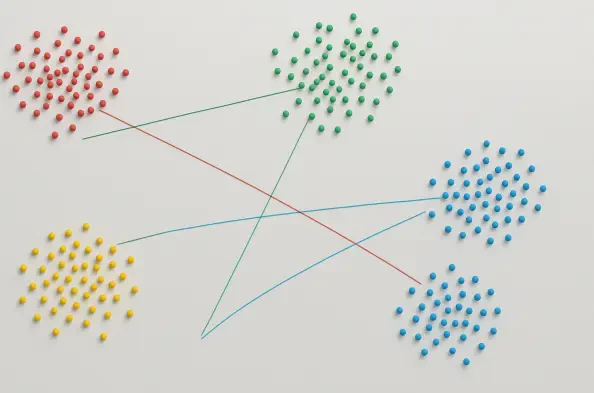
Global prototype matrices in DPAS-Net stabilize the training process by accumulating information across an entire dataset rather than relying on noisy mini-batches. This foundational innovation addresses a persistent headache in the field of unsupervised learning, where multi-view clustering (MVC) attempts to synthesize insights from diverse data

The persistent fragmentation of enterprise data ecosystems is encountering its most formidable challenger yet as a unified semantic standard transitions from a niche experiment into a global industrial necessity. This shift is driven by the formal alignment of major cloud providers and platform vendors around Apache Ossie, an open-source

Sophisticated threat actors are outpacing security leaders by utilizing automated tools to identify and exploit vulnerabilities before traditional patches can be widely deployed across enterprise networks. This rapid escalation in technical capability has forced a reevaluation of the current obsession with Artificial Intelligence deployment within

The capability to query live operational data alongside massive analytical datasets in BigQuery helps eliminate the need for complex and slow ETL pipelines. This advancement comes at a time when enterprise technology faces an unprecedented challenge: the collision of high-stakes production workloads with the massive computational hunger of