Vernon Yai is a distinguished authority in the realms of data protection and strategic IT governance, known for bridging the gap between technical risk management and corporate growth. With a career dedicated to developing innovative detection techniques and safeguarding sensitive information, he has become a leading voice for CIOs navigating the complexities of digital transformation. His insights focus on shifting the IT narrative from a back-office cost center to a frontline driver of organizational value and resilience.
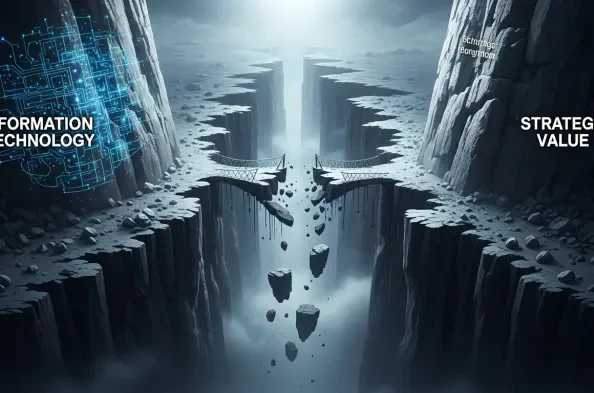
In this discussion, we explore the evolving role of the CIO, focusing on how IT leaders can overcome the “value articulation problem” by aligning technical roadmaps with financial outcomes. We delve into the strategic implementation of AI beyond mere cost-cutting, the necessity of building trusted data products, and the importance of user experience in reclaiming IT’s reputation as a business partner.
Many IT leaders focus on technical innovation but struggle to view themselves as business leaders. How does this mindset shift impact executive collaboration, and what specific habits help a CIO transition from being a tech-first lead to a strategic driver of company growth?
The mindset shift is the difference between being viewed as a functional manager and a true peer at the executive table. When a CIO identifies primarily as a technologist, they tend to communicate in terms of uptime, patches, and implementation phases, which often leaves the CFO or CEO feeling disconnected from the actual business impact. In fact, while 82% of CIOs feel their roles are becoming more digital-focused, only 50% actually see themselves as business leaders, creating a significant gap in strategic influence. To bridge this, a leader must develop the habit of “business-first” communication, where every project is framed by its contribution to revenue or market share rather than technical specifications. For example, instead of reporting on a cloud migration’s completion, a strategic CIO highlights how that migration reduced time-to-market for a new product line. This transition requires a commitment to lifelong learning and deep immersion in business operations to ensure IT isn’t just “getting things done” but is actually moving the needle on the company’s bottom line.
AI is often evaluated through the narrow lens of headcount reduction or cost savings. How can you reframe these initiatives toward capability expansion and decision-making speed?
Reframing AI starts with moving away from the trap of headcount reduction, which pigeonholes IT into a cost-center narrative. The real power of AI lies in its ability to scale revenue and decision-making without a linear increase in costs. To prove this, I look at metrics like the reduction in time-to-decision for critical business pivots or the increase in customer engagement scores through AI-driven personalization. We must create experimental spaces to pressure test assumptions, allowing us to see where AI truly impacts the enterprise strategy before scaling. By focusing on use cases that transform the customer experience or launch entirely new product categories, we demonstrate that AI is an engine for growth rather than just a tool for optimization.
High levels of distrust in data and uncertainty regarding ROI often plague large-scale technology investments. What steps can IT take to rebuild data integrity across the organization, and how do you ensure that technical roadmaps align directly with financial objectives?
Rebuilding trust is a multi-step process that begins with transparency; currently, 84% of executives report a distrust in the data they are given, which is a staggering hurdle for any investment. The first step is to partner closely with the CFO to align IT’s financial expectations with actual business drivers, ensuring that we aren’t just reporting qualitative benefits like “better data quality” but are capturing hard financial impacts. Second, we must implement an AI governance program that balances necessary guardrails with growth strategies, specifically targeting the confidence gap where 90% of leaders are unsure of an investment’s ROI. Finally, we should adopt a “value with every release” approach, breaking down long-term roadmaps into smaller, measurable milestones that deliver tangible business wins every few months. This prevents the “black hole” perception of IT spending and creates a continuous feedback loop of trust and verified value.
Treating data as a product requires repeatable business decisions and reliable infrastructure. What are the primary indicators that a data asset is ready for productization, and how do you measure the specific business outcomes resulting from its adoption?
A data asset is ready for productization when it supports repeatable business decisions and is backed by an infrastructure capable of meeting strict quality and availability expectations. We look for “high-vibration” data—information that is frequently accessed and critical to multiple departments—as the primary candidate for a formal data product. We measure success by tracking adoption rates across the organization and identifying whether the product has streamlined the pipelines needed for AI or citizen analytics. If a data product is well-designed, we should see a measurable decrease in the manual “data cleaning” time previously required by business analysts. By treating these assets as internal products with their own roadmaps and support structures, IT moves from being a gatekeeper to an enabler of a data-driven culture.
Employee satisfaction levels and the presence of shadow IT are often signals of underlying workflow issues. How do you use these indicators to identify capability gaps, and what role does user-experience design play in reclaiming IT’s reputation as a value-driver?
Shadow IT is actually a gift of information; it acts as a direct signal that our official tools are failing to meet the speed or quality requirements of our teams. When employees create work-arounds or adopt unofficial SaaS tools, they are pointing exactly to where the workflow is broken. By using employee satisfaction (ESat) and customer satisfaction (CSat) scores as primary KPIs, we can identify these capability gaps and apply user-experience design to fix them. I’ve seen cases where simply observing how an engineer gets work done—rather than just looking at the code they write—leads to a “delightful” interface redesign that eliminates shadow IT entirely. Reclaiming IT’s reputation requires us to move beyond implementation and focus on the “vibe” of the tools we provide, ensuring they help people work better rather than getting in their way.
What is your forecast for the role of the CIO in the next five years?
In the next five years, the CIO will transition fully from a “Chief Information Officer” to a “Chief Transformation Officer,” where the technical stack is entirely secondary to the orchestration of business outcomes. I expect to see the average tenure of digital leaders, currently around 3.3 years, either stabilize as they become more central to long-term strategy or shorten even further as the demand for “turnaround” specialists who can rapidly implement agentic AI increases. We will see a massive consolidation of SaaS platforms as AI agents begin to handle the heavy lifting of workflow integration, making the CIO’s ability to manage change and build AI literacy more important than their ability to manage infrastructure. Ultimately, the successful CIO will be the one who has successfully dissolved the “value gap” by ensuring that every technical initiative is indistinguishable from a business growth initiative.