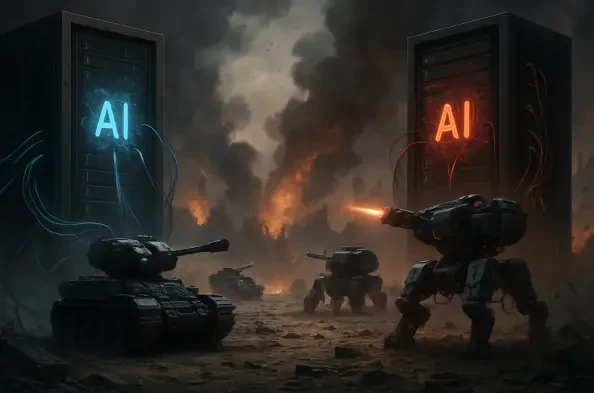
The digital battlefield has fundamentally shifted as the lines between human and machine adversaries blur at an unprecedented rate, compelling security leaders to confront a new and rapidly escalating reality. Artificial intelligence is no longer a theoretical threat or a distant promise; it is the central theater of operations in modern cyber warfare. For Chief Information Security Officers (CISOs), 2026 marks the year where the dual nature of AI as both a sophisticated weapon and an essential shield has come into sharp focus. They are now on the front lines of an automated arms race, a relentless cycle of AI-driven attacks met with AI-powered defenses. This escalating conflict is forcing a strategic reevaluation of security postures, creating an urgent and undeniable demand for AI solutions that are not just powerful, but also transparent, trustworthy, and demonstrably effective in a landscape where the best algorithm will ultimately determine the victor. The dialogue has moved beyond hypothetical scenarios to pragmatic preparations for a future that is already unfolding.
The Evolving Threat: AI as the Attacker’s New Weapon
Enhancing Old Tricks and Pioneering New Attacks
The past year has demonstrated that cybercriminals have become remarkably adept at integrating AI not to invent entirely new forms of attack, but to perfect and scale existing tactics with terrifying efficiency. This evolutionary leap has supercharged the age-old threat of social engineering, transforming it into a far more potent and insidious weapon. AI is now routinely used to craft phishing emails devoid of the classic grammatical giveaways, enabling them to bypass even savvy users. More alarmingly, it can generate hyper-personalized lures based on scraped data, creating messages that are almost indistinguishable from legitimate communications. Roger Grimes, a CISO advisor at KnowBe4, highlighted this disturbing trend by noting that approximately 90% of social engineering phishing kits now incorporate AI deepfake technology. This widespread adoption has made it trivially easy for threat actors to impersonate trusted executives or colleagues, fundamentally eroding the human-centric defenses that organizations have relied upon for years.
This refinement of existing tactics is merely the opening salvo in what security leaders anticipate will be a significant escalation in the scope and autonomy of AI-driven attacks. The recent cyberattack against the AI firm Anthropic, allegedly conducted by state-sponsored actors, is viewed as a stark harbinger of this new era, showcasing the potential for large-scale campaigns that operate with minimal human intervention. This event gives credence to the critical prediction that the future of cybercrime will be a direct confrontation between malicious AI bots and defensive AI bots, where victory is decided by the sophistication of the underlying algorithms. This automated conflict will move at machine speed, rendering traditional human-in-the-loop incident response models obsolete. The prospect of fully autonomous attack agents capable of identifying vulnerabilities, crafting exploits, and executing campaigns without direct oversight represents a paradigm shift that security teams are only now beginning to grapple with.
Targeting the AI Ecosystem and the Accountability Void
As enterprises aggressively integrate artificial intelligence into their core operations, threat actors are strategically shifting their focus from traditional network perimeters to the burgeoning AI ecosystem itself. CISOs are increasingly voicing concerns that the Large Language Models (LLMs) at the heart of corporate AI adoption will become the next generation of high-value targets. Jill Knesek, CISO at BlackLine, aptly describes these LLMs as future “honeypots,” given that they are designed to aggregate and process vast quantities of a company’s most sensitive data, from proprietary source code and financial records to strategic plans. This centralization of critical information makes them exceptionally attractive targets. Moreover, attackers are actively exploring novel vulnerabilities within the protocols that connect these complex AI systems. Experts point to open-source standards like the model context protocol (MCP) as potential vectors for exploitation through advanced methods like prompt injection, which could be used to manipulate model behavior or exfiltrate protected data.
This new wave of AI-perpetrated attacks introduces a profound and largely unresolved dilemma of accountability, creating a murky legal and ethical landscape for organizations to navigate. When an attack is launched not by a human but by a “synthetic identity” or a fully autonomous AI agent, the question of who bears the responsibility becomes incredibly complex. As Wendi Whitmore of Palo Alto Networks points out, the industry has yet to establish a clear framework for assigning liability in such scenarios. The blame could conceivably fall on a number of parties: the business unit that deployed the AI for a specific task, the CISO who approved its integration into the security stack, or the engineering team responsible for its operation and maintenance. This ambiguity creates significant risk for enterprises, as a single AI-driven incident could trigger a cascade of legal challenges and reputational damage with no clear precedent for resolution, forcing a necessary but difficult conversation about governance and oversight.
The Defensive Counterpart: AI in the Security Operations Center
From Data Sifter to Autonomous Agent
In direct response to the escalating sophistication of AI-powered threats, cybersecurity teams have increasingly embraced artificial intelligence as a critical defensive tool. During 2025, the primary benefit realized from this adoption was AI’s unparalleled ability to process and analyze immense volumes of security data, discerning the subtle patterns of a genuine threat from the overwhelming noise of daily network activity. Don Pecha, CISO at FNTS, described this capability as a “game changer” for his security operations center. He explained that by automating the tedious manual work of sifting through alerts and logs from disparate security tools, AI has drastically reduced the time his threat analysts spend on initial research for a potential incident, compressing a process that once took an hour into just ten minutes. This acceleration empowers analysts to make faster, more informed decisions, effectively allowing them to find the “needle in the haystack” before it can cause significant damage.
However, despite these clear gains in efficiency, a consensus is forming among security leaders that the current generation of AI-powered defense tools is still in its nascent stages. Jill Knesek argues that the market is predominantly filled with “legacy security with some AI capability and functionality” rather than “purpose-built AI security” solutions. This distinction is crucial; many existing tools have simply bolted on AI features as an afterthought, rather than being designed from the ground up to address the unique challenges of the new threat landscape. This indicates a significant gap between what vendors are currently offering and what CISOs truly need to combat autonomous, AI-driven attacks. The demand is shifting toward integrated platforms where AI is not just a feature but the core architecture, capable of understanding context, predicting adversary behavior, and coordinating a holistic defense.
The Dilemma of Trust and the New Defensive Frontier
The future of AI in cyber defense is widely expected to be defined by the rise of agentic AI—autonomous systems capable of identifying, analyzing, and mitigating threats without direct human intervention. Roger Grimes predicts that one of the first widely adopted forms of this technology will be “patching bots,” intelligent AI agents granted the autonomy to discover vulnerabilities across an enterprise network and apply the necessary security patches independently. While this promises a massive leap forward in proactive security, it also introduces a critical dilemma surrounding the long-held principle of keeping a “human in the loop.” As AI agents become more autonomous, CISOs must grapple with how much control they are willing to cede. There is a palpable fear of blindly trusting vendor promises of full autonomy, as a single error made by a patching bot could potentially lead to significant operational disruptions or system outages, creating a new class of self-inflicted incidents.
This move toward autonomous defensive agents simultaneously creates a new and critical attack surface that must be protected. As these AI agents are granted privileged access and entrusted with sensitive security functions, they will inevitably become high-value targets for sophisticated adversaries. This reality gives rise to a new defensive imperative that is only beginning to be understood: “In order to protect the human, you’re going to have to protect the AI agents that the human is using.” Securing these AI systems from compromise, manipulation, or poisoning will be just as important as the defensive tasks they are designed to perform. This creates a recursive security challenge where the protectors themselves need protecting, adding another layer of complexity to an already strained defensive posture and requiring a new set of tools and strategies focused on AI model security and governance.
The CISO’s Mandate: A Wish List for a Secure AI Future
Demanding Trust, Transparency, and Tangible Value
Having navigated the initial hype cycle surrounding artificial intelligence, Chief Information Security Officers are now articulating a clear and pragmatic set of demands for AI technology and its vendors. The focus has shifted decisively from proofs-of-concept to a demand for tangible, measurable value. CISOs expect AI-driven tools to deliver quantifiable improvements in operational efficiency that can be clearly communicated to executive boards and stakeholders. Jill Knesek emphasizes that leaders are looking for “purpose-built capabilities” where the return on investment is not ambiguous. A key area ripe for this innovation, according to Wendi Whitmore, is the security review process for new technologies. With enterprises rolling out dozens of new applications and services, an automated and accelerated solution for conducting these essential reviews is a critical yet currently unmet need that AI is perfectly positioned to address.
Underpinning this demand for tangible results is a profound lack of trust that currently permeates the CISO-vendor relationship in the AI space. Chris Henderson, CISO at Huntress, points out a common frustration: vendors are often protective of their intellectual property, leaving customers with vague assurances about their models’ capabilities instead of concrete, verifiable guarantees. This “black box” approach is no longer acceptable. To build the necessary trust, CISOs are calling for a new standard of transparency and governance. Don Pecha highlights the need for operational tools that can validate what data an AI was trained on and monitor its behavior in real time. This would ensure that both third-party and in-house AI tools are used securely and responsibly. To that end, Roger Grimes advocates for vendors to conduct and share more extensive threat modeling of their AI systems to proactively demonstrate their security and resilience against emerging attack vectors.
Augmenting Humans and Democratizing Security
There is a strong consensus among security leaders that the ultimate and most effective role for AI in cybersecurity is to augment, not replace, human expertise. The desire is for AI tools that move beyond simplistic, binary outputs such as “threat” or “no threat.” Instead, CISOs like Chris Henderson want AI to provide more sophisticated and nuanced recommendations, complete with a confidence score or a detailed explanation of its reasoning. This would position AI as a powerful decision-support tool, one that empowers a human analyst with deeper context and clarifies which alerts truly warrant being woken up for at 2 a.m. This vision frames AI as a force multiplier that enables security teams to scale their capabilities and effectiveness without necessarily increasing headcount. As Henderson articulates, security leaders need “extensions of their teams rather than replacements,” viewing this collaborative human-machine model as the most viable path to success.
Beyond empowering enterprise teams, CISOs also expressed a significant concern for the growing security gap affecting small to medium-sized businesses (SMBs). These organizations are critical components of the global supply chain and are increasingly targeted by attackers, yet they often lack the budgets and specialized resources of large enterprises to mount an effective defense. Don Pecha voiced a common hope that AI could help democratize cybersecurity by providing an affordable and effective “stopgap” for these underserved organizations. The development of accessible, AI-driven security platforms could level the playing field, offering sophisticated protection that was once out of reach. Ultimately, the mandate from CISOs was clear. They had moved past the initial allure of AI and established a pragmatic vision where intelligent systems, grounded in transparency and trust, served to augment human ingenuity and extend robust security to all corners of the digital ecosystem.