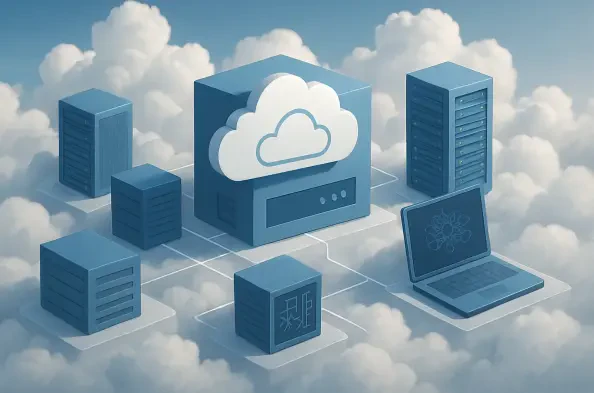
The unshakeable confidence that once defined the enterprise relationship with its technology partners has been replaced by a calculated and urgent mandate for control and self-sufficiency. A decade spent outsourcing digital infrastructure and intelligence to third-party platforms has culminated in a year of reckoning. The prevailing belief that centralized cloud services are infinitely resilient and that public AI tools are harmless productivity aids has been systematically dismantled. Now, a strategic reclamation is underway, as businesses move to regain sovereign control over their most critical asset: their data. This shift is not a retreat from technology but a deliberate maturation, a course correction driven by the hard-learned lessons of over-reliance and the quiet accumulation of hidden liabilities.
The Twin Pillars of Modern IT a Decade of Absolute Trust in Cloud and AI
For much of the last decade, enterprise strategy was built upon two foundational assumptions. The first was the unwavering resilience of the public cloud. Companies eagerly traded the complexities of managing their own data centers for the perceived simplicity and scalability offered by a handful of hyperscale providers. This consolidation sacrificed the internet’s original decentralized design for convenience, creating an ecosystem where the promise of fault tolerance was taken as an article of faith rather than a principle to be actively engineered. The mantra was clear: move everything to the cloud and let someone else manage the complexity.
Parallel to this infrastructural migration, a second pillar of trust was erected around the rise of public artificial intelligence. Generative AI platforms were rapidly adopted by employees, celebrated as revolutionary tools for enhancing productivity and creativity. This adoption, however, happened largely outside of traditional IT governance. These tools were viewed not as data-processing systems requiring oversight but as benign, stateless utilities, akin to a calculator or a search engine. This perspective allowed for the unchecked flow of internal corporate knowledge into third-party servers, an activity that proceeded without the slightest consideration for its long-term consequences.
The Great Awakening How 2025 Shattered the Illusions of Resilience and Privacy
The year 2025 served as a stark and disruptive awakening, exposing the fragility inherent in the modern enterprise’s digital foundation. The twin pillars of absolute trust in the cloud and AI did not collapse under the weight of a single, catastrophic event, but rather crumbled from a series of seemingly minor incidents that revealed deep, systemic vulnerabilities. These events forced a critical re-evaluation of risk, demonstrating that convenience had been prioritized over resilience and that productivity gains had been achieved at the cost of creating an enormous, ungoverned liability.
This period marked a fundamental turning point in strategic thinking. It was the moment when theoretical risks became tangible operational failures and latent legal exposures became active threats. The fallout from these crises illuminated the dangerous dependencies that had been cultivated over years of uncritical adoption. Consequently, the conversation in boardrooms shifted from how to accelerate migration to the cloud to how to architect a more robust and defensible digital existence.
When the Cloud Crumbled From Minor Errors to Global Operational Paralysis
The illusion of infinite cloud resilience was shattered not by a sophisticated cyberattack, but by the mundane reality of operational error. Throughout the autumn of 2025, a series of cascading outages demonstrated how centralized infrastructure had created a dangerously brittle global ecosystem. A flawed software update on one provider’s network, a misconfigured push on another, or a regional failure on a third triggered global disruptions that paralyzed businesses. These events proved that even with redundancies like multiple availability zones, the reliance on a shared control plane meant a single mistake could have an outsized, worldwide impact.
For industrial and operational sectors, the consequences were severe and immediate. Production lines stalled, logistics dashboards went dark, and authentication systems failed, forcing operators to manage complex physical processes without their digital oversight tools. The financial and operational toll of this downtime served as a brutal lesson: the cost of an outage is exponentially higher than any cloud invoice. The prevailing wisdom that all workloads must reside in the public cloud was officially rendered obsolete, replaced by a new imperative to design systems that can survive the inevitable failure of their components.
The Hidden Liability Measuring the Unseen Risk of a Corporate Shadow Brain
While cloud failures were a public spectacle, a quieter but more insidious crisis was brewing within the browser tabs of employees everywhere. The unchecked use of public AI tools resulted in the creation of a “shadow brain,” a vast and permanent copy of internal corporate intelligence existing entirely outside the company’s firewall. In the pursuit of efficiency, employees fed these platforms a continuous stream of sensitive information, from polishing confidential emails to summarizing strategic reports and brainstorming proprietary product ideas.
This activity created a profound and overlooked legal liability. Each query and conversation generated a permanent, searchable record stored on a third party’s servers, a record that is legally discoverable. The emergence of court motions demanding companies like OpenAI produce user conversations served as a thunderous wake-up call. An employee’s casual interaction with an AI was no longer a fleeting thought but the creation of evidence that could be subpoenaed and judged far outside its original context. For years, enterprises had built meticulous governance frameworks around their sensitive systems, but AI had slipped in through a side door, and none of those critical controls followed the data.
The Unwinding Navigating the Complexities of Digital Repatriation
In response to these converging crises, enterprises are now embarking on a complex process of digital repatriation. This is not a wholesale abandonment of valuable technologies but a strategic unwinding of the dependencies that created unacceptable levels of risk. The objective is to pull critical data and workloads back within the corporate governance perimeter, re-establishing control over the digital assets that define the organization’s value and operations.
This unwinding is a far more intricate task than the initial migration to the cloud. It involves a fundamental re-architecting of systems to run across a diverse set of environments, requiring significant investment in new infrastructure, tooling, and skills. It demands a cultural shift within engineering teams, moving them away from a “cloud-first” mentality toward a “resilience-first” approach, where designing for failure is the primary consideration.
From Legal Exposure to Sovereign Control Closing the AI Governance Gap
The most urgent front in this reclamation effort is closing the AI governance gap. The solution is not to prohibit the use of these powerful tools but to stop treating third-party SaaS platforms as private workspaces. The definitive trend is for enterprises to bring their AI interactions back inside their own governed environments. By hosting and running models within their own cloud accounts or on-premises data centers, they ensure that all interactions remain subject to established corporate rules.
This strategic move transforms AI from a source of unmanageable legal exposure into a governable corporate asset. Data is subject to the company’s own retention policies, access controls, and legal oversight. When a subpoena arrives, it is served to the company’s legal team, not a technology provider in Silicon Valley. This pro-governance stance allows the immense power of AI to be harnessed responsibly, without creating a shadow liability that grows more dangerous and difficult to unwind with each passing day.
Forging the Future Blueprints for a Resilient and Self-Sufficient Enterprise
To forge a more resilient future, enterprises are dismantling their reliance on single providers and adopting new architectural blueprints. The strategy of betting the entire operation on one public cloud is being replaced by sophisticated hybrid and multi-cloud designs. This approach ensures that critical, stateful applications and their associated data are replicated across a diverse portfolio of environments, including on-premises data centers, regional co-location facilities, and multiple public clouds.
This model draws inspiration from high-stakes fields like aerospace engineering, where redundant and diverse systems are not optional but essential for survival. It represents a return to the internet’s foundational principles: building robust, distributed systems designed to function even when individual components fail. This requires compelling engineering teams to treat failure not as a possibility to be mitigated but as an inevitability to be designed for, creating a resilient mesh of local intelligence and data.
The Reclamation Mandate a New Strategic Imperative for Data and Infrastructure
The events of the past year have solidified a new strategic imperative. The era of blind faith in centralized platforms and ungoverned tools is definitively over. The clear mandate for today’s enterprise is to build a sturdier, more resilient, and self-sufficient digital foundation by reclaiming direct control over its data and infrastructure.
This reclamation is being executed through two parallel and complementary actions. First is the dismantling of single points of cloud failure through the adoption of diverse, hybrid infrastructures. Second is the elimination of the growing liability of shadow AI by bringing artificial intelligence workloads back inside the corporate perimeter. The future now belongs to those organizations that understand that true digital sovereignty is achieved by spreading resilience across every layer of the technology stack and reasserting absolute control over their data.