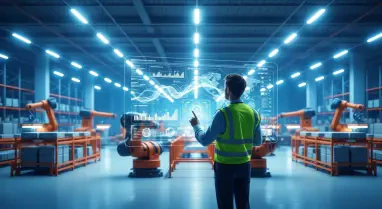
Modern enterprise leaders have collectively realized that the traditional blueprints for success are entirely obsolete in a market defined by lightning-fast shifts in consumer sentiment and global stability. In the wake of the sustained economic volatility that defined the mid-2020s, the corporate world has undergone a fundamental shift in its approach to survival. As the market moves through 2026, organizations have pivoted away from static growth models toward a philosophy of organizational agility—the capacity to pivot instantly in response to market fluctuations. This transformation explores how artificial intelligence has matured from an experimental tool into the bedrock of modern corporate strategy. By integrating AI across various business verticals, organizations are no longer merely reacting to change; they are building proactive architectures designed to thrive in turbulent conditions. The transition from simple automation to sophisticated agentic systems is now fortifying the global economy in unprecedented ways.
From Volatility to Vision: The Path to 2026
The global economic landscape of 2025 served as a brutal stress test for traditional management structures that relied on historical data and slow-moving hierarchies. Data indicates that over 60% of organizations faced significant disruptions to their strategic execution due to unforeseen shifts in the market during the previous year. Historically, businesses relied on rigid five-year plans and manual forecasting, methods that proved insufficient against the rapid-fire pace of modern geopolitical and economic change. This era of instability highlighted a critical lack of preparedness, forcing a widespread industry shift toward real-time responsiveness.
The transition observed today is rooted in the realization that flexibility is the primary currency of success in a digital-first economy. Organizations have moved toward dynamic operational strategies, learning from past failures to prioritize investments that allow for immediate adjustments. This shift is not merely about adopting new software but involves a complete reimagining of how capital and labor are deployed. The goal is to create a “frictionless” enterprise where information flows vertically and horizontally without the bottlenecks that once plagued large-scale corporate entities.
The Architectural Shift: AI-Driven Operations
The Rise of Agentic AI as Domain Custodians
The deployment of artificial intelligence has evolved far beyond the basic automation of repetitive tasks like payroll or expense reporting that dominated earlier years. In 2026, the trend has shifted toward agentic AI—systems that act as autonomous custodians of specific business domains rather than simple scripts. Unlike earlier iterations, these AI agents can interpret complex datasets, draw nuanced inferences, and manage intricate processes such as regulatory compliance with minimal human oversight. This shift allows human leadership to step away from the minutiae of daily operations and focus on high-level strategy and vision.
By empowering AI to manage specific territories independently, companies are achieving a level of operational fluidity that was previously considered impossible. These systems are capable of self-correction, identifying errors in data entry or anomalies in financial reports before they escalate into systemic issues. Furthermore, the integration of these agents into core business functions has reduced the time-to-market for new products, as the AI can handle the logistical and administrative heavy lifting. This allows the organization to remain lean and responsive, regardless of its physical size or market capitalization.
Closing the Utilization Gap: Data-Driven Financial Forecasting
One of the most profound developments in recent years is the move toward data-driven scenario planning as a replacement for static budgeting. While traditional forecasting models failed during the economic turbulence of 2025, modern AI-backed systems are closing the utilization gap by processing vast amounts of unstructured information to create multiple “what-if” scenarios. Despite this potential, many firms are still in the early stages of full integration, representing a massive opportunity for value creation across the financial sector.
For those who have embraced these tools, the focus is no longer on predicting a single future, but on building a financial architecture that remains functional regardless of which economic outcome eventually manifests. These systems analyze global interest rates, consumer spending patterns, and even social media sentiment to adjust forecasts on a weekly or even daily basis. This level of granularity ensures that capital is always deployed where it can generate the highest return, protecting the organization from the “sunk cost” fallacies that often lead to corporate decline.
Strengthening Global Supply Chains: The Predictive Logistics Model
Supply chain optimization has become a critical front for resilience in the current economic climate. Given the frequency of geopolitical instability and extreme weather events, organizations now rank supply chain disruption as a top-tier financial risk that can negate years of growth. AI-powered solutions are managing this complexity by providing real-time monitoring of global conditions, from port congestion to raw material shortages. Modern AI agents are now capable of identifying potential bottlenecks before they occur and suggesting alternate logistics routes instantly.
This capability has fundamentally changed the risk profile of global trade, allowing companies to control costs and maintain inventory flow even when shipping lanes or resource availability become unpredictable. Moreover, predictive logistics allow for a “just-in-time” approach that is actually reliable, reducing the need for massive, expensive warehouses. By synchronizing production with actual demand and logistical reality, firms are minimizing waste and maximizing the efficiency of their global footprints.
Future Horizons: The Evolution of Intelligent Investment
As the market moves through the latter half of the decade, the relationship between capital expenditure and technological innovation continues to deepen. A paradoxical trend is emerging where companies are increasing spending despite economic uncertainty, driven by the belief that the cost of stagnation far outweighs the risk of investment. Emerging trends from 2026 to 2028 suggest that AI will increasingly be used to solve the talent paradox, handling high-volume drudge work in accounting and finance so that human staff can focus on creative problem-solving and relationship management.
Furthermore, AI is expected to play a larger role in recruitment and workforce development, ensuring that the human element of the business is as agile as the technological infrastructure. This involves using predictive analytics to identify skills gaps within the organization and automatically curating training programs for employees. The focus is moving toward a hybrid workforce where the line between human intuition and machine precision becomes increasingly blurred, resulting in a more resilient and intellectually stimulated employee base.
Strategic Implementation: Navigating the New Standards
For organizations looking to capitalize on these shifts, the path forward requires a balanced approach to technology and talent. A primary takeaway from the current landscape is that AI should be viewed as an operational lubricant rather than a total replacement for human judgment. Best practices in 2026 include prioritizing the security of AI systems, as cybersecurity has transitioned into a fundamental business risk. Companies must use AI defensively to thwart increasingly sophisticated cyber threats, a strategy that has already begun to drive down the average cost of data breaches significantly.
Leaders are encouraged to integrate AI into their core culture, ensuring that every department—from HR to the supply chain—leverages these tools to enhance stability and responsiveness. This cultural shift requires transparency regarding how AI makes decisions and a commitment to ethical data usage. Organizations that treat AI as a transparent partner rather than a “black box” have seen higher levels of employee trust and more effective collaboration between departments. This holistic integration is what ultimately separates the market leaders from those who are merely digitizing old, inefficient processes.
Cultivating a Resilient Future
The synthesis of advanced intelligence and corporate strategy proved that artificial intelligence was the essential thread weaving together every aspect of modern organizational resilience. By refining financial forecasts, securing sensitive data, and optimizing global logistics, these systems provided the necessary insights to navigate a volatile world with confidence. The significance of this topic remained high because the pace of change only accelerated, demanding a permanent shift in how value was created and protected. To remain competitive, successful businesses moved beyond seeing AI as a peripheral asset and instead treated it as a foundational element of their corporate DNA.
Looking ahead, the next logical step involved the democratization of these tools across smaller enterprises to stabilize the broader economic ecosystem. Leaders prioritized the development of “sovereign” AI models that functioned within the specific regulatory and ethical frameworks of their respective regions. This approach mitigated the risks of technological homogenization and encouraged a diverse range of innovative solutions to global challenges. Ultimately, the enterprises that thrived were those that successfully married human ingenuity with the speed and precision of intelligent systems, ensuring a future that was both adaptable and robust.