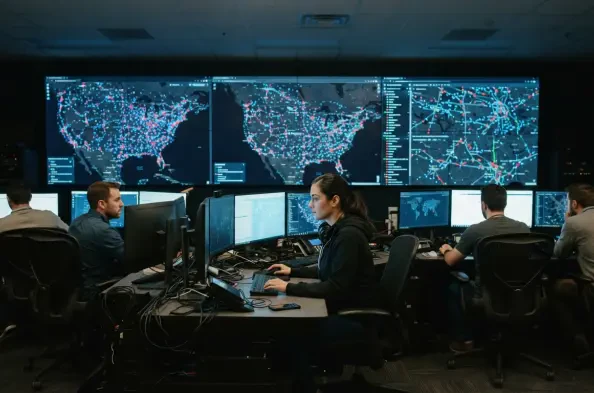
A series of outages in late 2026 involving the FAA, AWS, and major banks highlighted how deeply daily commerce depends on a handful of technology providers. When these digital foundations tremble, the ripple effects are felt instantly across global supply chains and essential public services. The November disruption of Microsoft 365 services, which lasted nearly twenty-four hours, impacted approximately 430 million users across seventy countries, demonstrating that even the most robust architectures are vulnerable to cascading failures. In the United Kingdom, the healthcare sector faced significant hurdles as hospital staff were forced to revert to paper records for cancer referrals and urgent care. These incidents serve as a stark reminder that cloud reliance is a double-edged sword, offering immense scalability while introducing a single point of failure that can paralyze operations. Organizations are now recognizing that uptime is no longer a guaranteed commodity but a metric that requires active, strategic management.
1. Mapping Infrastructure and Identifying Critical Dependencies
The first step in fortifying a business against a major cloud outage is conducting a comprehensive audit of the entire technological stack to identify every critical dependency. This process goes beyond merely listing primary software providers; it requires a granular look at the application programming interfaces (APIs) and authentication protocols, such as Single Sign-On (SSO) systems, that tie disparate services together. Many enterprises discovered during the recent disruptions that while their primary database remained functional, their employees could not access it because the identity management service was hosted on the failing cloud platform. By documenting these interconnections, IT leaders can pinpoint specific choke points where a single outage could trigger a total operational standstill. This inventory should also account for less obvious services, including VoIP phone systems and customer support portals, ensuring that no essential function is left unmonitored.
Beyond internal mapping, businesses must evaluate the stability of their third-party vendors who may themselves be reliant on the same hyperscalers. This concentration risk is often obscured, as a company using five different software-as-a-service products might find that all five are hosted in the same AWS or Azure region. When a localized hardware failure or network misconfiguration occurs, the entire stack collapses simultaneously despite the apparent diversity of vendors. Addressing this requires a proactive dialogue with service providers regarding their own redundancy plans and geographic distribution. Moreover, organizations are increasingly adopting specialized monitoring tools that provide real-time visibility into the health of external cloud environments. These platforms allow IT teams to receive early warnings of regional instability before the provider’s own status page is updated, granting a few precious minutes to initiate failover protocols or alert key stakeholders of an impending disruption.
2. Engineering Redundancy and Localized Fallback Procedures
True resilience in the modern cloud era necessitates a shift toward multi-cloud or hybrid-cloud architectures that distribute risk across diverse physical and logical infrastructures. While managing workloads across both AWS and Google Cloud Platform increases complexity and operational costs, it provides a vital safety net when one provider suffers a catastrophic failure. For mission-critical data, implementing real-time synchronization between disparate cloud regions ensures that a failover can occur with minimal data loss and near-zero downtime. Some financial institutions have even begun repatriating certain core functions to on-premises data centers or private clouds to maintain total control over their availability. This approach, often called cloud-exit readiness, ensures that the most sensitive operations are not entirely at the mercy of a third party’s technical debt or network vulnerabilities. The goal is to create a modular environment where components can be isolated without bringing down the ecosystem.
In the aftermath of the recent failures, leaders prioritized the development of manual fallback procedures and independent communication hubs. Organizations established secondary messaging channels on infrastructure entirely separate from their primary enterprise software to ensure coordination remained possible during total network blackouts. Retailers and healthcare facilities successfully implemented local caching mechanisms and paper-based protocols that allowed staff to continue essential functions without a live connection to the central database. These entities also re-evaluated their insurance portfolios, shifting focus toward business interruption coverage that specifically addressed non-malicious cloud outages. Legal teams began insisting on more transparent service-level agreements that moved beyond simple subscription credits to include more comprehensive liability protections. The most prepared firms conducted rigorous chaos engineering drills, which allowed them to identify and fix vulnerabilities before the next failure.