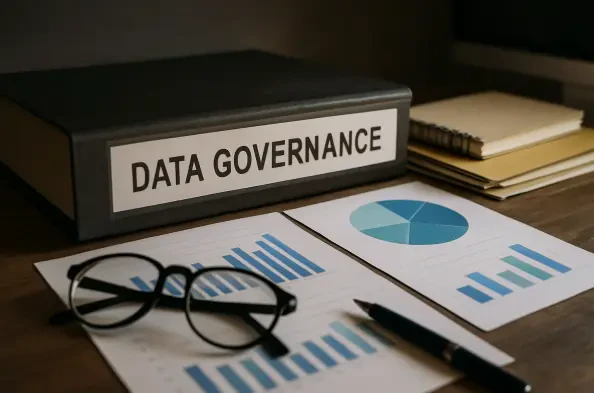
A Chief Information Officer who treats a crisis manual as a finished project is unknowingly handing a tactical advantage to every evolving threat in the digital landscape. The false sense of security provided by a thick, bound document often masks a terrifying reality: the moment a plan is finalized, its relevance begins to decay. In the high-stakes environment of modern enterprise management, the difference between a minor disruption and a corporate catastrophe often hinges on whether the response strategy is a rigid artifact or a living, adaptive framework.
The obsession with “completeness” in disaster planning has long been a double-edged sword for technology leaders. While having a documented procedure is necessary for compliance and basic coordination, the rigidity of these playbooks frequently fails to account for the speed of modern innovation. A strategy that does not breathe with the organization eventually suffocates the very teams it was designed to protect. As the digital footprint of the average company expands, the traditional “set it and forget it” mentality has become a liability that few organizations can afford to maintain.
The Fallacy of the “Perfect” Static Playbook
The most dangerous document in a CIO’s office isn’t a leaked password or a failed audit—it is a crisis management plan that hasn’t been touched in twelve months. In an era where technological infrastructure shifts weekly, relying on a static binder is equivalent to navigating a changing city with a decades-old map. While IT leaders often pride themselves on robust disaster recovery protocols, the reality is that traditional playbooks become obsolete the moment the “save” button is clicked. To survive the modern threat landscape, the enterprise strategy must transition from a fixed set of rules to a living, breathing organism that grows alongside the business.
When a crisis strikes, the inadequacy of a static plan becomes painfully obvious as responders find themselves following instructions for systems that no longer exist or roles that have since been reorganized. These documents often prioritize the documentation of past technologies rather than the anticipation of future failures. Consequently, the reliance on a finished product creates a psychological trap where leadership assumes readiness simply because a folder exists on a shared drive. True resilience, however, requires a constant state of revision and a recognition that the “perfect” plan is an unattainable mirage in a fluctuating environment.
Why Modern Infrastructure Renders Traditional Planning Obsolete
The shift toward cloud-native services, intricate API integrations, and distributed workforces has fundamentally altered the enterprise risk profile. Each new third-party dependency adds a potential point of failure that a year-old strategy simply cannot account for. Strategic obsolescence is no longer a slow decline; it is an immediate gap created by rapid digital transformation. When a niche service fails, the cascading effects across an interconnected enterprise can be catastrophic if the crisis strategy hasn’t accounted for the latest architectural migration. The challenge for today’s CIO is no longer just preventing an incident, but managing the inevitable complexity of a highly integrated environment.
Moreover, the decentralization of data and services means that the perimeter is no longer a physical wall but a shifting boundary of identities and access points. Traditional plans often focus on “securing the fort,” ignoring the fact that the modern enterprise lives across multiple clouds and external service providers. This fragmentation means that a single point of failure can trigger a domino effect that bypasses older, centralized recovery methods. Without a strategy that maps these invisible connections in real-time, the response team remains blind to the true scope of a disruption until the damage is irreversible.
Foundational Pillars of a Dynamic Crisis Framework
A functional strategy must move beyond a hierarchy of “wait-and-see.” By explicitly defining who has the power to pull the kill switch or authorize an emergency failover, organizations eliminate the paralyzing delays caused by seeking executive approval during a live incident. This decentralized decision-making authority ensures that technical experts can act with the speed required by modern threats. Furthermore, the shift to business-centric prioritization is vital; technical remediation is secondary to business continuity. An evolving strategy identifies which specific systems drive revenue and protect reputation, ensuring that resources are diverted to the most critical assets first.
Integrated automation and observability serve as the third pillar, reducing the “mean time to respond” through automated dashboards and alerts. These tools do not replace humans but allow them to focus on high-level strategy by localizing threats before they proliferate through the network. Finally, effective strategies must include pre-scripted multi-channel communication. This includes pre-vetted templates and communication pathways for legal, public relations, and internal stakeholders. Having these channels ready to deploy prevents the spread of misinformation and ensures a unified voice during the critical initial hours of any major disruption.
Expert Perspectives on the “Paper Plan” Trap
Industry veterans argue that the greatest mistake a CIO can make is confusing a documented plan with operational readiness. Experts like Conrad Bell and Roman Rylko emphasize that a plan that looks impressive in a boardroom often disintegrates in the heat of a real-world simulation. Research indicates that the most resilient organizations are those that move away from “incident avoidance” and toward “impact limitation.” This paradigm shift recognizes that some level of failure is inevitable. Therefore, the focus must be on how quickly the enterprise can contain the damage and restore essential services rather than trying to achieve a perfect, impenetrable defense.
Expert consensus suggests that the human factor—keeping instructions simple and ensuring non-technical stakeholders like HR and legal are integrated into the process—is often more decisive than the sophistication of the technical tools themselves. If the legal department is not aware of its role in an automated failover scenario, the resulting regulatory complications can be more damaging than the technical outage. The most sophisticated recovery tools are useless if the people expected to use them are overwhelmed by complex, jargon-heavy manuals. Success lies in the intersection of technical automation and clear, human-centered communication.
Practical Steps for Sustaining Strategic Relevancy
To maintain a competitive edge, CIOs should establish event-based review triggers. Beyond a standard quarterly review, immediate strategy reassessments should be mandated following major architectural changes, corporate acquisitions, or significant regulatory shifts. Implementing high-frequency stress testing is equally critical. Replacing annual drills with frequent, low-stakes simulations builds the “muscle memory” needed for real incidents. These simulations reveal “blind spots” in the strategy that only emerge under the pressure of execution, allowing the team to refine their approach in a safe environment.
Auditing third-party and API dependencies on a regular basis ensures that the strategy reflects the current state of the IT ecosystem. Every new integration should be mapped to the recovery timeline to see how it affects overall uptime goals. Finally, adopting a language of simplicity is paramount. Stripping away technical jargon from the crisis manual allows for precision in high-stress environments. When the pressure is on, teams require clear, minimal instructions that can be executed flawlessly, regardless of the underlying technology’s complexity.
The shift toward an evolving strategy required a fundamental change in how leadership perceived risk. It was discovered that the organizations which transitioned away from static playbooks achieved significantly faster recovery times and maintained higher levels of stakeholder trust. These enterprises prioritized the development of clear, actionable protocols that empowered mid-level managers to make critical decisions without waiting for board-level intervention. This move toward decentralized authority and simplified communication proved to be the most effective way to manage the inherent volatility of a modern digital environment.
Furthermore, the integration of non-technical departments into the core crisis framework addressed the regulatory and reputational risks that were previously overlooked. Leaders realized that a crisis was never just an IT problem, but a holistic business challenge that demanded a coordinated response. By adopting a culture of continuous rehearsal and event-based auditing, companies ensured their defensive strategies matured at the same pace as their technological infrastructure. This proactive stance turned crisis management from a defensive burden into a strategic asset that protected the long-term viability of the entire organization.