
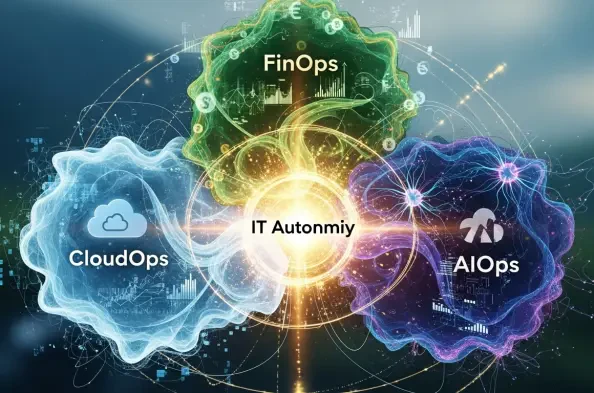
The digital enterprise has moved beyond the simple adoption of cloud services into an era where the sheer velocity of data and the volatility of generative AI consumption have made human-centric oversight physically impossible for global organizations. As businesses navigate increasingly distributed environments, the reliance on manual intervention or siloed monitoring tools has become a significant liability. The current market landscape demands a departure from reactive maintenance toward a model of operational autonomy. This shift is not merely a technical upgrade but a fundamental re-engineering of how technology serves business objectives. Organizations now face a reality where infrastructure must not only support applications but must also sense, heal, and optimize itself in real time. The integration of CloudOps, FinOps, and AIOps represents the most viable path forward for enterprises seeking to balance the aggressive pursuit of innovation with the necessity of financial and operational stability.
The purpose of this analysis is to explore how the convergence of these three critical disciplines creates a “decision fabric” that allows for autonomous execution. By examining current trends and projecting the trajectory of the market over the next several years, it becomes clear that the traditional boundaries between engineering, finance, and operations are dissolving. The importance of this transition cannot be overstated; companies that fail to adopt an integrated framework risk being overwhelmed by the complexity of hybrid-cloud architectures and the unpredictable costs associated with large-scale AI deployments. This analysis provides a comprehensive overview of the mechanisms driving autonomy, the challenges of implementing such a framework, and the strategic advantages that await those who successfully navigate this transition.
Achieving true autonomy requires a shift in perspective from managing components to managing outcomes. While the individual components of CloudOps, FinOps, and AIOps have existed for years, their historical isolation has prevented organizations from realizing their full potential. In the current market, the focus has shifted toward creating a unified ecosystem where telemetry data from every layer of the stack informs financial decisions, and financial constraints automatically trigger infrastructure adjustments. This interconnectedness ensures that every technical action is aligned with business value, providing a level of predictability and resilience that was previously unattainable. As the analysis delves into the specifics of these disciplines, it will highlight how their synergy creates a robust foundation for the future of enterprise IT.
Historical Shifts in Infrastructure Management: The Path to Current Autonomous Standards
The journey toward the current state of IT autonomy began with the initial migration to the cloud, a period marked by the promise of agility and reduced capital expenditure. Early cloud management, often categorized as basic CloudOps, focused primarily on provisioning and maintaining virtual environments. However, the shift from fixed-cost data centers to consumption-based billing models quickly introduced a new set of challenges. Organizations found that the ease of spinning up resources often led to “cloud sprawl,” where unused or underutilized assets resulted in massive financial waste. This inefficiency necessitated the birth of FinOps, a discipline dedicated to bringing financial accountability to the variable spend of the cloud. Initially, these two functions operated in parallel but rarely in unison, leading to friction between engineering teams focused on performance and finance teams focused on budgets.
As the volume of telemetry data grew exponentially with the rise of microservices and containerization, the limitations of human analysis became apparent. Traditional monitoring tools could alert operators to issues, but they could not provide the context or speed required to prevent downtime in highly dynamic environments. This gap led to the emergence of AIOps, which utilized machine learning to filter noise and identify patterns within vast datasets. Between 2024 and 2026, the market witnessed a rapid maturation of these technologies, as organizations realized that AIOps could do more than just troubleshoot; it could predict failures before they occurred. The historical silos that once defined IT management began to crumble as the need for cross-functional visibility became a prerequisite for survival in a competitive digital economy.
The current landscape is defined by the convergence of these historical trends into a single, cohesive strategy for autonomy. The lessons learned from early cloud adoption and the subsequent struggles with cost and complexity have informed the development of today’s integrated frameworks. Industry leaders now recognize that the unpredictable unit economics of AI—driven by token usage and high-performance compute requirements—require a level of precision that only an autonomous system can provide. By understanding this evolution, organizations can better appreciate the necessity of the current shift toward self-optimizing ecosystems. The move toward autonomy is not a trend but a logical conclusion to the challenges that have plagued enterprise IT for the better part of a decade.
The Strategic Pillars of a Self-Sustaining IT Environment
CloudOps: Engineering Resilience Through Policy-Driven Automation
CloudOps serves as the foundational runtime discipline for any autonomous framework, providing the necessary infrastructure to support modern digital services. In the current market, CloudOps has evolved from simple resource provisioning to a sophisticated practice of policy-aware automation. This involves the use of “autonomy-as-code,” where the operational guardrails of an organization are embedded directly into the infrastructure. When environmental conditions change—such as a sudden spike in user traffic or a shift in the cost-efficiency of a specific cloud region—the system responds by redistributing workloads or scaling resources without the need for manual approval. This level of responsiveness is critical for maintaining the high availability and performance standards expected by modern consumers.
The challenge in modern CloudOps lies in managing the extreme diversity of today’s digital estates, which often span multiple cloud providers and edge locations. To address this, organizations are adopting a shared operational data layer that provides a single source of truth for all management activities. By normalizing telemetry from disparate sources, CloudOps teams can ensure that automated actions are consistent across the entire environment. Moreover, the integration of security protocols into the CloudOps workflow ensures that autonomy does not come at the cost of vulnerability. When a system can automatically patch a vulnerability or isolate a compromised resource, it significantly reduces the window of risk, providing a layer of protection that manual processes simply cannot match.
Furthermore, CloudOps is increasingly focused on the optimization of specialized hardware, such as GPUs and NPUs, which are essential for running advanced AI workloads. Managing these high-cost, high-demand resources requires a level of precision that traditional management techniques lack. Autonomous CloudOps systems can monitor the utilization of these specialized chips and dynamically reallocate tasks to maximize efficiency. This not only improves performance but also ensures that the organization is getting the most value from its significant investments in AI infrastructure. As CloudOps continues to mature, its role as the engine of IT autonomy will only grow more central, providing the reliability and scalability required for the next generation of digital innovation.
FinOps: Mastering the New Economics of Volatile AI Consumption
The practice of FinOps has undergone a dramatic transformation as AI has become a central component of the enterprise technology stack. While traditional FinOps was largely concerned with managing virtual machines and storage buckets, the focus has now shifted toward the volatile economics of AI tokens and model inference. The cost of running an AI-enabled service can fluctuate wildly based on the complexity of user prompts, the specific model being used, and the volume of requests. Consequently, modern FinOps must provide a granular level of visibility that ties consumption directly to business outcomes. By establishing unit economics—such as the cost per successful customer interaction—organizations can make informed decisions about where to invest their resources and where to pull back.
Effective FinOps in the current market utilizes sophisticated optimization techniques, such as semantic caching and model tiering, to control costs without sacrificing quality. Semantic caching allows a system to store and reuse previous AI responses for similar queries, drastically reducing the number of tokens processed and lowering the overall spend. Model tiering involves routing simpler tasks to smaller, less expensive models while reserving premium models for complex reasoning. An autonomous FinOps framework applies these policies in real time, ensuring that every AI request is handled in the most cost-effective manner possible. This level of financial governance is essential for preventing “AI bill shock,” where unmanaged experimentation leads to astronomical costs that erode the ROI of digital initiatives.
Moreover, the integration of FinOps with CloudOps and AIOps allows for a “spend-aware” automation loop. For example, if a particular application exceeds its allocated budget, the system can automatically throttle non-essential services or move workloads to a lower-cost region. This proactive approach to financial management ensures that technology spend remains aligned with corporate objectives. By moving from a model of monthly reporting to real-time financial orchestration, FinOps enables organizations to treat their cloud and AI budgets as dynamic assets that can be optimized for maximum value. In a market where every dollar of technology spend is under scrutiny, the ability to demonstrate a clear link between cost and value is a powerful competitive advantage.
AIOps: Elevating Operational Speed Through Predictive Intelligence
AIOps provides the critical intelligence required to close the loop on IT autonomy, acting as the nervous system of the digital enterprise. By correlating vast amounts of data from infrastructure, applications, and security systems, AIOps platforms can identify the underlying causes of complex issues that would take human operators hours or even days to diagnose. This capability is particularly important in the context of microservices, where a single failure can trigger a cascade of alerts across multiple systems. AIOps filters this noise, presenting operators with a clear view of the problem and, in many cases, initiating an automated fix. This reduction in “mean time to resolution” (MTTR) is a key metric for operational excellence, directly impacting the user experience and the bottom line.
The current state of AIOps has moved beyond simple correlation toward “causal AI,” which understands the relationships between different components of the stack. This allows for a more sophisticated level of predictive maintenance, where the system can identify the early signs of a pending failure and take corrective action before any impact is felt by the end-user. For instance, an AIOps platform might detect a subtle degradation in database performance that suggests a disk failure is imminent. The system can then automatically trigger a migration to a healthy node and initiate a hardware replacement ticket. This shift from reactive troubleshooting to predictive orchestration is the hallmark of a truly autonomous environment, allowing highly skilled staff to focus on strategic innovation rather than routine firefighting.
In addition to improving reliability, AIOps plays a vital role in optimizing the performance of AI services themselves. By monitoring the quality and latency of model responses, AIOps can detect “model drift” or performance degradation in real time. If a model begins to provide inaccurate or slow responses, the system can automatically revert to a previous version or route traffic to a different provider. This ensures that the AI services relied upon by customers and employees remain consistently high-quality. As enterprises continue to embed AI into their core operations, the ability of AIOps to provide this layer of intelligent oversight will be indispensable for maintaining trust and performance in an increasingly automated world.
Market Trends and Future Projections: The Convergence of Compliance and Innovation
The trajectory of the IT market is being shaped by a significant convergence of technological innovation and regulatory necessity. As autonomous systems become more prevalent, the need for transparency and accountability has reached a critical point. Regulatory frameworks, such as the EU AI Act and global data privacy standards, are forcing organizations to ensure that their automated decisions are explainable and compliant. This trend is driving the development of “governance-aware” autonomy, where every automated action is logged and audited against a set of predefined legal and ethical standards. In the coming years, the ability to prove compliance within an autonomous loop will be as important as the efficiency of the loop itself.
Another major trend is the rise of specialized FinOps and AIOps platforms designed specifically for the orchestration of heterogeneous AI models. As the market moves away from a “one-size-fits-all” approach to AI, organizations are increasingly using a mix of proprietary and open-source models tailored to specific tasks. This creates a complex management environment that requires a new breed of tools capable of monitoring performance and cost across a fragmented landscape. We expect to see a surge in the adoption of AI gateways and model brokers that act as a centralized control point for all AI interactions. These platforms will provide the necessary visibility and control to manage model-specific risks, such as data leakage or prompt injection attacks, further reinforcing the need for an integrated framework.
Looking ahead, the role of the “human in the loop” will continue to evolve toward a model of strategic oversight. While low-risk operational tasks will be fully automated, human operators will focus on defining the policies and guardrails that govern the system’s behavior. This shift will require a massive upskilling effort across the enterprise, as traditional IT roles are replaced by “policy engineers” and “value orchestrators.” The organizations that succeed in this transition will be those that view autonomy not as a replacement for human talent, but as a force multiplier that allows their teams to operate at a higher level of impact. The future of IT management is one where technology and human intelligence are seamlessly integrated to drive unprecedented levels of efficiency and innovation.
Practical Deployment Strategies: Moving Toward Enterprise-Wide Autonomy
The transition to an autonomous operating model is a multi-year journey that requires a disciplined and phased approach. The first and perhaps most critical step is the establishment of comprehensive visibility. Organizations cannot automate what they cannot see, so the initial focus must be on consolidating cloud billing, system telemetry, and AI usage data into a single, unified view. This “observability foundation” allows teams to identify the low-hanging fruit—such as unused cloud resources or inefficient AI prompts—where automation can provide immediate value. By demonstrating early successes, IT leaders can build the necessary momentum and executive support for more complex autonomy initiatives.
Once visibility is established, the next phase involves the design of robust governance frameworks. This requires a collaborative effort between IT, finance, security, and legal teams to define the boundaries within which the autonomous system will operate. For example, an organization might decide that any automated infrastructure change costing more than a certain threshold requires human approval, or that certain types of data can never be sent to a public AI model. These guardrails ensure that the system remains under control and aligned with the organization’s risk tolerance. After the policies are defined, they must be translated into machine-readable code that can be enforced by the CloudOps and FinOps platforms.
The final phase of implementation is the scaling of autonomy across the entire digital estate. This involves the deployment of AIOps-driven orchestration that can handle more complex scenarios, such as cross-cloud failover or dynamic AI model selection. Throughout this process, organizations must prioritize continuous learning and optimization. The autonomous system should be treated as a living entity that is constantly refined based on its own performance data and changing business requirements. Regular reviews of the system’s decisions and outcomes are essential for maintaining trust and ensuring that the framework continues to deliver on its promise of operational excellence. By following this structured path, enterprises can navigate the complexities of modern IT and emerge as leaders in the autonomous digital economy.
The Final Transformation: Realizing the Long-Term Benefits of Integrated IT Disciplines
The integration of CloudOps, FinOps, and AIOps emerged as the definitive strategy for managing the complexities of a highly distributed and AI-driven technological landscape. By breaking down the traditional barriers between engineering, finance, and operations, organizations established a unified “decision fabric” that enabled a shift from reactive troubleshooting to proactive, autonomous orchestration. The transition was not merely about the adoption of new tools but represented a fundamental shift in the enterprise operating model toward a state of self-sensing and self-optimizing resilience. The evidence collected throughout this transformation period demonstrated that organizations which embraced this holistic approach achieved significantly higher levels of predictability in their cloud spend and greater stability in their critical digital services.
A critical component of this success was the elevation of financial governance into the real-time operational loop. The volatile nature of AI token consumption necessitated a level of precision in cost management that was previously unimaginable. By tying technical execution directly to unit economics and business outcomes, enterprises ensured that their innovation efforts remained sustainable and profitable. This alignment of technology and value became a cornerstone of modern corporate strategy, allowing CIOs and CTOs to provide a transparent account of how every dollar invested in the cloud contributed to the organization’s growth. The maturity of these systems allowed for the automation of high-frequency, low-risk decisions, freeing up human talent to focus on more complex, strategic initiatives.
Ultimately, the move toward IT autonomy proved to be a vital response to the dual pressures of increasing technological complexity and tightening regulatory requirements. The development of explainable and compliant autonomous loops allowed businesses to navigate the intricate landscape of global data laws without sacrificing the speed and agility that the cloud provides. The lessons learned during this period of transition highlighted the importance of a phased implementation strategy, centered on visibility, policy-driven governance, and continuous optimization. Organizations that successfully navigated this path did not just improve their IT operations; they created a resilient and adaptive foundation that allowed them to thrive in an increasingly unpredictable digital economy. The legacy of this transformation was a new standard of operational excellence that will continue to define the enterprise for years to come.





