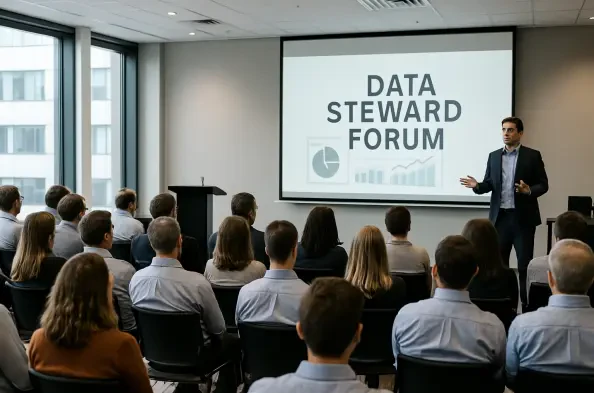
Modern enterprises frequently find themselves drowning in a sea of disconnected data points that lack the necessary context to drive meaningful business outcomes or strategic shifts. This structural fragmentation often leads to expensive redundancies and missed opportunities as different departments inadvertently work at cross-purposes using inconsistent information. A data steward forum serves as the essential bridge between these silos, acting as a collaborative powerhouse where organizational knowledge is synthesized into actionable wisdom. When these forums are established with a clear vision and a robust framework, they transcend being simple meeting groups to become the primary catalysts for a genuine data-driven culture. However, the path to long-term success is paved with more than just good intentions; it requires a deliberate architectural approach that prioritizes engagement and clear value from the very first session. By focusing on the underlying mechanics of how people interact with information, organizations can transform their raw data assets into a competitive advantage that scales alongside the business.
1. Constructing the Value Proposition
Launching a successful data steward forum requires an immediate and undeniable demonstration of its worth to the broader organization through concrete evidence. One must build a compelling argument by identifying specific operational hurdles, such as inconsistent customer records or delayed financial reporting, and showing how collective oversight solves these issues. Strategic advantages become apparent when shared insights allow for more accurate revenue forecasting and a higher return on investment for new data products. By identifying complex data dependencies early in the development lifecycle, the forum prevents costly rework and ensures that strategic initiatives are built on a foundation of high-quality, verified information. This proactive approach transforms data from a passive resource into an active driver of corporate growth, making the forum an indispensable part of the executive toolkit for navigating the competitive landscape of 2026.
Operational gains provide another layer of justification by directly addressing the hidden costs of poor data hygiene and fragmented internal processes. Standardizing data attributes across disparate systems significantly reduces the manual effort required for data reconciliation, allowing teams to focus on high-value analysis instead of basic cleanup. When collective expertise is applied to quality issues, the organization sees a marked improvement in the reliability of its reports and a simplification of data sharing protocols between departments. Furthermore, risk management is greatly enhanced through a coordinated approach to compliance and early threat detection. By ensuring that data policies are applied consistently across the entire enterprise, the forum helps the organization stay ahead of evolving regulatory requirements and potential security vulnerabilities. This comprehensive coverage of strategic, operational, and risk-related benefits ensures that the forum is viewed as a value-generating entity rather than a bureaucratic hurdle.
2. Obtaining Leadership Buy-In
Securing the long-term viability of a data steward forum necessitates strong alignment with senior leadership and a diverse pool of dedicated participants. It is crucial to identify executive sponsors who span the emotional spectrum of data adoption, ranging from enthusiastic champions to cautious skeptics. For the data enthusiasts, the pitch should focus on the possibilities for rapid innovation and the creation of cutting-edge data products that can redefine the market. In contrast, pragmatists will respond more favorably to a focus on specific business outcomes and efficiency gains that impact the bottom line. Skeptics, perhaps the most important group to convert, should be presented with small, tangible wins that demonstrate immediate impact with minimal risk. Tailoring the communication style to match these individual perspectives ensures that the forum has the political cover and financial resources needed to survive initial growing pains.
Beyond executive sponsorship, the selection of the stewards themselves is a critical factor that determines the forum’s daily effectiveness and cultural reach. Effective stewards must be recruited from every corner of the organization, including finance, human resources, marketing, and information technology, to ensure a holistic view of the data lifecycle. These individuals should possess a deep understanding of their specific business processes combined with a natural curiosity about how data can be leveraged to improve those processes. They must also have enough internal influence to drive cross-functional projects and advocate for data best practices within their respective teams. Once the forum is active, maintaining ongoing support requires a structured feedback loop, such as a data leadership council. Regular updates that link forum activities to specific business outcomes keep the leadership engaged and ensure that the group remains aligned with the organization’s evolving strategic priorities.
3. Planning with Purpose
Transitioning from a formal charter to a high-functioning community requires a design philosophy that prioritizes human interaction and psychological safety. As a facilitator, the goal is to create an environment where stewards feel empowered to share their most difficult hurdles and experimental ideas without the fear of being judged for mistakes. This sense of safety is the bedrock of innovation, as it allows for the honest discussion of data quality gaps and process failures that might otherwise remain hidden. When participants know their contributions are valued and their challenges are understood, they are much more likely to engage deeply with the forum’s goals. Celebrating these candid conversations as opportunities for collective learning helps to shift the organizational mindset from one of blame to one of continuous improvement and collaborative problem-solving.
Intentional design also involves the co-creation of community guidelines and the shifting of meeting dynamics from a top-down approach to a steward-led model. Rather than imposing a rigid set of rules, the facilitator should work with the members to develop standards for communication, conflict resolution, and decision-making. This collaborative process builds a sense of ownership among the stewards, making them more likely to uphold the guidelines and hold each other accountable. Furthermore, the meetings themselves should serve as a platform for stewards to showcase their expertise and share recent successes or failures. Encouraging members to lead discussions or present on specific domain challenges transforms the facilitator’s role into that of an enabler. This transition ensures that the forum remains relevant to the actual work being done on the ground and prevents it from becoming a disconnected academic exercise or a repetitive reporting meeting.
4. Encouraging Active Participation and Teamwork
A successful launch is characterized by a focus on immediate, actionable goals that provide the momentum needed to sustain long-term engagement. Organizations should target “low-hanging fruit” during the first 30 to 60 days, focusing on urgent data issues that can be resolved quickly to provide a sense of accomplishment. Utilizing modern communication tools, such as a dedicated Slack channel or a collaborative workspace, allows for real-time problem-solving and reduces the friction of cross-departmental interaction. These channels should be used not just for formal announcements, but as a space for informal knowledge sharing and quick questions that don’t require a full meeting. By establishing these habits early, the forum becomes an integrated part of the stewards’ daily workflow rather than an additional burden on their already busy schedules.
As the forum moves past its initial phase, the focus should shift toward promoting joint initiatives that address systemic data challenges across the enterprise. Stewards should be encouraged to work together on developing governance policies, refining data hygiene practices, and identifying new opportunities for data reuse. This collaborative approach helps to surface cross-functional dependencies that might otherwise cause delays in major projects or lead to inconsistent reporting. For example, a joint initiative between marketing and finance could lead to a unified definition of a “customer,” eliminating hours of manual data reconciliation every month. By fostering an environment where joint successes are the standard, the forum effectively breaks down the walls between departments and creates a more cohesive, efficient data ecosystem. This spirit of teamwork is what eventually turns a group of individual contributors into a powerful force for organizational change.
5. Cultivating Growth and Expanding Influence
To maintain the vitality of the forum over time, there must be a consistent effort to measure impact, celebrate milestones, and expand the group’s reach. Monitoring key performance indicators that reflect true business value—such as the speed of policy adoption, the frequency of cross-departmental collaborations, and the measurable reduction in data-related errors—provides the data needed to justify continued investment. These metrics should be shared widely with both the stewards and the executive sponsors to reinforce the forum’s importance. Additionally, creating a formal recognition program for top performers helps to incentivize high-quality contributions and signals to the rest of the organization that data stewardship is a valued career path. Celebrating these wins publicly ensures that the forum’s influence continues to grow as it attracts more talent and resources.
As the data steward forum matures, it must evolve into a strategic engine for scaling advanced data practices throughout the entire organization. This expansion can be achieved by offering specialized training on emerging governance trends, such as automated metadata management or decentralized data mesh architectures. Providing leadership development opportunities for forum members not only improves the group’s effectiveness but also prepares the next generation of data-savvy executives. Furthermore, the forum should begin to document and share success stories that illustrate how specific data initiatives led to significant business breakthroughs. By acting as a central repository for best practices and a training ground for data leaders, the forum ensures that its impact is felt far beyond its immediate membership. This commitment to continuous growth and scaling allows the organization to remain agile and responsive to the rapidly shifting technological landscape.
Turning the Forum into a Force Multiplier
Establishing a sustainable data culture was a process that demanded significant patience and a clear strategic vision during the previous year. The transition from a simple meeting group to a powerful organizational force multiplier occurred when the focus shifted from bureaucratic compliance to empowered problem-solving. Leaders discovered that success was not found in achieving a perfect state on the first day, but in fostering an environment where stewards felt truly capable of building collective solutions. As the forum matured throughout 2026, its influence expanded from making localized data decisions to fundamentally altering how the entire enterprise perceived and utilized its information assets. This cultural shift proved to be the ultimate return on investment, providing the organizational agility required to thrive in an increasingly complex environment. Moving forward, the most effective next step involved integrating these stewardship practices into the core performance metrics of every department. By making data responsibility a standard part of professional development, organizations ensured that the forum’s impact remained permanent and scalable.