The Dawn of the AI-Driven Battlefield
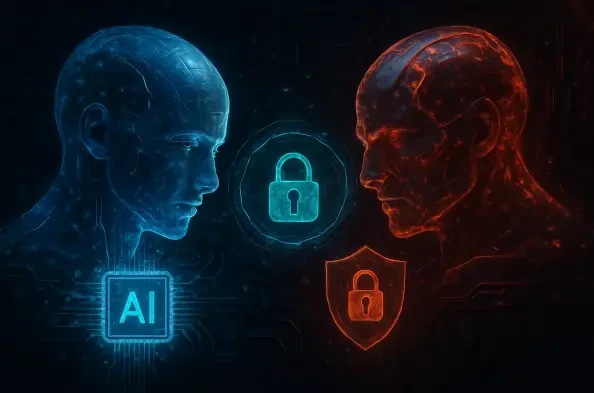
The year 2025 marks a pivotal moment in cybersecurity, a period where Artificial Intelligence has graduated from a theoretical tool to a central, unavoidable force shaping the digital battlefield. The long-standing cat-and-mouse game between attackers and defenders has been supercharged, forcing a fundamental evolution in how organizations view security—not as a loss center, but as a critical strategic capability. This article explores the dual nature of AI in this new era, examining how it simultaneously serves as the most potent weapon for cybercriminals and the most sophisticated shield for security professionals. This technological arms race is unfolding against a backdrop of persistent, foundational security weaknesses, ultimately determining whether AI will be cybersecurity’s savior or its greatest challenge.
The Road to 2025 from Reactive Defense to Proactive Warfare
The journey to the current AI-infused landscape was gradual, then sudden. For decades, cybersecurity was largely a reactive discipline, focused on building digital walls with firewalls and deploying antivirus software to catch known threats. The rise of cloud computing and big data in the 2010s created unfathomably large attack surfaces and data volumes, rendering manual security analysis insufficient. This shift paved the way for machine learning and, eventually, sophisticated AI to enter the scene. Understanding this history is crucial because it reveals a constant escalation; AI is not just another tool but the next logical—and most disruptive—phase in this ongoing conflict, amplifying both new opportunities for defense and old, unpatched vulnerabilities.
The Two Faces of AI in Modern Cyber Conflict
AI as the Ultimate Offensive Weapon
For threat actors, AI is a force multiplier that automates, scales, and customizes cyberattacks with terrifying efficiency. Attackers are leveraging AI to craft hyper-realistic phishing emails, develop polymorphic malware that evades signature-based detection, and automate reconnaissance to find vulnerabilities faster than any human team could. This has not only empowered sophisticated nation-state actors but has also lowered the barrier to entry for less-skilled criminals. Traditional threats like ransomware remain prevalent, but they are now deployed with AI-driven precision. This offensive capability is underscored by a geopolitical shift, with U.S. intelligence increasingly viewing China as the primary source of state-sponsored cyber threats.
AI as the Sentinel on the Digital Wall
Conversely, for defenders, AI represents the best hope for keeping pace. AI-powered security platforms enhance threat awareness by analyzing massive datasets in real-time to identify anomalies and subtle patterns indicative of a sophisticated breach. These systems can predict potential attack vectors, automate incident response, and enable security teams to shift from a reactive to a proactive posture. However, this defensive power comes at a price. Many Chief Information Security Officers grapple with the high costs of implementing advanced AI security systems and are racing to establish clear internal policies to mitigate the risks posed by employees using generative AI, which can inadvertently leak sensitive corporate data.
The Unsettling Paradox Advanced Tech vs Foundational Flaws
The most striking feature of the 2025 cybersecurity landscape is the paradox between the adoption of advanced AI and the neglect of basic security hygiene. The 2025 Cisco Cybersecurity Readiness Index, which surveyed 8,000 global business leaders, reveals this stark reality. Despite the focus on AI threats, the most persistent vulnerabilities lie in securing networks (31%) and managing user identity (29%). Weaknesses in cloud environments and device management follow closely behind. This data confirms that while AI elevates the nature of the threat, many organizations remain vulnerable to far simpler attacks because they have failed to master the fundamentals. AI is not a silver bullet that can compensate for unlocked doors and unpatched systems.
The Geopolitical and Regulatory Horizon
The future of cybersecurity is being shaped not only by technology but also by shifting geopolitical currents and emerging regulations. The pivot in U.S. strategic focus toward China as the primary nation-state adversary influences threat intelligence and investment priorities. Domestically, transient governmental changes, such as the brief emergence of a “Department of Government Efficiency,” have raised lasting concerns about the consolidation and security of sensitive federal data, creating new potential targets. Looking ahead, governments worldwide will inevitably attempt to regulate AI’s role in both cyber offense and defense, creating a complex and fragmented compliance landscape that businesses must navigate.
Navigating the AI Infused Threatscape a Strategic Blueprint
The key takeaway for any leader is that AI is a double-edged sword, and its effectiveness—for good or ill—is magnified by an organization’s underlying security posture. To navigate this new reality, businesses must adopt a multi-pronged strategy. First, they must double down on foundational security; mastering network visibility, identity and access management, and consistent patching is non-negotiable. Second, investment in defensive AI should be strategic, aimed at augmenting human analysts, not replacing them. Finally, clear and robust governance policies for all AI tools, especially generative AI, are essential to mitigate insider threats and prevent data leakage.
The Final Verdict Coexistence Not Conquest
In 2025, AI is definitively neither a pure ally nor a pure adversary; it is a permanent and powerful feature of the cybersecurity ecosystem. The conflict is not between humans and machines, but between human ingenuity on both sides, now amplified by artificial intelligence. This paradigm shift has cemented cybersecurity’s role as a strategic business enabler, where resilience is a competitive advantage. The ultimate question is no longer if AI is part of cybersecurity, but how effectively an organization can manage its dual-use nature. The winners in this new era will not be those with the most advanced AI, but those who master the synergy between foundational security, human expertise, and intelligent technology.