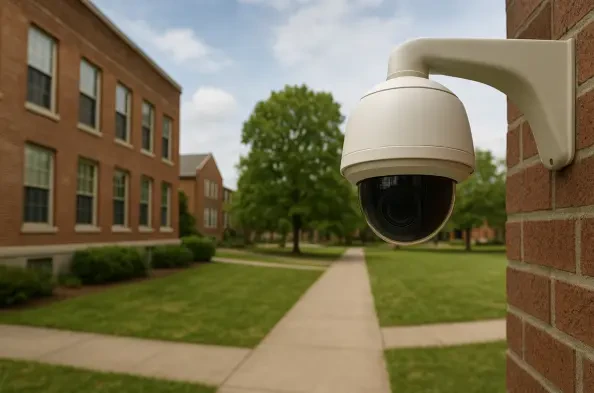
University officials have acknowledged that Texas Senate Bill 4 prevents them from guaranteeing that license plate data will not be shared with federal immigration authorities. Since 2022, the University of Texas at Dallas has utilized the Flock Safety automatic license plate recognition system to monitor vehicle traffic entering the campus perimeters. This infrastructure consists of thirteen high-resolution cameras strategically placed at various entrances to capture detailed information about every passing vehicle. These devices are not merely recording tools; they are sophisticated scanners that log the make, model, color, and license plate details for 13,000 to 20,000 vehicles on a typical weekday. While the police department emphasizes the system’s role in crime prevention and rapid response, many students feel a growing sense of unease regarding their digital privacy. The shift toward permanent, high-tech surveillance represents a fundamental change in the university environment, where driving to class now leaves a permanent digital trail that could be accessed by government entities.
Legislative Realities: The Intersection of Safety and Law
The debate over the Flock Safety system is deeply rooted in the legal complexities introduced by Texas Senate Bill 4, a piece of legislation that mandates local law enforcement agencies to cooperate with federal immigration officials. For a university that prides itself on being a diverse and inclusive sanctuary for learning, the inability of the police department to offer an absolute guarantee of privacy to its undocumented population is a significant point of contention. Students have expressed fear that the automated logs could be used to track the movements of specific individuals, effectively turning the campus into a monitored zone for federal agencies. Although the university administration has stated that no such requests have been fulfilled to date, the legal obligation to comply with state law creates a structural vulnerability that cannot be ignored. This tension highlights a broader national trend where state mandates often override the specific privacy policies of individual educational institutions.
In response to these mounting concerns, campus law enforcement has emphasized a stance of extreme caution regarding external requests for surveillance data. Any inquiry from a federal agency regarding the license plate logs is reportedly subjected to a rigorous legal review process involving university counsel and the broader state university system’s legal team. The department aims to ensure that any data release is strictly necessitated by law and accompanied by the appropriate judicial warrants. However, the admission that a refusal is not always legally possible remains a chilling prospect for the student body. The complexity of these legal maneuvers often feels disconnected from the daily reality of students who simply want to attend their classes without the shadow of potential deportation hanging over their digital records. This ongoing struggle between state-mandated cooperation and local privacy protection continues to define the ethical boundaries of campus security in the modern era.
Network Expansion: The Risks of Unchecked Data Sharing
Beyond the local campus, the surveillance data collected at the university flows into a massive, interconnected network shared with nearly 600 external law enforcement agencies. This collaborative framework allows campus police to access vehicle data from surrounding jurisdictions, theoretically enhancing their ability to track suspects fleeing toward or away from the university. However, this reciprocity means that the information collected on university grounds is also visible to a wide array of municipal, county, and state departments. The sheer scale of this information exchange has raised red flags regarding the secondary use of data, where information collected for campus safety might be utilized by third parties for unrelated investigative purposes. As the network grows, the individual’s right to move anonymously through public and semi-public spaces is gradually eroded by the ubiquity of these tracking systems and the seamless integration of disparate law enforcement databases.
University administrators have candidly acknowledged a significant gap in the current data-sharing arrangement, noting that the university lacks the authority to dictate how external agencies manage the data they receive. Once the campus-collected information enters the shared system, it becomes subject to the internal policies and ethical standards of the receiving agency, which may be far less stringent than those of the university. This realization has led to calls for the establishment of minimum data-handling standards that every participating agency must meet to maintain access to the university’s feeds. Currently, the system functions as a digital hub without a robust mechanism to audit or restrict non-compliant partners, creating a scenario where student data is essentially exported into a vacuum of accountability. Closing this gap is seen as a critical step in restoring student trust and ensuring that the university does not inadvertently contribute to broader systemic privacy violations outside its own gates.
Operational Integrity: Addressing the Potential for Internal Abuse
Internal accountability remains a cornerstone of the university’s defense of the Flock system, with the police department implementing strict protocols to prevent unauthorized searches. Every time an officer accesses the database, they are required to enter a valid case number and provide a specific, documented reason for the query. These logs are subjected to monthly internal audits to ensure that the technology is being used solely for official police business rather than personal curiosity. To date, the department reports that these audits have revealed zero instances of misuse, suggesting that the current administrative safeguards are functioning as intended. By maintaining a clear paper trail for every interaction with the system, the university hopes to demonstrate its commitment to ethical policing. However, for many privacy advocates, the existence of such a powerful tool inherently presents a risk that no amount of internal auditing can completely eliminate, especially as technology evolves.
The potential for human error or intentional malice remains a persistent concern despite the presence of rigorous background checks for all law enforcement personnel. Historical precedents in other jurisdictions have shown that license plate recognition technology has occasionally been abused by officers for personal vendettas, such as tracking former romantic partners or acquaintances. While university officials argue that the threat of criminal charges and immediate termination serves as a powerful deterrent against such behavior, students remain skeptical of a system that relies heavily on self-policing. The psychological impact of being monitored can also lead to a chilling effect, where students alter their behavior or avoid certain areas of campus out of a vague fear of being watched. This dynamic creates a fundamental tension between the police department’s need for efficient investigative tools and the student body’s desire for a learning environment free from the overbearing presence of pervasive digital surveillance.
Pragmatic Benefits: Proactive Security and Emergency Response
Proponents of the Flock system frequently cite its efficacy in managing life-threatening situations that traditional patrolling might miss. A prominent example shared by the police involved a student experiencing a severe mental health crisis who had expressed intentions of self-harm at a campus parking structure. By adding the student’s license plate to a hotlist, the system triggered an immediate alert the moment the vehicle crossed onto university property, allowing officers to intervene and provide the necessary medical support within minutes. In this context, the cameras act as a proactive tool for community care rather than a punitive instrument of the state. These success stories are used to illustrate the tangible benefits of high-speed data processing, which can provide a level of situational awareness that is impossible to achieve through human observation alone. For many in the administration, these potential life-saving outcomes justify the presence of the cameras.
In addition to crisis intervention, the automated system has played a vital role in identifying and apprehending individuals involved in serious criminal activities. Law enforcement officials have noted that the cameras were instrumental in tracking a suspect in a sexual assault case and in locating individuals with active felony warrants who had entered the campus. By scanning thousands of plates daily, the system can instantly cross-reference vehicle data against national crime databases, flagging stolen cars or vehicles associated with AMBER alerts. This rapid identification process allows for a more targeted and efficient use of police resources, ensuring that officers are deployed exactly where they are needed most. The argument for maintaining the system rests on the premise that the technological advantage provided by license plate recognition significantly enhances the overall safety and security of the university community, making it a difficult tool to abandon in the face of ongoing public safety challenges.
Future Pathways: Establishing Oversight and Ethical Standards
The social landscape of the university has been further complicated by the emergence of unofficial groups like the Flock Guardians, who claim to protect the surveillance hardware from potential vandalism. This movement toward student-led vigilantism has been met with significant concern by both the administration and the official student government, as it introduces new risks of physical confrontation and legal liability. Furthermore, the representative student body has struggled to reach a formal consensus on the surveillance issue due to procedural hurdles and a lack of quorum during key meetings. This legislative stalemate has left students without a unified voice to negotiate privacy protections or demand greater transparency from the university leadership. The absence of a clear, student-backed resolution means that the implementation and expansion of surveillance technology continue largely unchecked by the very population it monitors, highlighting a critical need for more active engagement.
The university administration recognized that the path forward required more than just technical reliability; it demanded a renewed social contract with the student body. To address these concerns, officials began exploring the implementation of a transparency dashboard that provided real-time metrics on how often the license plate data was accessed and for what specific legal purposes. Furthermore, the establishment of an independent oversight committee, comprised of students, faculty, and privacy experts, was proposed to review the monthly audits conducted by the police department. This move aimed to shift the dynamic from a trust us model to a framework of verifiable accountability. By prioritizing the creation of enforceable data-sharing standards, the university sought to lead the way in ethical campus surveillance. These measures were designed to ensure that the safety benefits of the technology did not come at the permanent expense of the individual’s right to privacy and anonymity.