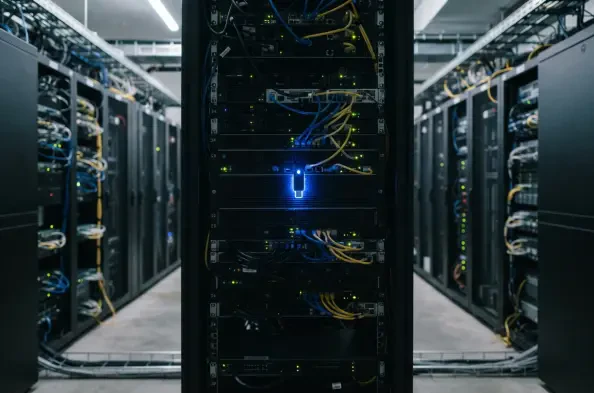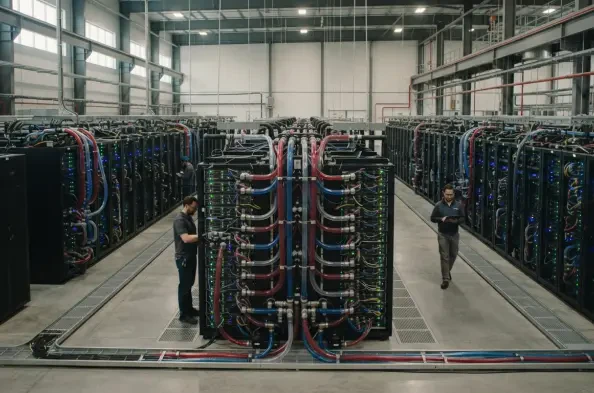
A software engineer at a major financial firm decides to bypass a six-month procurement cycle by downloading Ollama to a local workstation, unwittingly opening a digital backdoor into the core corporate network. This specific scenario is becoming increasingly common as the friction between rapid technological innovation and traditional cybersecurity protocols reaches a critical breaking point within modern enterprises. While the allure of running large language models locally is undeniable for privacy and speed, the “Shadow AI” phenomenon presents a unique challenge that IT departments are currently struggling to contain. Unlike previous waves of unauthorized software, these local AI environments function as active web servers, often operating outside the visibility of standard security scans. This lack of oversight creates a sprawling, unmanaged attack surface where convenience frequently takes precedence over fundamental security hygiene, leading to a precarious situation for sensitive data. As we navigate the current landscape of 2026, the proliferation of open-weight models has made it easier than ever for individual employees to deploy high-performance intelligence tools directly on their hardware without any formal vetting or administrative approval.
Strategic Benefits of Local AI
Why Businesses Choose Local Deployments
The shift toward local AI is primarily driven by three critical factors that organizations can no longer ignore: data sovereignty, cost predictability, and the need for absolute control over proprietary information. Organizations operating in highly regulated sectors, such as international finance or healthcare, utilize local models to ensure that sensitive proprietary data never leaves their internal infrastructure for processing in a third-party cloud. This architectural choice mitigates the inherent risks associated with data leaks caused by cloud provider breaches or accidental exposure via shared training sets. By maintaining local weight files and local inference engines, these firms establish a rigorous boundary around their intellectual property. Furthermore, the reliance on local hosting eliminates the volatile “pay-per-token” costs associated with external cloud services, providing a fixed-cost solution for massive engineering teams. This financial predictability is essential for long-term budgeting in 2026, where AI usage has become a standard utility rather than a luxury experiment for specialized teams.
Managing the economic impact of artificial intelligence has led many leadership teams to reconsider their reliance on external vendors who utilize aggressive usage-based pricing models. The industry often points to the historical cautionary tale of Uber, where a large group of engineers reportedly exhausted a massive annual AI budget in a matter of months, demonstrating how quickly unmanaged cloud access can spiral out of control. Local AI solutions like Ollama offer a sustainable alternative by leveraging existing high-performance hardware or dedicated local servers to handle the bulk of inference tasks. Beyond the immediate financial savings, local deployments provide a level of technical independence that cloud services cannot match. Developers can experiment with various open-weight models, fine-tuning them for specific internal tasks without worrying about latency issues or API downtime. This environment fosters a “fail-fast” culture where teams can prototype complex applications in a low-risk setting. Consequently, local AI serves as a critical bridge between theoretical research and functional, cost-effective business applications within the modern enterprise structure.
Rapid Prototyping and Technical Independence
The implementation of local AI environments allows for a level of agility that was previously impossible when development teams were tethered to the availability and latency of public cloud endpoints. By running models locally, engineers can iterate on prompts, system instructions, and RAG architectures with instantaneous feedback, drastically reducing the development lifecycle for AI-driven features. This technical independence is particularly valuable when testing experimental models that may not yet be supported by mainstream cloud providers or when an organization requires offline capabilities for secure site operations. The ability to swap out model weights or adjust quantization levels on the fly enables a more granular approach to performance optimization. This flexibility ensures that the chosen AI solution is perfectly tailored to the specific hardware constraints and performance requirements of the task at hand. By removing the middleman, companies empower their technical staff to explore the full potential of large language models without the administrative hurdles often associated with external service integrations.
Leveraging local hardware for AI tasks also addresses the growing concerns regarding model versioning and consistency over time. When using cloud-based AI, developers are often at the mercy of the provider’s update schedule, which can lead to unexpected changes in model behavior or the deprecation of critical features. Local deployments grant teams total control over the environment, allowing them to pin specific model versions and ensure that their applications remain stable across different deployment cycles. This level of environmental consistency is vital for maintaining the reliability of automated workflows and customer-facing tools. Moreover, the local approach encourages a deeper understanding of the underlying technology, as engineers must manage the hardware-software stack themselves. This hands-on experience translates into better-optimized systems and a more resilient technical architecture. As organizations continue to integrate AI into their core operations, the ability to maintain a stable, independent, and highly responsive local environment becomes a significant competitive advantage that outweighs the initial setup challenges and hardware investments.
Emerging Risks and Vulnerabilities
From Local Testing to Global Exposure
The transition from a secure local experiment to a significant security liability often stems from a seemingly innocuous configuration change meant to facilitate collaborative teamwork. By default, most local AI software restricts access to the local machine, but developers frequently change the host setting to “0.0.0.0” to share their work with colleagues or connect the service to other internal tools. Because the software frequently lacks built-in authentication or robust access control mechanisms, this change can expose the server to the entire internet if internal network firewalls are not properly configured or if a user is connected to an unprotected public network. This lack of an authentication layer essentially leaves the front door open for any actor who can identify the specific port being used by the service. Security researchers have already identified over 152,000 unique internet addresses running exposed AI servers, highlighting the massive scale of this configuration oversight. These exposed systems are not just passive endpoints; they are active gateways that can be manipulated to reveal internal data or execute malicious commands.
The danger of unauthenticated AI servers is further compounded by the fact that these installations often exist entirely outside the purview of the central IT department. When an employee sets up a “Shadow AI” instance, they rarely consider the implications of network binding or the necessity of implementing a reverse proxy for security. This leads to a situation where powerful computational resources are reachable by external actors who can then use the server’s processing power for their own purposes, such as cryptomining or launching secondary attacks. Furthermore, the lack of logging and monitoring on these rogue installations makes it nearly impossible for security teams to detect when a breach has occurred or what data might have been compromised. The intersection of high-performance computing and poor network security hygiene creates a perfect storm for cybercriminals. As the usage of local models continues to grow throughout 2026, the risk of accidental global exposure remains one of the most significant threats to corporate network integrity, requiring a fundamental shift in how organizations approach the deployment of localized intelligence tools.
Critical Vulnerabilities and Exploit Chains
Recent investigations into local AI software have uncovered critical flaws that demonstrate the severe risks associated with unpatched and exposed server instances. One of the most notable vulnerabilities is known as “Bleeding Llama,” officially tracked as CVE-2026-7482, which allows an attacker to read the server’s memory by sending a specially crafted request. This memory leakage can expose sensitive information such as API keys for other connected services, proprietary code snippets, or even the private chat histories of authorized users who have interacted with the model. Because the AI engine must load significant amounts of data into memory to function, a memory-read vulnerability is particularly devastating in this context. Attackers can essentially “siphon” the internal state of the server without ever needing to bypass a traditional login screen. This flaw underscores the reality that the software hosting the AI models is often less mature and less rigorously tested than the models themselves, leading to a false sense of security among those who deploy them.
Even more concerning are the vulnerabilities involving remote code execution, such as CVE-2026-103663, which can grant an attacker total control over the host system. By exploiting the model download and management features of the software, a malicious actor can plant a hidden file on the machine that executes with administrative or “root” privileges the next time the system or the AI service restarts. This level of access allows the attacker to move laterally through the corporate network, install persistent malware, or exfiltrate massive amounts of sensitive data. Despite the rapid release of security patches to address these specific issues, the “Shadow AI” nature of these installations means they often remain unmanaged and unupdated for long periods. Data indicates that fewer than 3% of vulnerable servers are updated in a timely manner, as individual users rarely check for software updates as diligently as central IT systems. This persistent vulnerability gap leaves thousands of corporate workstations and local servers open to exploitation by sophisticated threat actors who target the weak links in the AI deployment chain.
Best Practices for Secure Integration
Architecting Secure AI Deployments
To mitigate the inherent risks of localized intelligence, organizations must implement a structured security framework that prioritizes strict access control and total network isolation. Local AI instances should never be exposed directly to the network; instead, they should be placed behind a hardened reverse proxy, such as Nginx or Traefik, which can enforce modern authentication protocols. This ensures that every request sent to the AI API is verified and authorized, effectively closing the “open door” policy that often results from default configuration changes. Additionally, companies should implement a policy where the software binding is strictly limited to the localhost unless a proxy is explicitly configured to handle external traffic. By requiring multi-factor authentication for any interaction with the AI server, organizations can prevent unauthorized access even if the network perimeter is breached. This approach moves the security burden from the AI software itself to a dedicated, battle-tested security layer that is designed to handle modern web threats and sophisticated intrusion attempts.
Network isolation strategies must also include the use of Virtual Private Networks and strict firewall rules to ensure that only authorized devices can communicate with the AI hardware. Organizations should proactively block common AI service ports, such as 11434, at the enterprise firewall to prevent any external traffic from reaching internal development servers. Furthermore, all AI traffic should be encrypted using TLS to protect data in transit from interception or tampering. This is especially important for remote employees who may be accessing local AI resources from less secure network environments. By treating the AI server as a highly sensitive piece of core infrastructure rather than a developer’s utility, IT departments can apply the same rigorous standards they use for database and application servers. Implementing these defensive layers creates a defense-in-depth posture that significantly reduces the likelihood of a successful exploit. Ensuring that AI tools are integrated into a managed network architecture allows businesses to capitalize on the technology’s benefits while maintaining a robust and verifiable security posture.
Proactive Infrastructure Management
Active monitoring and automated scanning are essential components of a modern strategy to eliminate the risks of unauthorized AI installations. IT departments must utilize network discovery tools to scan for the specific ports and service signatures associated with common local AI software to identify and catalog every instance running within the organization. Once discovered, these “Shadow AI” installations should be either decommissioned or officially integrated into the company’s standard patch management cycle. This ensures that critical security updates, such as those addressing the “Bleeding Llama” vulnerability, are applied consistently across the entire enterprise. Moreover, organizations should establish clear procurement and deployment policies that provide developers with a “paved path” to secure AI resources. By offering a centrally managed, secure alternative to local installations, IT can reduce the incentive for employees to set up their own unmanaged servers. This proactive approach transforms the security team from a source of friction into a facilitator of safe innovation.
When deploying AI tools in containerized environments like Docker, it is vital to adhere to the principle of least privilege by running the containers without root access. This adds a critical layer of protection that limits an attacker’s ability to move laterally through the host system or access the underlying hardware in the event of a software breach. Security teams should also implement comprehensive logging and alerting for all AI API calls, allowing them to detect unusual patterns that might indicate an ongoing attack or a data exfiltration attempt. By maintaining high visibility into how AI resources are being used, organizations can quickly respond to threats and refine their security policies based on real-world usage data. Integrating AI into the broader security operations center workflow ensures that these powerful tools are governed by the same standards as any other enterprise application. This transition from accidental, unmanaged usage to a structured, monitored environment is the only way to successfully navigate the complex security landscape that has emerged with the rise of local AI deployment.
Strategic Realignment of AI Security
The rise of local AI deployment initially followed a trajectory of rapid, unmanaged growth that caught many security departments off guard as they entered 2026. This period of “Shadow AI” was characterized by a fundamental disconnect between the need for developer agility and the necessity of institutional safety. However, the subsequent emergence of critical vulnerabilities like Bleeding Llama served as a necessary catalyst for a more mature approach to local infrastructure. Organizations eventually realized that the risks were not inherent to the AI models themselves, but rather to the administrative oversight of the web servers that hosted them. By adopting a structured framework involving reverse proxies, strict network isolation, and proactive vulnerability scanning, forward-thinking firms successfully moved their AI initiatives out of the shadows. These companies demonstrated that it was possible to maintain data sovereignty and reduce operational costs without sacrificing the integrity of the corporate network. The focus shifted toward a collaborative model where IT teams provided the secure foundations that allowed developers to innovate with confidence. Ultimately, the industry moved toward a state where local AI became a managed, transparent, and highly secure component of the modern technical stack.