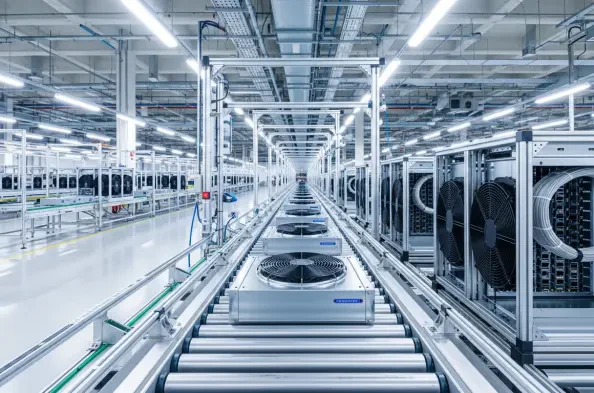
A single delayed high-voltage transformer can now turn a five-hundred-million-dollar digital fortress into a silent, expensive monument to poor planning. The current landscape of digital infrastructure has reached a tipping point where the artisanal approach to facility design is no longer a sign of prestige but a significant financial liability. As the speed of digital transformation accelerates, the traditional model of treating every data center as a unique architectural project is being dismantled by the harsh realities of global logistics and skyrocketing demand.
This shift marks a fundamental departure from the era when facilities were custom-built to fit specific plots of land or regional preferences. Today, the focus has pivoted toward radical standardization and speed, treating the data center as a manufactured product rather than a civil engineering project. For organizations aiming to keep pace with the requirements of modern computing, the transition from “sticks and bricks” to a factory-driven assembly model is the only viable path forward to maintain a competitive edge.
From Architectural Gems to Assembly Lines: The High Cost of the One-Off Design
The days when a data center was treated as a unique piece of civil engineering—a “bespoke” architectural project tailored to a specific site—are rapidly coming to a close. In this high-stakes environment, the traditional construction model faces a brutal reality where the absence of a single critical component can freeze half a billion dollars in capital for over a year. The industry is aggressively moving away from the era of localized, manual construction toward an industrialized product assembly model. In this new paradigm, predictability and speed have become the primary currencies that dictate success.
Bespoke designs often lead to fragmented procurement processes that cannot withstand the pressures of modern demand. When every facility is a unique “gem,” there is no economy of scale and no repeatable blueprint to follow when a component fails or a supply line is disrupted. The cost of being one-off is simply too high, not just in terms of initial capital expenditure, but in the lost opportunity cost of idle infrastructure. By adopting a product-based mindset, the industry is seeking to eliminate the volatility inherent in traditional construction projects.
The Triple Threat: Why the Shift to Industrialized Infrastructure Is Non-Negotiable
The global digital landscape is being reshaped by a massive seven-trillion-dollar investment wave driven by an increasingly online population and the total digitalization of daily life. This surge is compounded by the explosive rise of artificial intelligence, which requires power and cooling densities that traditional designs cannot easily accommodate. This “triple threat” has forced a fundamental transition in how the backbone of the internet is built, shifting the focus from localized construction to managing a complex, multi-trillion-dollar global supply chain.
For modern organizations, the challenge is no longer just about securing capital; it is about navigating the physical constraints of a volatile market where capacity demand is projected to triple by 2030. Securing a site and funding is only the first step in a much longer and more dangerous journey through a landscape of scarcity. Organizations that continue to rely on reactive, localized sourcing strategies find themselves at a disadvantage compared to those that treat infrastructure as a global, industrialized asset. The shift is not a choice but a survival mechanism in a world of finite resources.
Breaking the Data Chasm: Bridging the Gap Between Construction and Operations
One of the most persistent hurdles in the data center lifecycle is the difficult handoff between building teams and facility operators. Historically, construction data managed in tools like Procore remained siloed from the financial and operational systems used to run the asset, creating a massive visibility gap. This disconnect often results in operators receiving facilities that do not match the digital records, leading to inefficiencies that can persist for the entire life of the building. Breaking this data chasm is essential for optimizing the long-term performance of these massive investments.
By creating a continuous “digital thread” that connects Building Information Modeling to Data Center Infrastructure Management, organizations are moving toward virtual commissioning. This integration allows for real-time financial telemetry, showing exactly how a supply chain delay affects the long-term internal rate of return. When the construction data flows directly into operational systems, the facility can be “switched on” virtually before the physical work is even completed. This level of synchronization ensures that every watt and every rack is accounted for long before the first server arrives on the site.
The Hyperscale Benchmark: How Industry Leaders Are Redefining Digital Investment
Recent research and industry data on hyperscalers like Microsoft, Google, and Amazon highlight a staggering seventy percent increase in spending levels, which are expected to exceed six hundred and fifty billion dollars this year. This massive influx of capital is characterized by a move toward “platform capital,” where investors favor global portfolios over single-project debt to mitigate the risks of localized shocks. By spreading investment across a fleet of standardized facilities, these giants are able to absorb the impact of individual delays that would otherwise cripple a smaller organization.
Expert analysis suggests that by adopting a “hybrid-agile” supply chain model, these industry leaders are successfully navigating lead times of fifty to eighty weeks for critical components. High-voltage switchgear and liquid cooling manifolds are no longer items that are ordered when a project starts; they are secured years in advance as part of a continuous procurement loop. This benchmark for digital investment sets the standard for the rest of the industry, proving that the only way to manage multi-billion-dollar portfolios is through standardization and strategic inventory control.
The Modern CIO Mandate: Strategies for Mastering the Industrialized Supply Chain
To survive this transition, the modern Chief Information Officer has evolved from a manager of IT services into a master orchestrator of industrial supply chains. This transformation requires a shift toward Design for Manufacturing and Assembly, where up to seventy percent of a facility is built in a factory and shipped as modular components. This approach bypasses the unpredictability of on-site labor and local weather conditions, allowing for a much tighter and more reliable deployment schedule. The role of the CIO now includes oversight of factory floors as much as server rooms.
Furthermore, leadership must take direct ownership of “long-pole” procurement items and leverage predictive AI to move from “just-in-time” delivery to a “just-in-case” strategy. This involves securing inventory years before the “Power On” date to ensure that growth is not capped by physical shortages. By integrating financial data with supply chain logistics, CIOs can predict exactly when to trigger a purchase based on global lead times rather than local project milestones. The mandate is clear: those who control the supply chain control the future of their digital expansion.
The industry successfully pivoted toward an industrialized model as the only way to sustain the growth required by the artificial intelligence era. Decision-makers moved away from reactive procurement and established robust digital threads that connected every phase of development from the factory to the server hall. These advancements allowed organizations to thrive despite the volatile physical constraints of a rapidly expanding digital world. By embracing standardization and predictive logistics, the sector replaced the uncertainty of bespoke engineering with the reliability of a global assembly line. Strategies that focused on modularity and integrated financial telemetry proved to be the most effective tools for securing the backbone of the global economy. Progress was measured not by the uniqueness of individual buildings, but by the velocity and predictability of the entire infrastructure portfolio.
WordsCharactersReading time