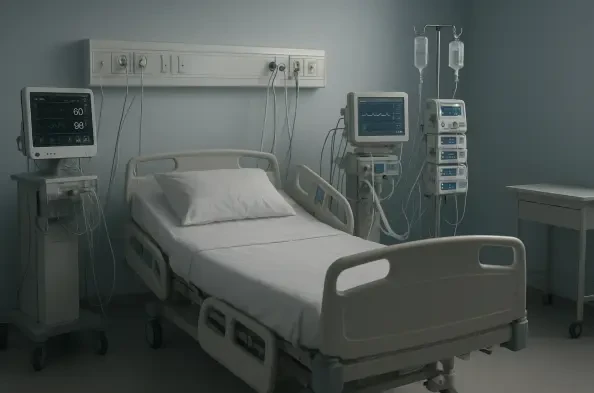
The gap between a recorded intervention time and the actual physiological response can lead to the training of brittle AI models that may fail in real-world clinical settings. In the high-stakes environment of the neurocritical care unit, where patients battle traumatic brain injuries, every second counts and every data point matters. High-frequency monitors generate a relentless stream of intracranial pressure and oxygen saturation levels, creating a complex digital map of a patient’s survival. To provide context to these waves of information, bedside staff manually enter annotations—time-stamped notes indicating when a medication was delivered or a life-saving procedure was performed. While these records are meant to serve as the definitive ground truth for both clinical review and the development of predictive software, recent findings suggest they are often plagued by significant temporal inaccuracies. The chaos of emergency interventions frequently forces nurses and physicians to log events long after they occur, leading to a disconnect between the recorded time and the physiological reality observed on the monitors.
The Intersection: Human Error and Artificial Intelligence
Integrating artificial intelligence into the ICU promises a shift toward proactive medicine where algorithms detect subtle signs of deterioration before a crisis manifests. However, the reliability of these machine learning models is tethered strictly to the quality of the data labels provided during the training phase. If a clinical note inaccurately records the timing of a sedative or a blood pressure medication, the software begins to learn false correlations that do not exist in biological reality. This fundamental challenge represents a significant hurdle in the deployment of autonomous monitoring tools, as even the most sophisticated neural networks cannot overcome the “garbage in, garbage out” phenomenon. Instead of providing early warnings, poorly trained models may offer misleading insights that complicate the decision-making process for medical teams. The problem is not merely a lack of data but rather a lack of trustworthy data that accurately mirrors the complex interplay between medical interventions and patient reactions in real time.
Addressing this digital crisis requires more than just an acknowledgment of human fallibility; it demands a systematic method for auditing the internal consistency of clinical records. Researchers involved in the CENTER-TBI project developed a pragmatic framework that moves away from the impossible search for a perfect “gold standard.” By analyzing thousands of documented interventions across multiple European trauma centers, the team identified pervasive patterns of temporal imprecision and documentation fatigue. Their approach focuses on verifying manual annotations by cross-referencing them with the high-resolution waveforms captured by bedside equipment. This method acknowledges that while human clinicians are indispensable for patient care, the stressful nature of the environment naturally leads to errors in secondary tasks like data entry. By creating a filter that identifies these discrepancies, researchers can finally begin to separate genuine physiological trends from the noise of administrative mistakes, ensuring that future AI models are built upon a foundation of truth.
Phase 1: Establishing Trust through Visual Screening
The first component of this evaluative framework relies on human clinical expertise to conduct a high-level visual audit of patient files. This step involves identifying “reference events”—specific procedures like airway suctioning or chest physiotherapy that are known to produce distinct and immediate “fingerprints” in physiological data. For instance, suctioning typically triggers a sharp, transient spike in both heart rate and intracranial pressure that is easily recognizable to a trained eye. By checking whether the manual notes for these common events align with the physical fluctuations recorded by the monitors, reviewers can establish a baseline level of trust for the entire record. This process allows for a reasonable window of error, acknowledging that a five- or ten-minute delay in documentation is common in a busy ward. If these reference events consistently match the data spikes, it serves as a strong indicator that the bedside team was diligent and accurate in their record-keeping throughout the patient’s stay.
This visual screening process categorizes clinical files into high, moderate, or low evidence based on the degree of alignment between notes and signals. The findings from the CENTER-TBI study indicated that approximately sixty percent of examined files reached the high-evidence threshold, where over ninety percent of annotations were found to be physiologically plausible. This high level of correlation suggests a halo effect in clinical documentation: when a staff is meticulous about recording routine bedside procedures, they are statistically more likely to provide accurate timings for critical medication dosages and complex interventions. Conversely, files labeled as low evidence showed little to no discernible relationship between the manual notes and the monitor data, highlighting records that should likely be excluded from any high-stakes analysis or machine learning training. This tiered classification system provides a rapid yet effective way for data scientists to prune massive datasets, focusing their efforts on the most reliable information.
Phase 2: Automated Verification of Medical Need
Following the initial human-centric review, the framework transitions into an automated phase designed to verify the medical necessity and context of specific treatments. This stage focuses heavily on osmotherapy, a common intervention used to manage life-threatening brain swelling by drawing fluid out of the cranium. To determine if an annotation is plausible, the algorithm scrutinizes the window of time surrounding the recorded note to see if the patient actually required the treatment. In the context of traumatic brain injury, this means checking for signs of intracranial hypertension, such as pressure readings exceeding a certain threshold for a sustained period. If the physiological data shows that the patient’s pressure was low and stable during the entire forty-minute window surrounding the note, the entry is flagged as “rejected.” This rejection does not necessarily mean the medication was not given, but rather that the record of it is too unreliable to be used for scientific modeling.
The results of this automated filtering process revealed a stark contrast between documented actions and physiological reality, with over one-third of osmotherapy entries failing the baseline necessity check. These discrepancies often point to significant data entry errors, such as logging a treatment on the wrong day or attributing a medication to the wrong patient file. By implementing this algorithmic filter, researchers can automatically identify and remove these outliers without needing a human to manually review every single line of code. Furthermore, this phase of the framework ensures that any analysis of treatment effectiveness is based on interventions that were truly warranted by the patient’s condition. It prevents the inclusion of “phantom” treatments—events that exist in the digital record but have no corresponding presence in the physical world. This layer of scrutiny is essential for maintaining the integrity of neurocritical care research, especially as the industry moves toward more complex data-driven protocols.
Phase 3: Analyzing Response and Long-Term Reliability
The final stage of the framework assesses the physiological response following an intervention to distinguish between documentation errors and genuine treatment failures. For every osmotherapy entry that passes the initial necessity check, the system looks for a subsequent drop in intracranial pressure or a stabilization of the patient’s vital signs. It is vital to recognize that an “ineffective” treatment—where the drug was administered but failed to produce the desired result—is a highly valuable clinical data point that must be preserved. In contrast, a “rejected” annotation represents a failure in the documentation process itself, where the record simply does not match the event. By separating these two outcomes, the framework allows researchers to study why certain patients do not respond to standard therapies without the confusing interference of misplaced or incorrectly timed notes. This nuance ensures that the resulting clinical insights are based on biological resistance rather than administrative clerical errors.
The convergence of these human and automated methods has provided deep insights into the natural lifecycle of ICU documentation quality. Researchers observed that the accuracy of clinical notes typically peaks during the first twenty-four hours after a patient is admitted, likely due to the high level of vigilance and staffing resources dedicated to the initial stabilization period. As the hospitalization progresses, however, the quality of record-keeping tends to decline, reflecting the reality of staff fatigue and the shifting priorities of long-term care. In patient files that were initially flagged by human reviewers as “low evidence,” the automated system rejected the majority of treatment notes, confirming that early signs of poor documentation are predictive of systemic inaccuracies throughout the record. By recognizing these patterns, data scientists can now apply weighted importance to different segments of a patient’s stay, prioritizing high-fidelity data while being more cautious with later records.
Strategies: Implementing Robust Data Standards
The establishment of this three-step framework served as a critical bridge between raw clinical data and the reliable implementation of precision medicine in neurocritical care. Until hospitals could deploy fully automated integration between infusion pumps and bedside monitors, manual annotations remained a necessary but deeply flawed component of the medical database. The methodology developed by the CENTER-TBI team provided a blueprint for how modern healthcare institutions audited their own data streams to ensure they were fit for the demands of advanced analytics. By adopting these rigorous standards, medical centers protected themselves from the risks associated with training AI on “brittle” data that might not have survived the transition to real-world application. This proactive approach to data hygiene was not merely a technical preference but a fundamental safety requirement for digital health tools, ensuring that the technology used to save lives was built on a foundation of verified truth.
In the years leading up to 2028, the widespread adoption of these verification protocols helped transform the landscape of clinical research by significantly reducing the noise found in large-scale medical registries. Medical organizations focused on integrating these automated filters into their daily workflows, allowing for real-time flagging of documentation discrepancies that clinicians addressed during their shifts. This shift in practice encouraged a culture of data accountability where the digital record was treated with the same clinical gravity as the physical treatment of the patient. By pruning away the inaccuracies that previously clouded the understanding of traumatic brain injuries, the research community gained the ability to develop more resilient predictive models that performed with high accuracy across diverse patient populations. Ultimately, the successful implementation of these frameworks proved that while human error was inevitable, the tools used to interpret medical history were engineered to account for those flaws.