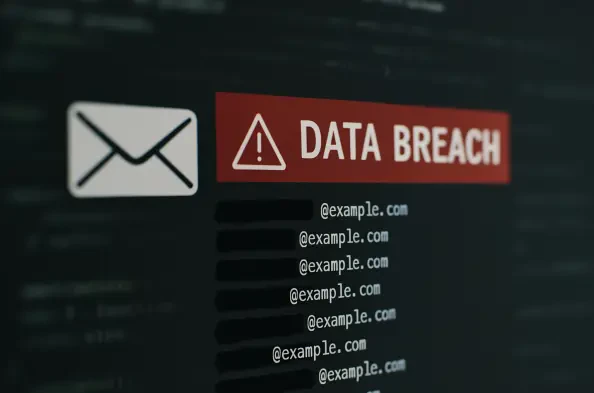
Gaming enthusiasts who registered for updates regarding the Tokyo Game Show were among the millions of individuals whose contact information was exposed. This massive data spill, confirmed in November 2026, serves as a sobering reminder of how interconnected the global entertainment industry has become and how easily that connection can be severed by a single security failure. While the SEGA name carries significant weight and trust, the breach actually originated within the infrastructure of a third-party partner, Arara Co., Ltd., which specializes in newsletter and marketing distribution. This specific event has sparked intense debate regarding the “vendor layer” of the modern digital supply chain, highlighting a critical point of vulnerability that even the most robust internal security protocols cannot entirely eliminate. As the investigation unfolded, it became clear that the security of a major corporation is effectively tied to the digital hygiene of every supplier it chooses to handle sensitive user data.
Scope of Exposed SEGA Customer Information
The total number of unique records compromised in this specific leak reached 2,196,044 unique email addresses, marking one of the largest exposures for the gaming giant in recent years. Within this substantial data set, a smaller but still significant subset of 92,273 records contained additional details related to product delivery services. The affected individuals were primarily those who had engaged with SEGA’s diverse ecosystem of arcade titles and promotional events, including fans of popular rhythm franchises such as CHUNITHM, Ongeki, and maimai. Furthermore, users who participated in the SEGA Lucky Kuji Online service or requested promotional materials during high-profile industry events found their contact information caught in the sweep. This targeted nature of the data exposure means that the attackers now possess a curated list of active consumers with specific interests, making them prime targets for future marketing exploitation or more malicious social engineering attempts.
Despite the alarming number of exposed email addresses, SEGA’s internal architectural decisions significantly limited the potential for a catastrophic financial fallout. The company had intentionally maintained a strict logical and physical separation between its promotional marketing lists and its centralized “SEGA Account” infrastructure. Because of this strategic isolation, highly sensitive information—including user passwords, credit card numbers, home addresses, and dates of birth—remained entirely untouched by the external intrusion. This structural safeguard effectively prevented the attackers from pivoting from a marketing list to core user profiles, thereby protecting the financial integrity of millions of account holders. It illustrates a rare but successful application of the principle of least privilege, where a third-party vendor was only granted access to the specific data necessary for their service, preventing a localized breach from becoming a total system compromise for the entire customer base.
Massive Systemic Failure: Arara and Paycloud
The intrusion affecting SEGA was not an isolated event but rather a single thread in a massive tapestry of failure involving Arara Co., Ltd., a subsidiary of Paycloud Holdings. Internal investigations following the discovery revealed that unauthorized actors successfully breached 97 different servers, leading to the theft of approximately 77 million email addresses across 380 distinct client companies. The scale of this disaster is staggering, with victims spanning a vast array of Japanese industries and essential services. Major entities such as the food service giant MOS Burger reported 7.5 million exposed records, while entertainment companies like Shochiku Multiplex Theatres saw 3.3 million entries leaked. Even government-adjacent services were compromised, including the TKC corporation, which manages municipal My Number Card booking systems. This widespread exposure underscores the dangerous concentration of data within specialized service providers that act as invisible hubs for modern corporate communications.
Forensic analysis of the Arara infrastructure pointed to a specific vulnerability within a web server and broader environmental security flaws that allowed the initial intrusion to spread laterally. This incident highlights the inherent “single point of failure” risk that arises when hundreds of disparate organizations consolidate their digital services under a handful of third-party suppliers. Because Arara provided a standardized platform for email distribution, a single technical oversight or unpatched vulnerability in their stack became a national data crisis for their entire client roster. For the affected companies, the situation was particularly frustrating as they had little direct control over the vendor’s internal security audits or day-to-day server maintenance. This crisis serves as a stark warning for the industry: the efficiency gained through outsourcing must be balanced with rigorous, independent verification of a partner’s security posture to ensure that one vendor’s mistake does not become a global liability.
Rising Phishing Risks for Targeted Users
While the theft of email addresses might appear less damaging than the loss of financial credentials, the real-world utility of this data became apparent almost immediately. By gaining control over Arara’s high-volume mailing platform, the attackers were able to launch a sophisticated phishing campaign involving over seven million fraudulent messages in late October. These emails were designed to impersonate legitimate credit card companies and financial institutions, tricking recipients into revealing their private login information. Because these malicious messages were sent through verified commercial infrastructure, they carried the high sender reputation and authentication markers of a trusted service provider. This allowed the phishing attempts to bypass standard spam filters that typically catch mail from unrecognized or blacklisted servers. This method demonstrates how attackers can leverage legitimate business tools to enhance the credibility of their scams, making them exceptionally dangerous.
For the millions of SEGA customers involved, the primary long-term threat is the potential for highly personalized “follow-up phishing” attacks. Cybercriminals can now utilize the specific context of the stolen data—such as a user’s interest in arcade titles or their participation in the Tokyo Game Show—to craft incredibly convincing social engineering lures. A user might receive a message claiming they have won a prize from a recent arcade campaign or an urgent alert stating that their SEGA account requires immediate verification due to suspicious activity. These lures are far more effective than generic spam because they reference legitimate past interactions that the user perceives as private. Security experts are advising all affected individuals to maintain a high level of skepticism toward any unsolicited communication, even if it appears to come from a familiar brand. The goal is to train users to verify the source of an email through official channels before clicking links or providing any personal information.
Separate Security Incident at SEGA Fave
Almost simultaneously with the revelations concerning the Arara data leak, SEGA Fave reported a separate and distinct security event on November 2. This internal intrusion involved unauthorized access to the servers supporting the ALL.Net and Aime arcade networks, which are the primary systems used for online gameplay and data synchronization in gaming centers across the globe. The timing of this second incident caused immediate concern within the gaming community, as it suggested the possibility of a coordinated multi-vector attack against the company’s various digital properties. To protect the integrity of the network and prevent any potential data exfiltration, SEGA Fave took the proactive and disruptive step of suspending several key services. This included a temporary halt on new SEGA ID registrations and the disabling of online features for multiple arcade titles. These measures were necessary to perform deep forensic cleaning and to ensure that no hidden persistent threats remained within the local server environment.
SEGA has been quick to clarify that there is currently no evidence linking the Arara marketing leak to the SEGA Fave server intrusion, despite their proximity in time. While the coincidence is notable, the company maintains that the two events occurred in entirely different environments with unique exposure profiles. Current investigations into the SEGA Fave incident suggest that, while operational stability was compromised, no customer data was actually stolen during this specific breach. However, the dual nature of these security challenges has forced the company to undergo a comprehensive and expensive review of its cybersecurity protocols across all global divisions. The focus has shifted toward building more resilient systems that can withstand both external vendor failures and direct attacks on internal infrastructure. By treating these incidents as distinct but related symptoms of a broader threat landscape, the company aims to implement a more unified security strategy that prioritizes rapid detection and response.
Future Resilience: Strengthening Cybersecurity Governance
The fallout from the SEGA and Arara data breach highlighted the urgent necessity for more transparent reporting standards and rigorous vendor oversight. Organizations that moved toward decentralized data management strategies found themselves better prepared to contain the impact of such widespread supply chain failures. In the wake of the incident, security teams recommended that companies implement mandatory, real-time security telemetry sharing with their third-party partners to bridge the communication gap that delayed this disclosure. Consumers were encouraged to adopt hardware-based two-factor authentication and to utilize email aliasing services to limit the blast radius of any future marketing list leaks. Furthermore, the industry began to shift its focus toward zero-trust architectures where even “trusted” mailing services are subjected to continuous verification. Ultimately, this event served as a catalyst for a broader transformation in how the gaming industry approached digital trust, prioritizing the security of the user over the convenience of the vendor.