The traditional perimeter has not just moved; it has effectively vanished in an landscape where 79% of cybersecurity professionals now cite the sheer velocity of automated exploitation as their primary existential threat. For decades, the Virtual Private Network (VPN) served as the undisputed backbone of remote connectivity, relying on the simple premise that an encrypted tunnel was synonymous with a secure one. However, as of 2026, the emergence of machine-speed attacks has turned these once-reliable tunnels into liability-prone blind spots. This review examines how the integration of artificial intelligence into secure access is attempting to salvage a legacy architecture that was never designed to move as fast as a modern algorithm.
The Evolution of Remote Access: From Legacy VPNs to AI-Enhanced Security
The transition from static connectivity to AI-driven security marks a fundamental pivot in how enterprises conceptualize trust. In the past, a VPN functioned like a physical bridge; once a user crossed the threshold of authentication, they were granted broad access to the internal landscape. This “flat network” model has become a playground for contemporary threats, where an initial compromise can lead to lateral movement across an entire data center in minutes. The current evolution seeks to replace this binary access with a continuous, intelligent evaluation of risk that happens in real-time, moving beyond simple credential checks to a holistic analysis of user behavior and device health.
This technological shift is not merely a defensive upgrade but a necessary response to the industrialization of cybercrime. In the current environment, adversaries leverage generative models to identify vulnerabilities and launch social engineering campaigns with a frequency that human defenders cannot match. Consequently, the relevance of AI-enhanced security lies in its ability to act as a force multiplier. By automating the mundane aspects of traffic monitoring and policy enforcement, these systems allow security teams to focus on high-level strategy while the infrastructure itself handles the nanosecond-level decisions required to block a mutating threat.
Technical Architecture and Core Capabilities
AI-Powered Traffic Inspection and Threat Detection
At the heart of modern secure connectivity lies the ability to perform deep content inspection without introducing the latency that historically plagued legacy systems. Unlike traditional firewalls that rely on static signatures—essentially a “wanted poster” for known malware—AI-driven inspection uses heuristic analysis to identify “signs of life” that indicate malicious intent. This involves monitoring the metadata of encrypted flows to detect patterns consistent with data exfiltration or command-and-control signaling. The significance here is profound: it allows organizations to spot a breach even when the specific malware has never been seen before, effectively closing the gap between a new threat’s release and its eventual signature update.
Performance in this area is measured by the system’s ability to maintain high throughput while decrypting and re-encrypting traffic for analysis. Many competitors fail because they create a “chokepoint” that frustrates users, leading them to bypass security altogether. The most successful AI implementations utilize distributed cloud architectures to spread the processing load, ensuring that security does not come at the cost of productivity. By shifting the heavy lifting of inspection to the cloud edge, these systems provide a level of oversight that on-premises hardware simply cannot replicate, turning the encryption blind spot into a transparent, monitored gateway.
Automated Response and Context-Aware Authentication
The second pillar of this technology is the move toward context-aware authentication, which functions as a digital sentry that never stops asking questions. Rather than relying on a one-time password, the AI constantly evaluates variables such as the user’s geographic location, the time of day, and the specific “fingerprint” of the device being used. If a marketing manager suddenly attempts to access financial databases from an unusual IP address at three in the morning, the system doesn’t just send an alert—it automatically restricts the session or triggers a high-friction authentication challenge.
This automated response capability is what truly differentiates AI-driven security from its predecessors. In a standard VPN setup, a compromised credential is a “skeleton key” until an administrator manually revokes it. In contrast, an AI-enhanced system acts as a containment-first mechanism. It reduces the “dwell time” of an attacker by shutting down suspicious connections in milliseconds. This real-time adaptability is essential for modern businesses where the workforce is increasingly mobile and the devices used to access corporate data are often outside the direct control of the IT department.
Current Trends: The Shift to Machine-Speed Defense
The current technological landscape is defined by a move toward “self-healing” networks that can adjust their own security posture without human intervention. We are seeing a trend where security platforms are no longer reactive tools but proactive participants in the defense cycle. Innovation is currently focused on predictive modeling, where the system analyzes global threat telemetry to harden local defenses before an attack even arrives at the company’s doorstep. This shift from “detect and respond” to “predict and prevent” is the new benchmark for enterprise resilience.
Furthermore, there is a growing industry move toward the “democratization” of advanced security tools. Capabilities that were once reserved for global conglomerates are now being integrated into standard remote access packages. This is largely driven by the realization that a breach at a small supplier can serve as a backdoor into a larger partner’s network. As a result, the industry is witnessing a consolidation where standalone VPN products are being absorbed into broader Security Service Edge (SSE) platforms, reflecting a holistic approach to protecting data wherever it resides.
Real-World Applications and Industrial Deployment
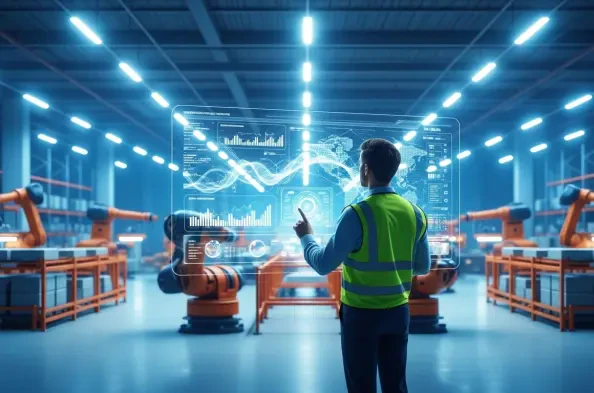
In the manufacturing sector, the deployment of AI-driven security has revolutionized how third-party contractors interact with sensitive industrial control systems. Instead of granting a technician broad network access to perform a simple software update, AI-mediated tunnels provide “micro-segmented” access only to the specific machine requiring service. This deployment model is critical for protecting operational technology (OT) from the vulnerabilities inherent in the general corporate network. It effectively creates a “clean room” for remote maintenance, ensuring that a compromised laptop in the field cannot become a vector for a plant-wide shutdown.
The financial services industry provides another compelling use case, particularly in the context of high-frequency trading and remote wealth management. Here, the technology is used to ensure that sensitive client data remains protected even when accessed over public Wi-Fi or via personal mobile devices. By using AI to verify the integrity of the connection and the device posture simultaneously, banks can maintain a rigorous security standard without hindering the speed at which their advisors operate. These implementations show that when security is baked into the architecture, it becomes an enabler of business agility rather than a bottleneck.
Critical Challenges: Visibility Gaps and Operational Hurdles
Despite the impressive technical strides, significant hurdles remain, particularly regarding the “visibility gap” in encrypted traffic. A staggering one in three organizations still inspects none of their encrypted VPN traffic, largely due to fears of performance degradation or privacy concerns. This creates a paradox where the very encryption meant to protect data also serves as a cloaking device for attackers. Overcoming this hurdle requires not just better technology, but a shift in organizational culture that prioritizes comprehensive oversight over the false sense of security provided by uninspected tunnels.
Operational complexity also continues to plague the industry. For many IT teams, the burden of patching legacy VPN hardware is a losing battle; more than half of organizations admit it takes a week or longer to remediate critical vulnerabilities. In an era where AI can weaponize a new exploit in hours, a week-long patching cycle is functionally equivalent to having no defense at all. This delay is often rooted in rigid change-management processes that were designed for an era of slower threats, highlighting a disconnect between traditional business operations and the new reality of machine-speed warfare.
Future Outlook: The Convergence of AI and Zero Trust
The trajectory of secure connectivity is clearly aimed at the total convergence of AI and Zero Trust principles. We are moving toward an era where the concept of a “network” becomes secondary to the concept of the “application.” In this future, the AI will act as an invisible broker, creating ephemeral, one-to-one connections that exist only for the duration of a specific task. This “dark cloud” approach ensures that an organization’s infrastructure remains invisible to the public internet, leaving attackers with no target to scan and no perimeter to breach.
Breakthroughs in edge computing will likely make these complex calculations even faster, reducing the latency of AI-driven security to the point of being imperceptible. The long-term impact will be a significant reduction in the success rate of automated attacks, as the cost and complexity of breaching an AI-hardened system will begin to outweigh the potential rewards for most adversaries. Society as a whole will benefit from a more stable digital economy, where the focus can shift back from defending infrastructure to innovating within it.
Conclusion: Assessing the Impact of AI on Secure Connectivity
The assessment of AI-driven VPN security revealed a technology at a critical crossroads, where the traditional methods of the past were found entirely insufficient for the challenges of the present. It was clear that the “machine speed” of modern threats necessitated a transition from static, perimeter-based defenses to dynamic, identity-centric models. The analysis showed that while the technical capabilities for robust defense existed, the primary obstacles remained operational inertia and the persistent visibility gaps within encrypted traffic. The verdict was that the legacy VPN, in its unaugmented form, was no longer a viable security tool.
Moving forward, the focus should shift toward the immediate adoption of Zero Trust architectures that utilize AI as a core orchestration engine rather than a peripheral add-on. Organizations must prioritize the reduction of their visible attack surface and implement mandatory inspection of all encrypted flows to eliminate the shadows where threats currently thrive. The next step for leadership involves moving beyond a checklist-based security mindset to one of continuous, automated containment. By aligning defensive capabilities with the velocity of modern exploits, enterprises can ensure that their connectivity solutions serve as a bridge to growth rather than a gateway for disaster.