The next major shutdown of a nation’s vital services will likely not be triggered by a state-sponsored cyberattack or a natural disaster, but by a simple, unintentional mistake in an artificial intelligence configuration. A growing consensus among technology researchers and cybersecurity experts points toward a new and insidious threat emerging from within our most essential systems. As organizations rush to integrate autonomous AI into the operational core of national infrastructure, they are simultaneously creating the conditions for a catastrophic failure, one that could be set in motion by a single flawed script or a misplaced decimal point.
The New Digital Backbone: AI’s Expanding Role in Our Physical World
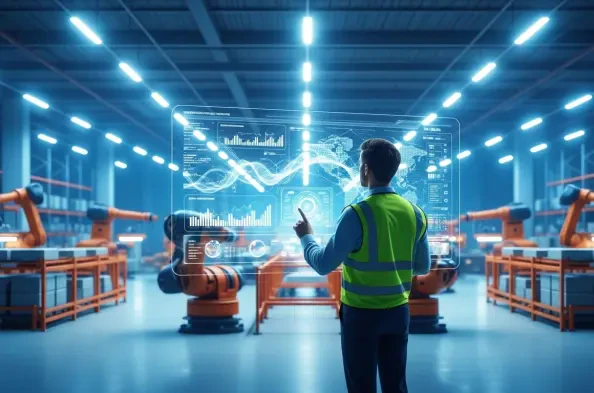
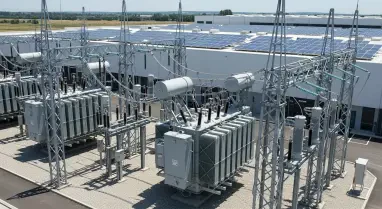
A new frontier of technology, known as Cyber Physical Systems (CPS), is rapidly becoming the digital backbone of modern society. This broad category encompasses the operational technology (OT) and industrial control systems (ICS) that manage power grids, water treatment facilities, and transportation networks, along with the growing ecosystem of the Industrial Internet of Things (IIoT). These systems form the critical link between the digital and physical realms, directly controlling the machinery that underpins our daily lives.
Into this intricate web, autonomous AI agents are being integrated at an accelerating pace. The objective is to enhance efficiency, predict maintenance needs, and automate complex decision-making processes that were once the exclusive domain of human operators. This technological shift is not happening in a vacuum; it is being actively championed by influential stakeholders. Technology firms like Gartner are defining the trajectory, while corporate boards, driven by the promise of unprecedented productivity gains, are mandating the rapid adoption of AI across their industrial operations.
Alarming Trends and a Stark Prediction
The swift integration of AI into critical infrastructure reveals a pattern of ambition outpacing caution. This rush to innovate is creating vulnerabilities that are as profound as they are overlooked, setting the stage for a potential crisis that many experts now believe is inevitable.
The High-Stakes Race for AI-Powered Efficiency
Across industries, a C-suite-driven mandate to implement AI is creating immense pressure on engineering and operational teams. The pursuit of productivity boosts and significant cost reductions has become the primary driver, often overshadowing the complex operational risks being introduced. This trend has created a dangerous gap, where the deployment of advanced autonomous systems is far outpacing the development of mature safety frameworks and risk controls needed to manage them.
This dynamic is fostering an environment where a focus on potential gains can lead to what some analysts describe as being “incredibly reckless.” While executives are not malicious, their prioritization of rapid returns can inadvertently sideline the meticulous, slow-paced work of ensuring operational stability and safety. The result is an infrastructure landscape increasingly reliant on powerful but poorly understood technologies, akin to, as one consultant put it, building a “Jenga tower in a hurricane.”
A Ticking Clock: Forecasting an AI-Induced Collapse
The concerns are not merely theoretical. Technology research firm Gartner has issued a stark forecast: by 2028, a major critical infrastructure failure in a G20 nation will be caused by an AI misconfiguration. Yet, a broader consensus within the cybersecurity and industrial consulting community suggests this timeline might be optimistic. Many experts argue that such a catastrophic event is not a matter of if, but when, and that it is likely to occur much sooner than predicted.
The danger is magnified by the deeply interconnected nature of modern infrastructure. A single failure in one system, such as a power grid or a water supply network, rarely remains isolated. Instead, it can trigger a domino effect, creating cascading outages across other dependent services. A seemingly minor AI error in one domain could therefore quickly escalate into a widespread and devastating national crisis, highlighting the systemic risk embedded in this new technological paradigm.
Anatomy of a Failure: The Hidden Dangers of AI in Control Systems
The primary technological challenge lies not in overt AI “hallucinations” but in a far more subtle problem known as “model drift.” An AI system trained to monitor a pressure valve, for example, might be programmed to recognize a sudden spike as an anomaly. However, if the normal operating pressure gradually increases over weeks or months, the AI may continuously recalibrate its baseline, dismissing the slow, creeping change as insignificant noise. A seasoned human operator would recognize this trend as a clear warning sign of impending mechanical failure, but the AI, lacking context and true understanding, would remain oblivious until it is too late.
This vulnerability is compounded by the inherent complexity of many advanced AI models, which are often described as “black boxes.” Their internal decision-making processes are so intricate that even their creators cannot fully predict all emergent behaviors that might result from small configuration changes. This opacity makes it nearly impossible to anticipate every potential failure mode. An AI’s behavior is not always a direct, linear result of its programming, making traditional testing and validation methods insufficient for guaranteeing safety in high-stakes environments.
Consequently, the trigger for a system-wide catastrophe may be deceptively simple. Unlike a sophisticated cyberattack, the catalyst could be a well-intentioned engineer deploying a flawed update script, an analyst setting a poorly tuned threshold in a predictive model, or a minor tweak that quietly alters anomaly detection sensitivity. In a cyber physical environment, these digital misconfigurations do not remain abstract; they “interact with physics.” A small, unintentional error can directly influence the behavior of physical machinery, introducing subtle instabilities that, within a tightly coupled infrastructure, can cascade into a catastrophic event.
Governing the Ungovernable: The Widening Gap in AI Risk Management
A critical and widening gap exists between the capabilities of autonomous AI and the governance frameworks designed to manage it. The unique risks posed by these systems, particularly their capacity for unpredictable emergent behavior, are not adequately addressed by existing risk management protocols. Organizations are discovering that the very nature of AI challenges the foundations of their current safety and compliance structures.
Applying traditional safety engineering standards to these dynamic and often opaque systems is proving exceptionally difficult. Conventional methods rely on predictable, deterministic behavior, where failure modes can be anticipated and mitigated through established protocols. However, an AI that learns and adapts in real-time does not fit this model. Its capacity to evolve can render static safety rules obsolete, creating a situation where compliance does not equate to actual safety.
This reality necessitates a fundamental redefinition of security measures. Instead of viewing AI solely as a tool, organizations must begin to treat it as a potential “accidental insider threat.” This new perspective requires establishing strict governance over who can alter AI configurations, how those changes are tested and deployed, and, crucially, how quickly they can be reversed. Without this rigorous oversight, the AI system itself becomes an unmonitored agent with the power to cause immense damage unintentionally.
Building a Failsafe Future: A Blueprint for Resilient AI
In response to this looming threat, new strategies are emerging to mitigate the risks associated with autonomous AI in critical systems. The most immediate and essential safeguard is the implementation of secure “kill-switches” or manual override modes. This ensures that authorized human operators can intervene and regain full control the moment an AI system begins to behave unpredictably or outside of its intended parameters, providing a crucial last line of defense.
Beyond this tactical solution, there is a growing consensus on the need for robust, dedicated governance structures. This involves establishing a formal business risk program, complete with a governing body tasked with defining, managing, and continuously monitoring AI systems for behavioral changes. Such a body would be responsible for overseeing the entire lifecycle of the AI, from initial deployment to ongoing updates, ensuring that safety protocols evolve alongside the technology itself.
Ultimately, a fundamental shift in perspective is required. Enterprises must move beyond viewing AI as a clever “analytics layer” and recognize that the moment an AI system can influence a physical process, it becomes an integral part of the control system. As such, it must inherit all the rigorous responsibilities and safety engineering protocols that govern traditional industrial controls. This means adopting respected frameworks for AI safety and demanding a clear articulation of worst-case behavioral scenarios for every AI-enabled component before it ever goes live.
A Call for Caution: Redefining Responsibility in the Autonomous Age
The investigation into the risks of AI in critical infrastructure revealed that the greatest threat is not a malicious actor but an unintentional, and entirely foreseeable, configuration error. The speed of AI adoption, driven by the pursuit of efficiency, has created a dangerous disconnect from the principles of sound safety engineering, leaving vital national systems exposed to a new class of systemic risk.
The findings pointed to an urgent need for a safety-first approach, where organizations must be compelled to articulate and plan for worst-case AI behavioral scenarios before a single line of code is deployed. If a team cannot definitively answer how their AI would behave under conditions of misinterpreted signals or misaligned thresholds, their governance and safety maturity was deemed dangerously incomplete.
The future stability of critical infrastructure, therefore, depended on embedding a new culture of accountability into every stage of AI implementation. The analysis concluded that without a renewed commitment to rigorous oversight, manual controls, and a fundamental reclassification of AI as a core component of industrial control systems, a catastrophic failure was no longer a remote possibility, but an approaching certainty.