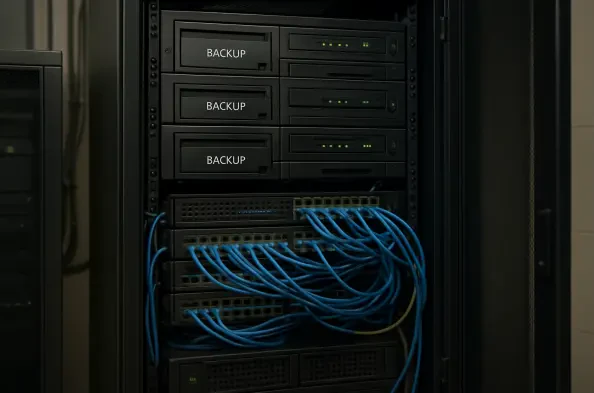
In an increasingly fragmented digital landscape where personal and professional data is scattered across numerous devices and cloud services, establishing a coherent and trustworthy backup strategy has become a significant challenge for many. The common approach often involves a patchwork of solutions, from commercial cloud storage like Google Drive and Microsoft OneDrive to specialized backup software, each with its own costs, limitations, and security models. This fragmented ecosystem not only creates complexity but also leads to inefficiencies and a concerning loss of control over one’s own data. Addressing this long-standing issue requires a move away from disparate tools toward a single, unified system that offers robust security, remarkable storage efficiency, and complete user control without the burden of subscription fees. BorgBackup emerges as a powerful open-source solution designed to replace this chaos with a streamlined, secure, and highly efficient approach to data protection, empowering users to regain sovereignty over their digital assets.
A New Philosophy of Data Control
At its core, BorgBackup operates on a principle of absolute data sovereignty, fundamentally shifting the balance of power from third-party service providers back to the individual user. Unlike mainstream cloud backup solutions where data is stored on opaque, remote servers under terms of service that can change without notice, Borg grants the user complete control over where their data resides. Whether it is a local server, a network-attached storage (NAS) device, or an offsite server rented from any provider, the user dictates the physical and logical location of their backups. This control extends to the most critical component of security: the encryption keys. With Borg, the user is the sole custodian of their keys, ensuring that no one else—not the storage provider, not a government agency, nor the developers of Borg itself—can access the encrypted data. This model stands in stark contrast to the custodial nature of commercial services, offering a transparent and trustworthy alternative for those who prioritize privacy and long-term data ownership over convenience.
This commitment to user empowerment is intrinsically linked to a philosophy of security by design, where robust protection is a mandatory and foundational element rather than an optional feature. Borg employs authenticated encryption by default for all data, a critical security measure that provides two distinct layers of defense. The first, confidentiality, ensures the data is cryptographically unreadable to any unauthorized party. The second, integrity, guarantees that the data has not been tampered with or corrupted since it was last written. If an attacker or even a hardware fault were to alter a single bit of the stored, encrypted data, the Borg client would immediately detect the modification during the next access attempt, preventing the restoration of malicious or damaged files. This zero-knowledge security model makes it entirely safe to store backup repositories on untrusted third-party servers, as the storage provider only ever sees meaningless, encrypted data blocks. With this profound level of control, however, comes profound responsibility; the user must securely manage their own encryption key, as losing it results in the irreversible loss of access to all backed-up data.
The Technical Pillars of Unmatched Efficiency
The most transformative feature setting BorgBackup apart from conventional backup tools is its sophisticated implementation of global deduplication. This technique revolutionizes storage efficiency by fundamentally changing how data is recognized and stored. Instead of backing up complete files or using simple block-level differentials, Borg utilizes content-defined chunking to break all data down into smaller, variable-sized pieces based on their content, not their file name or location. Each unique chunk is then compressed, encrypted, and stored in the repository only once. Every subsequent time that exact same chunk of data is encountered—whether in a different file, on a different machine, or in a later backup—Borg simply creates a lightweight reference to the single, already-stored copy. This process is “global,” meaning it operates across the entire backup repository, identifying and eliminating redundancy regardless of the data’s origin.
This content-aware approach yields immense space savings that are simply unattainable with traditional incremental backup methods. For instance, if a minor change is made within a very large file, such as a multi-gigabyte virtual machine disk image, a conventional backup tool might be forced to save a new copy of the entire file or a large, fixed-size block. In contrast, Borg’s content-defined chunking intelligently identifies only the few small chunks directly affected by the change, storing just those new pieces of data while referencing the thousands of unchanged chunks that already exist in the repository. This efficiency becomes even more pronounced when backing up multiple systems to the same repository. If two different computers contain identical operating system files, shared documents, or application data, Borg’s deduplication engine recognizes the identical content and stores the corresponding chunks only a single time, creating a long-term, space-saving system that grows more efficient with every backup.
Performance and Practicality in Daily Use
Beyond its remarkable storage efficiency, Borg is engineered for exceptional performance and usability, ensuring that accessing backed-up data is as seamless as creating the backups themselves. A significant advantage is its capability for “instant restores,” which allows a user to mount any backup archive as a standard filesystem on their computer. This feature operates on a “lazy-loading” principle, where the archive’s contents can be browsed and inspected almost immediately without needing to download or decrypt the entire dataset first. A specific file is only fully retrieved and decrypted from the remote repository at the moment the user chooses to open or copy it. This makes it incredibly efficient to locate and restore a single lost document from a massive, multi-terabyte backup archive, a vital feature that transforms backups from a cumbersome emergency measure into a readily accessible historical record of one’s entire digital life.
This focus on practical performance extends to the backup process itself, which is designed to be light on system resources and highly customizable to fit any environment. Borg supports a range of tunable compression algorithms, allowing users to strike the perfect balance between backup speed and storage size on a per-job basis. For example, the LZ4 algorithm is favored for its high speed, making it ideal for backing up large, frequently changing directories where minimizing the backup window is critical. Conversely, ZSTD offers a strong balance of excellent compression and fast performance on modern hardware, while GZip provides maximum compression for archival snapshots that are rarely accessed. The software is also network-aware, incorporating features like the ability to throttle upload speeds to prevent a large backup job from saturating a home or office internet connection. These optimizations make Borg versatile enough to run smoothly on everything from powerful workstations to low-power devices like Raspberry Pi-based NAS units, ensuring reliable operation without performance degradation.
A Stewardship of Digital Legacy
Ultimately, the adoption of a solution like BorgBackup represented more than just a technical upgrade; it signified a fundamental shift in the approach to personal data management. The journey moved away from a passive reliance on third-party services and toward a model of active, informed stewardship over one’s own digital history. The process of configuring repositories, managing encryption keys, and defining pruning schedules fostered a deeper understanding of the data’s value and lifecycle. This hands-on engagement revealed that true data security and longevity were not products to be purchased but outcomes of a deliberate and controlled process. The built-in tools for maintaining repository health, such as automated pruning, storage compaction, and data integrity verification, provided the confidence needed for long-term archival. This experience underscored the profound capability of open-source software to deliver enterprise-grade reliability and control, proving that taking ownership of one’s backup strategy was the most effective way to ensure a digital legacy remained both secure and accessible for years to come.