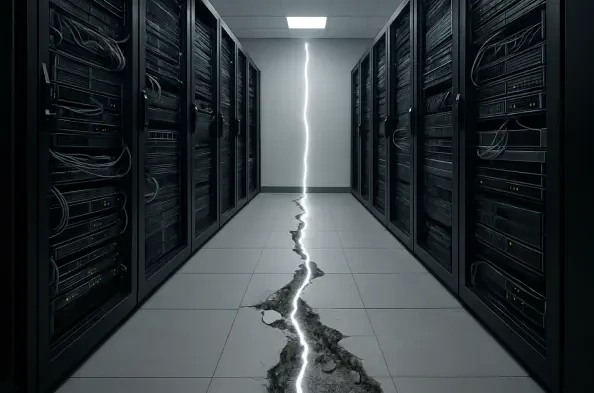
Corporate resilience often shatters when a company realizes that while its cloud infrastructure can reboot in minutes, its fleet of thousands of remote laptops remains completely unusable and disconnected from the network. This paradox defines the modern disaster recovery landscape, where a twenty-minute server restoration often contrasts sharply with a month-long hardware bottleneck. While the backend systems return to operational status, the workforce remains paralyzed because the entry point to those systems—the endpoint—is effectively bricked.
The “last mile” of disaster recovery has surfaced as the most vulnerable link in corporate continuity plans. Hyper-optimized cloud architectures have solved data availability, yet they have simultaneously exposed a silent threat regarding local hardware. When a catastrophic event strikes, the focus on data center agility counts for little if the physical devices in the hands of employees require manual intervention or onsite imaging to function again.
The Illusion of Resiliency: When Data Centers Recover but Businesses Remain Offline
Infrastructure teams frequently celebrate successful failovers to secondary sites while ignoring the reality of the end-user experience. A business that lacks accessible endpoints is a business that remains offline, regardless of how many green lights appear on a server dashboard. This gap creates a false sense of security that evaporates the moment a distributed workforce loses access to its primary tools, turning a technical glitch into a long-term operational shutdown.
Current continuity strategies often fail to account for the logistical friction of a remote-first world. Traditional recovery models assumed that staff could simply walk to an IT desk for a replacement device, but that assumption is no longer valid. In an era of global distribution, the time required to ship, provision, and deploy new hardware to thousands of unique locations across the country can extend recovery timelines from hours to weeks.
The Widening Disparity Between Infrastructure and the Modern Workspace
The evolution of Recovery Time Objectives (RTO) has been remarkably one-sided, with significant investment directed toward the data center while endpoint management has remained largely stagnant. This disparity forces organizations into a reactive posture that is both expensive and inefficient. While the cloud scales instantly to meet demand, the physical workspace relies on legacy processes that cannot match the speed of modern digital threats or systemic failures.
Reactive recovery carries hidden costs that extend far beyond the initial IT expenditure. Lost productivity, the erosion of brand reputation, and the failure of traditional insurance models to cover long-term business interruptions create a massive financial burden. Organizations are discovering that conventional coverage often excludes the secondary impacts of a protracted endpoint outage, leaving the enterprise to absorb the full weight of the downtime.
The Failure of Traditional Reactive Models and the Risk of Re-Compromise
The standard “monitor, detect, and patch” cycle is proving insufficient against the speed of sophisticated ransomware and automated attacks. By the time a threat is identified, the damage to the local operating system is often irreversible without a complete wipe. Relying on detection alone creates a window of vulnerability that attackers have learned to exploit with increasing precision, targeting the very tools designed to protect the network.
A common pitfall in recovery is the “backup trap,” where restoring an endpoint to a previous state inadvertently invites the same vulnerability back into the ecosystem. If the initial breach was facilitated by an unpatched flaw or a compromised credential, a simple rollback provides the attacker with a clear path for re-entry. Furthermore, ad-hoc hardware procurement through retail raids or scavenging storage for aging laptops is a desperate measure that fails to provide a scalable or secure solution during a crisis.
Engineering Immunity Through Preventive Security Architecture
Transitioning toward a “Secure by Design” strategy requires moving beyond simple detection and into the realm of technical immunity. This architecture relies on operating system immutability, which strips malware of the ability to gain a persistent foothold on the device. By ensuring the core system cannot be modified by unauthorized processes, organizations can prevent the “bricking” of hardware even when the network is under direct assault.
Decoupling data from the local device further enhances this immunity by ensuring that hardware failure does not lead to permanent information loss. When files and configurations are stored in secure, centralized environments rather than on local drives, the endpoint becomes a replaceable gateway rather than a single point of failure. This shift is supported by next-generation identity security, which replaces stored credentials with temporary tokens to neutralize the threat of credential harvesting.
Strategies for Harmonizing Endpoint Recovery with Enterprise RTOs
Execution control played a pivotal role in preventing the unauthorized birth of arbitrary code, ensuring that only verified applications could run. This technical shift allowed organizations to treat their endpoints as critical infrastructure rather than peripheral accessories. IT leadership successfully aligned cybersecurity frameworks with operational goals, which transformed the economics of disaster recovery from expensive idle inventories into resilient, software-defined recovery paths that functioned at the speed of the cloud.
The implementation of “Dual Boot” technology provided an instant recovery path for existing hardware, allowing users to bypass a compromised local environment and access a secure workspace immediately. These solutions were showcased at the IGEL Now & Next events, where experts demonstrated how organizations closed the RTO gap by adopting a preventive stance. By shifting toward these resilient models, businesses finally eliminated the logistical nightmare of manual hardware replacement and secured their continuity for the long term.