The shimmering heat of a Mediterranean morning in Málaga often obscures the physical weight of the digital world, yet the stony grandeur of the Palacio Miramar provides a surprisingly accurate mirror for the critical infrastructure of the current era. While the general public often envisions the internet as a collection of ethereal signals floating through the atmosphere, the reality is far more industrial, anchored by massive quantities of concrete, specialized cooling systems, and redundant power grids. These structures have transitioned from being utilitarian warehouses hidden on the outskirts of cities into the foundational cathedrals of modern commerce and human interaction. In this environment, the data center is no longer just a technical necessity; it has become a symbol of continuity and institutional strength, functioning as a modern palace that protects the most valuable currency of the twenty-first century. As global reliance on high-speed computation and artificial intelligence accelerates from 2026 into the coming years, the architectural and philosophical alignment between historic seats of power and these digital hubs has never been more evident or more necessary for social stability.
The evolution of these facilities mirrors a broader shift in how society values permanence over the fleeting nature of software updates and virtual interfaces. Historically, a palace was designed to communicate a sense of absolute authority and unshakable presence, utilizing heavy materials and intentional layouts to reassure those within its walls of their safety. Modern data centers are now adopting this same design language, moving away from the “tin shed” aesthetic of the early internet era toward sophisticated, high-performance campuses that prioritize architectural integrity. This change is driven by the realization that “the cloud” is not a destination but a physical location that must withstand environmental pressures, geopolitical shifts, and the relentless demands of a world that never sleeps. By framing these centers as modern palaces, the industry acknowledges that the digital economy requires a level of physical gravity and meticulous care that matches the high stakes of the data being processed inside them.
The Perimeter as a Gateway to Certainty
The traditional view of a data center perimeter usually focuses on the mechanics of exclusion, emphasizing high-voltage fencing, thermal cameras, and biometric access points designed to keep unauthorized visitors at bay. However, a more nuanced perspective suggests that these boundaries serve as a psychological threshold, much like the ornate iron gates of a historic European estate that signal a transition from the chaos of the public street to an environment of absolute order. This transition is essential because it establishes a baseline of trust before a single byte of data is even processed. When a facility’s exterior communicates a sense of impenetrable stability and deliberate design, it sets the stage for the internal operations to be perceived not as a series of reactive measures, but as a state of “inevitability” where system failure is rendered statistically insignificant through sheer engineering excellence.
Establishing this level of certainty requires moving beyond the simple “fences and badges” narrative that has dominated the industry for decades. A modern facility achieves this by integrating security into the very fabric of its architectural identity, ensuring that every point of entry reinforces the theme of reliability. This approach aligns with the “zero trust” security model, but it elevates the concept by making the infrastructure itself a testament to the rigor of the protocols it houses. Inside these walls, the environment is curated to eliminate any sense of randomness; the airflow is precisely calibrated, the light levels are optimized for maintenance, and the sound of the cooling fans creates a steady, rhythmic hum of productivity. This coherence transforms the data center from a mere collection of hardware into a unified organism where the perimeter acts as the skin, protecting a complex and vital internal system from the unpredictability of the outside world.
Architecture as a Functional Map
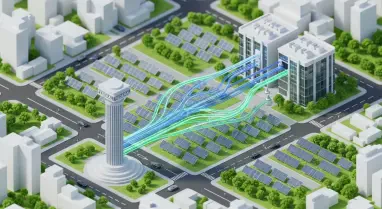
Mapping the complexities of a modern technology stack onto the physical layout of a building allows for a clearer understanding of how infrastructure supports high-level digital services. This synthesis begins at the outermost layer, where the facility’s structural design acts as a buffer against the noise and volatility of the surrounding urban or industrial landscape. Just as the gardens of a palace provide a serene transition toward the inner sanctum, the external landscaping and structural shielding of a data center mask the intense energy consumption and mechanical complexity hidden within. This layer is crucial because it manages the interface between the massive physical requirements of the hardware and the delicate needs of the sensitive electronics, ensuring that external fluctuations in temperature or vibration do not compromise the integrity of the mission-critical operations.
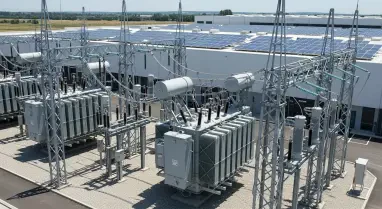
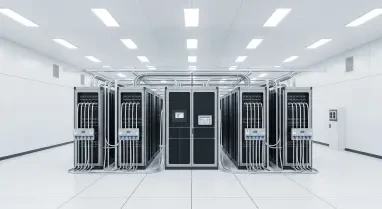
As one moves deeper into the structure, the architecture increasingly reflects the core requirements of the digital age, with the “steps and stone” of the palace finding their counterpart in the facility’s underlying life-support systems. The massive conduits for power, the sophisticated chilled water loops, and the intricate webbing of fiber-optic cabling represent the true foundation of the site. Above this subterranean complexity sits the “lobby” of the data center—the expansive halls filled with repeating columns of server racks that provide the raw computational muscle for the global network. This spatial organization is not accidental; it is a deliberate engineering choice that ensures the most critical components are supported by a robust and accessible base. By treating the data center as a holistic path through these various layers, operators can move away from viewing the facility as a parts list of megawatts and racks, instead seeing it as a cohesive environment where every architectural detail contributes to the resilience of the hosted applications.
Transforming Capacity into Service
The transition from raw physical capacity to usable digital service is perhaps the most critical stage in the life cycle of a data center, functioning much like a palace kitchen that refines basic ingredients into a sophisticated banquet. This process occurs within the orchestration and platform layers, where software management protocols interact directly with the hardware to organize and direct the flow of information. It is in these “passageways” of the infrastructure that the massive investments in concrete, copper, and cooling are finally translated into the intangible value that businesses and consumers recognize as “the cloud.” This stage of the operation requires a seamless integration of physical layout and logical architecture, ensuring that the movement of data is as efficient and unobstructed as the movement of staff through a well-designed service corridor.
At the end of this functional journey lies the “terrace,” which represents the final application interface where the technology meets the human user. This is the point where all the underlying stability and complex engineering become visible as a smooth, responsive experience on a screen, whether it is a financial transaction, a medical diagnosis, or a real-time communication link. The success of this interface is entirely dependent on the stability of the layers beneath it; a beautiful view from a terrace is only enjoyable if the foundation of the building is secure. By maintaining this focus on the end-to-end path, the modern data center ensures that its primary purpose—serving as a reliable host for the world’s most critical digital functions—is never compromised by a lack of coordination between the physical and the virtual. This holistic approach reinforces the idea that the facility is a single, integrated tool for progress rather than a disconnected series of hardware components.
The Financial Reality of Digital Infrastructure
The perception of data centers within the global financial markets has undergone a significant transformation, shifting from being classified as volatile tech stocks to being viewed as stable, long-term infrastructure assets. During recent high-level economic forums, industry experts and former treasury officials have noted that while software companies and AI startups are subject to the whims of market sentiment and rapid cycles of disruption, the physical data center behaves more like a high-grade bond. This is due to the “durable demand” for compute power, which remains constant regardless of which specific software or hardware architecture is currently in favor. As long as the digital economy continues to expand from 2026 onward, the need for a physical location equipped with massive power and cooling capacity remains a permanent fixture of the market landscape.
This shift toward a “bond-like” valuation reflects a maturing industry that prioritizes predictable necessity over speculative growth. For institutional investors, the appeal of the data center lies in its real-world constraints; you cannot simply download more power or more cooling, and the scarcity of suitable land and energy permits creates a natural barrier to entry that protects existing assets. These facilities provide a stabilizing force in an otherwise turbulent technology sector, offering a physical anchor for the vast amounts of capital being poured into the digital transformation. By recognizing data centers as the essential backbone of the economy, the financial world is acknowledging that the “cloud” is a tangible, depreciable asset with persistent utility, much like a toll road or a power plant, but with the added growth potential of the digital revolution.
Balancing Growth with Physical Stability
Maintaining a healthy and resilient digital ecosystem requires a disciplined balance between the rapid expansion of high-growth technologies like artificial intelligence and the “boring” but essential stability provided by physical infrastructure. As the industry looks ahead toward 2027 and 2028, the primary challenge is ensuring that the foundational backbone of the internet can keep pace with the massive influx of new, power-hungry applications. There is a growing realization that without a significant increase in the construction of these “modern palaces,” the most innovative software ventures will face a hard ceiling imposed by the laws of physics. The reliability of power distribution and the efficiency of cooling systems are no longer secondary concerns; they are the primary determinants of whether a new technology can survive and scale in a competitive global market.
Ultimately, the conclusion of the digital era’s formative phase has led to a newfound respect for the physical reality of the machine. The data centers of today and the coming years are the cathedrals of the twenty-first century, built to endure and designed to provide the quiet, essential support that makes all other technological bets possible. To move forward effectively, organizations must prioritize investments in these durable assets, recognizing that digital stability is not a given but a carefully engineered outcome of superior infrastructure. The transition from utility warehouse to digital palace was inevitable, marking a new chapter where the most successful players are those who understand that the future is built on a foundation of concrete, water, and unwavering reliability. This shift ensures that as the digital landscape continues to evolve, the physical structures at its heart will remain the steadfast guardians of global progress.
The transition toward treating data centers as high-value, permanent infrastructure was completed when the industry recognized that stability is the ultimate product of the digital age. In previous years, the focus was often on the speed of deployment and the novelty of the services offered, but the focus has now shifted toward the long-term viability of the physical sites themselves. This evolution was evidenced by the increased integration of sustainable energy sources and the adoption of architectural designs that favor longevity over temporary fixes. By viewing these facilities through the lens of a long-term bond, the sector successfully attracted the massive capital necessary to build the next generation of digital strongholds. The result was a global network of “palaces” that provided a consistent and reliable environment for the data that now drives every aspect of human civilization, from high-frequency trading to the management of vital public resources. Progress was measured not just in bits per second, but in the unwavering uptime and physical resilience of the world’s most important buildings.