Navigating the Shift from Reactive to Proactive Supply Chain Management
The rapid acceleration of global trade volatility has transformed yesterday’s historical data from a reliable strategic asset into a dangerous operational liability for modern enterprises. In an environment where geopolitical tensions escalate without warning and climate-related disruptions occur with increasing frequency, the traditional reliance on static forecasting has become a recipe for failure. Organizations that continue to operate without a digital twin are effectively navigating a stormy sea with a paper map, while their competitors utilize high-fidelity radar to see beyond the horizon. The digital twin—a comprehensive, virtual replica of a physical supply chain—represents the transition from a defensive “what happened” mindset to an offensive “what happens next” strategy. This technology integrates live data streams and artificial intelligence to offer the foresight necessary to navigate a landscape defined by fragmentation and unpredictability.
The core value of this virtual architecture lies in its ability to serve as a strategic command center for operational excellence. By synthesizing vast amounts of information from disparate sources, these models provide a level of clarity that was previously impossible to achieve. The modern supply chain is no longer just a series of logistical steps; it is a complex, living ecosystem that requires constant monitoring and adjustment. Companies adopting these virtual simulations are finding that the ability to test “what-if” scenarios in a risk-free environment allows them to anticipate bottlenecks before they manifest in the physical world. This paradigm shift toward proactive management is not merely a technological upgrade but a fundamental requirement for survival in a global economy that no longer rewards those who wait for a crisis to occur before taking action.
The Evolution of Global Dependency and the Cost of Uncertainty
The historical trajectory of global logistics has been characterized by an aggressive pursuit of lean efficiency and cost minimization, often at the expense of systemic robustness. Over the past several decades, the manufacturing world witnessed the emergence of incredibly elongated and intricate networks, where a single consumer product might cross multiple borders and oceans before reaching its destination. A primary example of this complexity is the modern smartphone, which involves a journey equivalent to traveling from the Earth to the Moon when accounting for the total distance covered by its individual components and assembly stages. While this hyper-globalization succeeded in lowering consumer prices for years, it simultaneously introduced profound vulnerabilities that were exposed during the massive disruptions of recent global health crises and sudden shifts in international trade policy.
As the market adjusts to these realities, there is a growing realization that many organizations historically failed to account for the true “landed costs” of their products, ignoring the hidden expenses of geopolitical risk and supply fragility. The industry is currently witnessing a significant pivot away from traditional offshore manufacturing toward “friend-shoring” and “near-shoring” models. This shift is driven by a desire to bring production closer to home or to more stable, allied regions. In a world where rapid technological adaptation and severe weather events are the norm, uncertainty has become the only constant. Moving toward these shorter, more visible supply chains allows businesses to mitigate the risks inherent in global dependency, ensuring that they remain operational even when traditional routes are compromised by unforeseen external pressures.
Leveraging Digital Replicas for Real-World Operational Excellence
Achieving Real-Time Visibility Through Data Integration
A supply chain digital twin functions as far more than a simple visual representation; it is a dynamic, living entity that mirrors the physical movement of goods from the extraction of raw materials to the final delivery to the consumer. By consolidating captive data from manufacturing processes, inventory levels, and environmental, social, and governance (ESG) compliance into a single source of truth, organizations can perform rigorous stress tests on their operations. This level of transparency is proving to be a game-changer for executive decision-making. Analysis from major management consultancies suggests that the implementation of digital twins can accelerate the speed of decision-making processes by up to ninety percent, allowing companies to respond to market shifts in hours rather than weeks.
The practical application of this technology is already being demonstrated by industry leaders across various sectors. Global consumer goods companies are utilizing digital twins to model entire factory ecosystems, allowing them to optimize production schedules and enhance sustainability initiatives in real time. Similarly, major aerospace manufacturers are employing these virtual models to gain better transparency into their supplier networks, effectively reducing production delays by identifying constraints before they halt the assembly line. These instances highlight that a virtual sandbox provides the necessary space to experiment with operational adjustments, ensuring that the physical supply chain remains lean without sacrificing the resilience needed to withstand unexpected shocks.
Enhancing Warehouse Dynamics and Robotic Efficiency
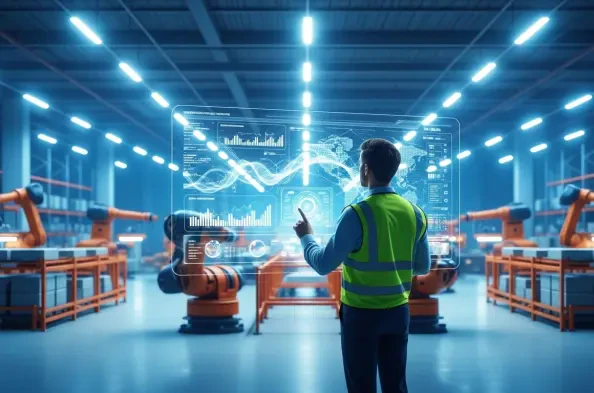
The application of digital twin technology extends deep into specific operational nodes, with warehouse management emerging as a primary beneficiary of these advancements. High-profile industrial collaborations have successfully utilized virtual environments to simulate complex warehouse dynamics and manage sophisticated fleets of autonomous robots. By creating a high-fidelity digital representation of the facility floor, companies can test new layouts and robotic workflows without needing to pause actual production. This capability allows for the fine-tuning of autonomous processes in a way that maximizes throughput while minimizing the risk of collisions or mechanical bottlenecks that often plague traditional automation efforts.
Furthermore, these simulations facilitate a level of agility that manual warehouse management cannot match. When operational requirements change—such as during a sudden surge in e-commerce demand or a shift in product dimensions—the digital twin allows managers to “vetted” new strategies in the virtual world before a single pallet is moved. This predictive approach significantly reduces the margin for error and prevents costly mistakes related to floor-space utilization. By perfecting the orchestration of human labor and robotic efficiency in a simulated environment, organizations ensure that their physical facilities are operating at peak performance from the moment a new process is deployed, effectively future-proofing their internal logistics.
Overcoming Technical Hurdles in Implementation
While the benefits are significant, the journey toward a fully functional digital twin is often hindered by substantial technical challenges, particularly concerning data integrity. Many organizations grapple with “dirty data” or conflicting information that originates from fragmented enterprise resource planning systems, diverse Internet of Things sensors, and aging legacy software. To address these issues, experts recommend a systematic assessment of an organization’s data maturity. The move away from traditional, centralized data lakes toward more sophisticated “data mesh” or “data fabric” architectures is becoming essential. These modern approaches allow for a more decentralized and flexible way of managing information, ensuring that every node in the digital twin receives accurate and timely updates.
Successful implementation also requires strategic partnerships with major cloud infrastructure providers and specialized software platforms. By mapping all relevant data points into a cohesive architecture through solutions like AWS, Snowflake, or Palantir, businesses can eliminate the data silos that often lead to inaccurate simulations. Addressing these complexities early in the process is vital, as the predictive power of the “crystal ball” is entirely dependent on the quality and consistency of the data that feeds it. A digital twin built on a foundation of flawed data will provide misleading insights, making the pursuit of data hygiene a non-negotiable prerequisite for any organization seeking to leverage this technology for long-term resilience.
The Future Landscape of AI-Driven Simulation and Scaling
The progression of digital twin technology is becoming increasingly intertwined with the rapid evolution of artificial intelligence. Looking forward, the primary trend involves the total integration of advanced machine learning algorithms to process and interpret the massive, multidimensional datasets generated within the twin environment. Future systems will transcend simple visualization; they will possess the capability to autonomously suggest optimal shipping routes, calculate precise inventory levels, and identify alternative suppliers in response to emerging macroeconomic or geopolitical shifts. This evolution marks the beginning of the “autonomous supply chain,” where the digital twin acts as a central nervous system that is constantly recalibrating itself to maintain equilibrium.
In addition to operational efficiency, digital twins will play a pivotal role in navigating the tightening regulatory landscape. As global requirements regarding carbon footprints and labor practices become more stringent, these virtual models will serve as the primary tool for automated compliance and ESG reporting. By providing a transparent and auditable trail of every component’s journey, digital twins make it possible for companies to meet legal obligations with unprecedented accuracy. This capability will be indispensable for economic survival, as organizations that cannot prove their compliance through data-backed evidence will face increasing financial and reputational risks. The future belongs to those who can model complexity and automate their response to a world in constant flux.
Strategies for Successful Adoption and Risk Mitigation
To successfully integrate digital twin technology without overwhelming existing resources, organizations should adopt a disciplined and phased methodology. The initial focus should be on small-scale pilot projects that are designed to demonstrate immediate value and build internal confidence. It is rarely necessary to overhaul the entire infrastructure at once; instead, companies should look for opportunities to integrate digital twins with existing systems and collaborate with industry partners to share the financial risks associated with research and development. This incremental approach allows for the refinement of strategies based on actual performance data, ensuring that the eventual scale-up is rooted in proven success rather than theoretical assumptions.
Equally important is the human element of technological transformation. Resistance to change is a common hurdle, often fueled by a lack of familiarity with artificial intelligence or the Internet of Things. Leadership must take an active role in fostering a culture of experimentation where employees feel empowered to engage with new tools. By creating a “safe space for failure,” where virtual simulations are treated as learning opportunities, organizations can turn their workforce into advocates for digital transformation. Focusing on value-driven metrics, rather than just traditional key performance indicators, ensures that the adoption of digital twins remains strategically aligned with the company’s long-term vision of resilience and growth in an increasingly volatile market.
Concluding Thoughts on the Imperative of Digital Foresight
Digital twins represented a fundamental shift in the methodology used to perceive and manage the global movement of goods and services. By providing a high-fidelity window into the future, they enabled companies to construct the resilience required to survive in an era defined by continuous global crises. The transition from reactive troubleshooting to proactive simulation became a requirement for any organization that intended to remain competitive in a landscape where speed and accuracy were the primary currencies. The industry recognized that the ability to model complexity and anticipate disruption served as the primary differentiator between market leaders and those who were unable to keep pace with technological progress.
The implementation of these virtual models successfully turned the fog of uncertainty into a clear and actionable roadmap for logistics professionals. Organizations that embraced the phased adoption of digital twins found themselves better equipped to handle the rising demands of regulatory compliance and the complexities of autonomous warehouse management. The integration of artificial intelligence into these systems provided a central nervous system for supply chains, allowing for constant recalibration in the face of shifting geopolitical realities. Ultimately, the strategic foresight gained through digital replication proved to be the most effective tool for navigating the high-stakes environment of global trade, ensuring that operational excellence was no longer a matter of chance but a result of informed simulation.