As enterprises rush to deploy artificial intelligence, many are discovering that the most sophisticated algorithms are rendered ineffective by a foundational flaw: the fragmented, inconsistent, and untrustworthy data they are forced to consume. Enterprise AI Data Integration represents a significant advancement in the enterprise software sector, shifting the focus from the intelligence layer to the data itself. This review will explore the evolution of the technology, its key features, performance metrics, and the impact it has had on various applications. The purpose of this review is to provide a thorough understanding of the technology, its current capabilities, and its potential future development.
The Dawn of the Enterprise Data Backbone
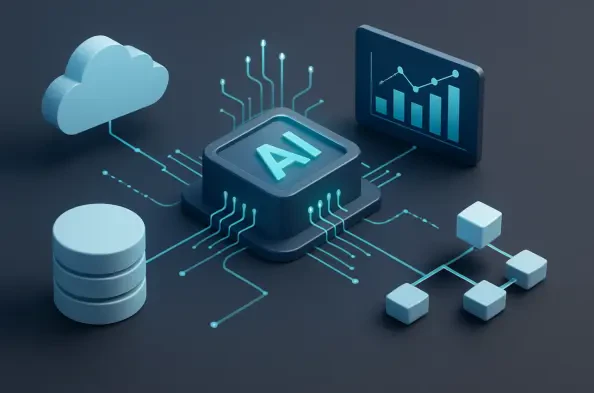
The prevailing narrative in enterprise AI is undergoing a fundamental transformation. For years, the emphasis was placed squarely on the predictive power and learning capabilities of AI models. However, a high rate of project failure has forced a strategic pivot toward what is now considered the primary driver of success: a robust, context-aware data foundation. This enterprise data backbone serves as the central nervous system for AI, integrating disparate data sources to provide a unified and coherent view of the entire organization.
This shift is a direct response to the reality that fragmented and poor-quality data is the leading cause of AI underperformance. Without a cohesive data strategy, AI agents operate with a limited and often contradictory understanding of the business, leading to flawed decisions and unreliable automation. The new imperative is not just to build smarter models but to build a smarter, more integrated data ecosystem that allows AI to function with clarity, context, and confidence.
Core Technologies of the Integrated Framework
A modern Enterprise AI Data Integration platform is not a single product but a convergence of several critical technologies. These components work in concert to create a governed, accessible, and trustworthy data landscape that can effectively fuel advanced AI and automation. The framework is designed to address the entire data lifecycle, from discovery and cleansing to unification and contextualization.
Unified Metadata and Data Lineage Engines
At the heart of this integrated framework lies a unified metadata layer, which functions as a “complete data index” for the enterprise. This engine methodically maps all organizational data assets, regardless of their location—be it in legacy on-premises systems, cloud data lakes, or third-party applications. By creating a comprehensive catalog, it provides AI with a clear map of the entire data landscape.
Moreover, this component traces the lineage of every piece of data, documenting its origin, the transformations it has undergone, and its quality metrics. This data journey provides the essential context AI needs to determine whether information can be trusted for critical decision-making. Essentially, data lineage equips AI with situational awareness, allowing it to move beyond simple pattern recognition to a deeper, more reliable interpretation of business information.
Master Data Management for a Golden Record
To eliminate the ambiguity that plagues AI systems, the framework incorporates robust Master Data Management (MDM) capabilities. The primary role of MDM is to establish a single, authoritative source of truth—often called a “golden record”—for the most critical business entities. These include core concepts like customers, products, suppliers, and assets, which are frequently represented differently across various business systems.
By reconciling and consolidating these disparate records, MDM ensures that all AI agents and business processes operate from a consistent and reliable data set. When an AI agent needs to understand a customer’s history or a product’s supply chain status, it can draw from one definitive record rather than trying to piece together conflicting information. This consistency is paramount for improving the accuracy of AI-driven decisions and automating workflows without introducing errors.
Zero-Copy Architecture for Seamless Access
Addressing the immense technical and financial burden of data movement, these platforms are increasingly built on a zero-copy architecture. This innovative design allows AI systems and applications to access and query data directly from its source, whether it resides on-premises, in a data lake, or in another cloud environment. This eliminates the need to create and maintain multiple physical copies of the same data across the enterprise.
The benefits of this approach are substantial. It dramatically reduces data transfer complexities, network latency, and the costs associated with redundant storage. Furthermore, it ensures that AI is always working with the most current data, as there is no delay caused by traditional data duplication and synchronization processes. This seamless access model fosters a more agile and cost-effective data infrastructure, making it feasible for enterprises to leverage their entire data estate for AI initiatives.
Evolving Market Sentiments and Strategies
The industry’s approach to AI adoption is maturing, reflecting a significant shift in enterprise priorities. The initial wave of AI implementation was largely driven by a “fear of missing out” (FOMO), where organizations rushed to deploy AI technologies without a clear strategy, often leading to disappointing results. This sentiment has now been replaced by a more pragmatic and cautious “fear of messing up” (FOMU).
Today, business leaders are less concerned with simply having AI and more focused on deploying it correctly. This means prioritizing foundational elements like data quality, governance, infrastructure stability, and cost-effectiveness. Enterprises are asking tougher questions about the total cost of ownership, the complexities of integrating data from legacy systems like ERPs, and the predictability of new pricing models. This strategic patience reflects a deeper understanding that successful AI is built on a solid data foundation, not on hasty deployment.
Applications in a Real-World Context
The practical impact of Enterprise AI Data Integration is most visible in its real-world applications. By providing a unified and context-rich data backbone, this technology enables the creation of sophisticated AI systems that can automate complex tasks and deliver unprecedented levels of personalization. Industries are now deploying integrated AI platforms to transform core business functions and create significant competitive advantages.
Powering Autonomous Enterprise Agents
A prominent application is the deployment of specialized AI agents designed to manage specific business functions, such as sales, customer service, or supply chain logistics. These autonomous agents are built on a multi-layered architecture that leverages a complete, 360-degree view of enterprise data. They can access and interpret real-time operational signals, understand historical context, and execute actions based on decades of embedded business logic.
For example, a supply chain agent can monitor inventory levels, track shipment delays, and automatically re-route orders to prevent disruptions, all while interacting with various business systems autonomously. These agents function as a highly efficient digital workforce, making informed decisions and automating complex workflows that previously required significant human intervention, thereby driving operational efficiency and responsiveness.
Revolutionizing the Customer 360 View
For decades, the “Customer 360” view has been an elusive goal for many organizations. An integrated data backbone finally makes it a reality. By unifying customer data from previously siloed departments—including sales, marketing, service, and e-commerce—enterprises can construct a truly comprehensive and dynamic profile for every customer.
This holistic view empowers AI to deliver hyper-personalized experiences at scale. AI can accurately predict customer needs, recommend relevant products, and automate service interactions with a deep understanding of the customer’s entire journey and history with the company. This moves beyond basic CRM functionality to enable proactive engagement, ultimately fostering greater customer loyalty and driving revenue growth.
Key Challenges and Implementation Hurdles
Despite its transformative potential, the widespread adoption of Enterprise AI Data Integration is not without its challenges. Organizations face significant technical hurdles and market obstacles that can slow down or complicate implementation. Successfully navigating these issues is critical for unlocking the full value of an integrated data strategy.
Navigating Data Complexity and Governance
One of the most significant technical difficulties lies in integrating vast and complex legacy systems, such as enterprise resource planning (ERP) platforms, which often house decades of critical business data in proprietary formats. The ongoing effort to discover, clean, protect, and unify these disparate data sources is resource-intensive and requires specialized expertise.
Furthermore, this integration must be accomplished while adhering to a complex web of data governance protocols, privacy regulations, and internal security policies. Ensuring consistent data quality and maintaining strict governance across a newly unified data landscape is a continuous challenge that demands a robust and well-defined strategy from the outset.
Addressing Cost and Pricing Model Concerns
Beyond the technical hurdles, market obstacles present another set of challenges. Many enterprises remain apprehensive about the total cost of ownership associated with these sophisticated platforms. A primary concern is the lack of transparency and predictability in the pricing models offered by many vendors.
Seat-based and usage-based contracts for AI offerings can lead to unpredictable costs that are difficult to budget for, causing hesitation among potential adopters. As organizations become more cost-conscious in their technology investments, vendors will need to provide clearer and more predictable pricing structures to alleviate these concerns and accelerate enterprise adoption rates.
The Future of Integrated Enterprise Intelligence
The trajectory of Enterprise AI Data Integration points toward an increasingly automated and self-governing business ecosystem. As the foundational data backbone becomes more robust and ubiquitous, the next evolution will see the rise of more sophisticated and interconnected autonomous agents. These agents will not only manage specific functions but will collaborate to orchestrate complex, cross-departmental workflows with minimal human oversight.
The long-term vision is a fully integrated, intelligent enterprise where data flows seamlessly and securely between systems, and AI-driven automation is embedded in every core business process. This will mark a fundamental shift from data-informed decision-making to data-driven automation, where the enterprise operates with a level of efficiency, agility, and intelligence that is unattainable today.
Concluding Analysis and Strategic Outlook
This review assessed the state of Enterprise AI Data Integration, a technology that has become central to the success of modern AI initiatives. The evidence demonstrated that its core components—including unified metadata, master data management, and zero-copy architecture—collectively solve the fundamental data fragmentation and quality issues that have historically hindered AI projects. The analysis of market trends and applications confirmed that enterprises are increasingly recognizing the strategic importance of this foundational layer.
It is clear that a unified, context-rich data backbone is no longer an optional component but an essential prerequisite for achieving reliable, scalable, and impactful AI. While challenges related to implementation complexity and cost remain, the technology’s potential to power autonomous agents, deliver true customer intelligence, and drive enterprise-wide automation is undeniable. Its continued development and adoption represent a transformative shift that will define the future of the enterprise sector.