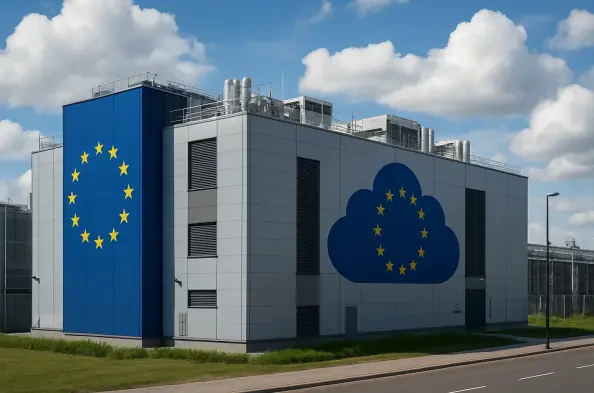
Europe’s relentless digital transformation is fueling an unprecedented expansion of its data center capacity, with projections showing it will triple within the next seven years, placing an extraordinary strain on the continent’s established power infrastructure. This explosive growth, driven by the insatiable demands of artificial intelligence and cloud computing, elevates the need for a continuous, uninterrupted power supply from a mere operational detail to a cornerstone of Europe’s entire digital economy. This critical juncture not only exposes significant vulnerabilities in the existing grid but also carves out a substantial market opportunity for advanced energy solutions capable of guaranteeing the resilience required for the future.
The Unprecedented Challenge to Europe’s Power Grid
Explosive Growth Meets Sustainability Mandates
The sheer magnitude of the data center expansion presents a formidable challenge to Europe’s energy sector, with consumption already exceeding 90 terawatt-hours in 2024, a figure destined for a steep ascent. This surge is not just about more facilities; it is about the increasing power density within them. Modern workloads, particularly the GPU clusters that power artificial intelligence and machine learning applications, are exceptionally power-hungry, with individual racks continuously drawing between 30 and 60 kilowatts. This intensification of energy use per square foot means that new data centers require power on a scale previously reserved for heavy industry. As businesses and governments migrate more services to the cloud and leverage AI for innovation, the underlying digital infrastructure demands an ever-growing share of the continent’s electricity, pushing the grid closer to its operational limits and raising urgent questions about how to sustainably power this growth without compromising stability or availability for other essential services.
This immense appetite for energy places the data center industry on a direct collision course with Europe’s ambitious environmental targets. The EU Green Deal and the Climate Neutral Data Center Pact establish stringent mandates for decarbonization and energy efficiency, creating a complex paradox for an industry defined by its massive power consumption. Operators are now under intense pressure to reconcile their operational needs with their corporate sustainability goals and regulatory obligations. Simply sourcing more power from the existing grid is no longer a viable or acceptable strategy, especially as much of that grid still relies on fossil fuels. The industry is therefore compelled to innovate, seeking solutions that not only provide the reliable, high-quality power essential for uptime but also align with a net-zero future. This dual imperative is accelerating the move away from traditional backup systems and toward cleaner, more integrated energy technologies that can support both digital growth and climate action.
A Continent-Wide Wake-Up Call
The long-held assumption of unwavering grid stability was shattered by a stark simulation of what could go wrong: a cascading grid failure on the Iberian Peninsula on April 28, 2025. This fictional event, which saw a sudden loss of 2.5 gigawatts of generation capacity, triggered severe voltage surges and a domino effect that disconnected Spain and Portugal from the broader European power system for as long as ten hours. This “wake-up call” served as a powerful proof-of-concept for a worst-case scenario, vividly illustrating how a localized disruption can have continental implications. It exposed the inherent fragility of a highly interconnected system, proving that reliance on the grid alone is a high-risk strategy in an era of increasing volatility. For critical infrastructure sectors, especially data centers, the event highlighted a fundamental vulnerability that could no longer be ignored, forcing a complete reassessment of energy resilience strategies across the continent.
The direct consequences of such a grid failure for data centers are nothing short of catastrophic. During the simulated Iberian blackout, facilities were forced onto their emergency systems, a last line of defense that is often not designed for prolonged use. The incident risked widespread, costly downtime, potentially leading to irreversible data loss and severe financial penalties for breaching stringent service level agreements (SLAs) with clients. Perhaps most unsettling was the revelation that even regions with a high penetration of renewable energy are not immune to such instability. The intermittency of wind and solar, without adequate energy storage and stabilization technologies, can contribute to grid fragility. The blackout drove home the point that a resilient power strategy requires more than just access to the grid; it demands a sophisticated, multi-layered approach to power management that can insulate critical operations from external shocks.
The Rise of Advanced Energy Storage Solutions
Shifting from Legacy Systems to Intelligent Batteries
In the wake of growing grid fragility and the enforcement of stringent zero-emission mandates, the data center industry is rapidly moving away from its long-standing reliance on diesel generators for backup power. For decades, these generators were the default solution, but their environmental impact, maintenance costs, and fuel-related logistical challenges make them increasingly untenable in the modern landscape. Corporate sustainability goals and public pressure for decarbonization are powerful drivers of this transition. The market is now pivoting decisively toward more advanced and sustainable alternatives, with lithium-ion Battery Energy Storage Solutions (BESS) emerging as the leading technology. This shift represents a fundamental change in how data center resilience is conceived—moving from a purely reactive, fossil-fueled backup plan to a proactive, integrated energy management system that is both cleaner and more technologically sophisticated.
Central to this technological evolution is the development of a new industry standard in power management: intelligent switchboards integrated with BESS. These advanced systems are engineered to detect grid anomalies and execute a seamless switch to battery power in less than five milliseconds. This near-instantaneous transition is a critical capability, as it prevents any power disruption from reaching the sensitive IT equipment within the data center, thereby ensuring 100% uptime and preventing data corruption. Unlike the slower start-up times of diesel generators, these battery-based systems provide a smooth and uninterrupted flow of high-quality electricity. This level of responsiveness transforms the battery from a simple backup device into an integral part of the facility’s primary power path, capable of conditioning power and protecting operations not just from blackouts but also from minor sags, swells, and other common grid disturbances.
The Dual Role of Batteries in Resilience and Grid Stability
The role of modern Battery Energy Storage Solutions extends far beyond providing a last resort during a power outage; they have become active and essential components in maintaining the overall health and stability of the electrical grid itself. These systems are capable of providing a range of ancillary services that are vital for grid operators. By rapidly injecting or absorbing power, BESS can perform frequency control, helping to keep the grid’s operating frequency within its narrow, stable range. They can also provide voltage management, ensuring that power quality remains high and consistent across the network. This ability to actively participate in grid balancing makes BESS a valuable asset not just to the data center but to the entire energy ecosystem. In this capacity, batteries act as shock absorbers, smoothing out fluctuations and reinforcing the grid against the kinds of disturbances that could otherwise lead to cascading failures.
This dual function is particularly crucial for facilitating Europe’s transition to a renewable-energy-dominated power system. The primary challenge with sources like solar and wind is their intermittency—power generation fluctuates with weather conditions. BESS directly addresses this issue by storing excess energy when generation is high (e.g., on a sunny, windy day) and discharging it when generation is low or demand peaks. This capability to smooth out the power supply from renewables makes the grid more stable and reliable, reducing the need for fossil-fuel “peaker” plants. For data centers, integrating BESS means they can reduce their dependence on an increasingly volatile grid while also enabling greater use of clean energy, helping them meet their sustainability targets. Ultimately, these battery systems are an indispensable enabling technology for building a digital infrastructure that is both resilient and truly sustainable.
The Iberian Peninsula as a New Energy Hub
Turning Crisis into Competitive Advantage
The simulated Iberian blackout, while disruptive in concept, has served as a powerful catalyst for change, uniquely positioning the region to emerge as a European hub for the burgeoning energy resilience market. Galvanized by the stark illustration of grid vulnerability, the crisis has accelerated both regulatory focus and industry investment in advanced energy storage solutions. This newfound urgency has created a dynamic environment for innovation, where policymakers and private enterprises are collaborating to develop and deploy the technologies needed to build a more robust power infrastructure. The region’s proactive response transforms a potential weakness into a significant strength, creating a testbed for next-generation grid technologies and establishing a blueprint for resilience that other European nations can follow. This focused effort is attracting talent, capital, and a new wave of technological development centered on ensuring the stability of critical digital infrastructure.
This regional momentum is strongly supported and amplified by Europe’s comprehensive regulatory framework, which creates a significant competitive advantage. Regulations such as the EU Battery Regulation and the associated Battery Passport requirements establish some of the highest standards in the world for quality, safety, sustainability, and circularity. These rules mandate transparency throughout the battery lifecycle, from the sourcing of raw materials to end-of-life recycling. While challenging, this framework fosters a market that rewards high-quality, durable, and environmentally responsible products. For the Iberian region, which is also a leader in renewable energy integration, this regulatory landscape provides a clear pathway to develop a world-class battery industry. By adhering to these standards, the region can position itself as a trusted supplier of the advanced, sustainable energy storage solutions that Europe’s digital economy critically needs.
Building a Collaborative Path Forward
The urgent need for resilient power solutions has ignited a rapidly expanding market for data center energy storage in Europe, which is projected to more than double in value from €585 million in 2024 to an estimated €1.2 billion by 2034. To effectively capitalize on this explosive growth and steer the industry toward scalable and sustainable solutions, a concerted, collaborative effort is essential. The industry has begun to converge at strategic forums designed to foster this collaboration, such as the upcoming Battery & Energy Storage Tech Europe conference scheduled for September 8-9, 2026, in Barcelona. These events have become critical meeting points for the entire value chain, bringing together energy professionals, data center engineers, investors, and policymakers to share knowledge, forge partnerships, and align on the technological roadmap required to secure Europe’s digital future against the backdrop of an increasingly fragile energy landscape.
The primary aim of these industry gatherings was to connect pioneers in next-generation materials, advanced battery management systems, and innovative safety and recycling technologies with the end-users and investors who could deploy their solutions at scale. The clear focus on stationary and industrial applications, particularly for data centers, reflected a collective recognition of this sector as the primary growth driver for the energy storage market. By creating a platform to address the lessons learned from grid instabilities and showcase the technologies needed for a more resilient digital infrastructure, the industry took decisive steps. These collaborative efforts built a strong foundation, not only for solving the immediate challenges of the data center boom but also for strengthening Europe’s overall industrial and energy independence in a rapidly changing world.