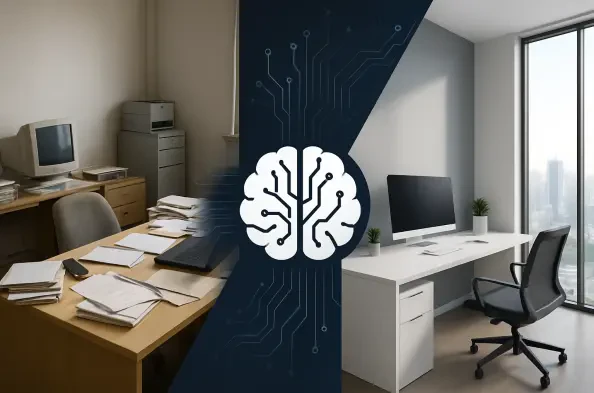
A persistent paradox haunts the modern CIO’s office, where an overwhelming majority of the IT budget is consumed by the very legacy systems that prevent the future from arriving. This challenge, a constant drain on resources and a formidable barrier to progress, defines the contemporary technology landscape. In response, a powerful strategic alliance has emerged, combining deep industry knowledge with hyperscale cloud infrastructure to offer a definitive path forward. This roundup of industry analyses and case studies examines how the collaboration between IBM and AWS is not just a partnership but a fundamental enabler of AI-powered business transformation, providing a playbook for organizations to break free from the past and build a resilient, innovative future.
The Modernization Mandate Overcoming Legacy Hurdles in the AI Era
A consensus among technology executives points to a crippling financial reality: an average of 70% of IT budgets are allocated not to innovation but to the sheer maintenance of outdated, monolithic infrastructure. This “budget trap” effectively sidelines crucial investments in cloud, data analytics, and artificial intelligence, the very technologies essential for competing in the modern economy. The immense cost and complexity of maintaining these legacy systems create a cycle of inertia, leaving businesses vulnerable to more agile, digitally native competitors and unable to meet evolving customer expectations.
The strategic alliance between IBM and Amazon Web Services (AWS) represents one of the most significant industry responses to this pervasive pain point. It is engineered to directly confront the challenge of technical debt by providing a structured, AI-accelerated pathway to the cloud. This collaboration moves beyond a simple vendor relationship, integrating IBM’s vast consulting and industry expertise with the robust, scalable, and technologically advanced platform of AWS. This analysis will dissect the mechanics of this partnership, exploring its foundational AI frameworks, its tangible impact across global industries, and the actionable strategies it offers leaders aiming to fund their future by modernizing their present.
Forging a New Path The Mechanics and Impact of a Synergistic Alliance
From Inertia to Intelligence The Role of Agentic AI in Application Modernization
At the heart of the joint IBM and AWS strategy is a transformative technological approach centered on IBM’s proprietary agentic AI framework. This is not merely automation; it is the deployment of intelligent, autonomous agents designed specifically to deconstruct, analyze, and streamline the process of migrating and modernizing complex applications. Working in synergy with AWS’s own powerful suite of agentic AI tools, this framework creates a best-of-both-worlds capability. It intelligently maps application dependencies, refactors code, and validates outcomes, significantly reducing the manual effort and human error traditionally associated with large-scale modernization projects.
Expert analysis of early adoption has consistently shown that this integrated approach offers the “fastest path to impactful ROI.” The benefits are multifaceted, extending beyond mere cost savings. Organizations report substantially reduced project risk, greater operational efficiency through automation, and dramatically accelerated timelines for bringing modernized applications to market. The inherent complexities of migrating decades-old, deeply embedded enterprise systems have historically been a major deterrent for CIOs. However, the combined AI-driven methodology is purpose-built to navigate these challenges, offering a level of predictability and control that makes even the most daunting transformation initiatives manageable and achievable.
Reimagining Customer and Fan Engagement Across Industries
The ultimate measure of any technology transformation is its impact on the end user, and it is here that the business outcomes of the IBM-AWS partnership become most visible. Modernizing customer-facing platforms is no longer just an IT project; it is a core business strategy for enhancing engagement and building loyalty. By moving applications to a flexible, scalable cloud environment, companies can deliver more personalized, reliable, and feature-rich digital experiences that were impossible to support with rigid legacy systems.
The results from Scuderia Ferrari HP offer a compelling case study. To engage a new generation of tech-savvy fans among its nearly 400 million global followers, the team overhauled its fan application on a hybrid-cloud architecture built on AWS. This modernization, guided by IBM Consulting, led to a doubling of active daily users. Similarly, Delta Air Lines leveraged the partnership to migrate over 500 applications to AWS, a move that enabled strategic initiatives like the rollout of free in-flight Wi-Fi for 1,000 aircraft. These examples illustrate a clear trend: companies that successfully leverage this alliance to transform their digital platforms gain a significant competitive advantage, directly translating technological agility into enhanced customer satisfaction and market share.
Modernizing the Core Fortifying Operations and Supply Chains for a Resilient Future
Beyond customer-facing applications, the partnership’s impact is profoundly felt in the modernization of mission-critical enterprise systems—the operational backbone of major organizations. These core systems, from ERPs to supply chain management platforms, have long been considered too entrenched and risky to move. The alliance challenges this assumption by providing a proven framework for migrating and improving these vital workloads, ensuring business continuity while unlocking new levels of performance and insight.
The successful migration of Southwest Gas’s data-intensive SAP applications to AWS, for instance, yielded a 35% performance boost and positioned the utility to explore agentic AI for customer experience. In the automotive sector, Toyota Motors North America partnered with IBM to deploy an “Agent AI Assist” built with Amazon Bedrock, providing unprecedented visibility into its supply chain. A key best practice emerging from these complex projects is the “humans in the loop” approach. This model balances powerful AI automation with essential human oversight, ensuring that strategic decision-making remains in the hands of experts while routine tasks are handled with machine efficiency. This hybrid approach is proving to be the gold standard for modernizing core operations responsibly.
Catalyzing Global Transformation Scaling Expertise and Fostering Regional Innovation
The demand for digital transformation is a global phenomenon, and the IBM-AWS partnership is strategically expanding its reach to meet growing regional needs. Recognizing the significant investments in modernization by governments and industries in the Middle East, the collaboration has been extended in Saudi Arabia and the UAE. This initiative is designed to accelerate the adoption of cloud and AI, helping to realize the region’s ambitious economic diversification goals.
A tangible outcome of this expansion is the creation of a new innovation hub in Riyadh. This center provides a dedicated space for government and enterprise clients to co-create, develop proof-of-concept projects, and gain hands-on experience with the latest cloud technologies. This model builds on the success of similar ventures established in India and Romania, demonstrating a repeatable formula for fostering local talent and building regional capability. By staffing these hubs with domestic professionals, the partnership not only delivers advanced technology but also contributes to the development of a skilled, self-sustaining local tech ecosystem.
The CIOs Playbook Translating Strategic Alliance into Actionable Advantage
The core value proposition emerging from this industry-wide analysis is clear: leveraging a combined, AI-powered framework allows organizations to finally break free from the legacy maintenance cycle and redirect capital toward genuine innovation. For business leaders, this translates into a practical playbook for action. The first step involves a comprehensive assessment of technical debt to identify which legacy systems are posing the greatest drag on the business. This creates a data-driven foundation for prioritizing modernization efforts.
From there, leaders are advised to identify high-impact pilot projects that can deliver measurable wins quickly, building momentum and demonstrating value to the broader organization. Engaging expert partners with deep domain and technical proficiency is critical to navigating the complexities of these initial projects. The final, and perhaps most crucial, piece of guidance is to meticulously align every modernization effort with a specific business outcome—whether it is elevating the customer experience, improving operational efficiency, or building a more resilient supply chain. This ensures that technological change is always in service of strategic business goals.
The Future is Forged in Collaboration A New Era of Continuous Innovation
The collective evidence from across sectors made it clear that the integration of deep industry knowledge, as embodied by IBM, and powerful cloud infrastructure, delivered by AWS, was the definitive key to unlocking true transformation. This synergy provided organizations with an unparalleled capability to plan, execute, and scale modernization initiatives that delivered concrete, bottom-line benefits. The partnership’s enduring importance was established by its success in setting a new standard for creating a virtuous cycle of agility, innovation, and business resilience. Ultimately, the analysis concluded that moving beyond maintenance was not merely a cost-saving exercise; it was the essential first step toward achieving and sustaining market leadership in an increasingly AI-driven global economy.