For more than a decade, enterprise technology has been constructed upon a powerful and pervasive assumption: the cloud offers a limitless, on-demand pool of resources that can scale effortlessly to meet any business need. This core belief in “elastic compute” allowed organizations to innovate rapidly, treating infrastructure capacity as an afterthought that could always be resolved with a few clicks. However, this foundational principle is now beginning to fracture under the immense weight of real-world physical and financial constraints. As the illusion of infinite scalability fades, a new, more disciplined paradigm is emerging—one of “intentional compute”—which compels technology leaders to abandon reactive scaling and instead leverage infrastructure architecture as a primary control for managing and predicting business outcomes. This shift marks a pivotal maturation point for the industry, moving from a blind faith in elasticity to a strategic, deliberate approach to resource management.
The Cracks in the Foundation of Elasticity
The Myth of Infinite Resources
The foundational promise of the cloud—that computational capacity is effectively infinite and available on demand—is rapidly becoming obsolete. For years, architects designed complex systems with the implicit safety net that any performance bottleneck or capacity issue could be resolved later by simply “adding more resources.” This assumption has not just been challenged; it has been fundamentally broken, transforming what was once a reliable strategy into a significant and growing business liability. The elasticity that was once considered an invisible, inherent property of cloud platforms is now revealing itself as a finite, often scarce, and increasingly costly resource that demands deliberate, proactive management. Systems built to rely on this infinite pool now find themselves on unstable ground, where the next scaling event could introduce unforeseen latency, cost overruns, or outright service failures. The quiet assumption that underpinned a generation of architectural decisions has been shattered, forcing a complete reevaluation of how systems are designed for resilience and growth.
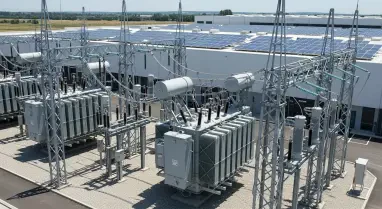
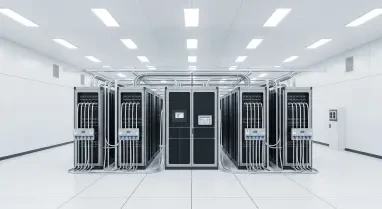
This failure of the infinite-scale assumption is not merely a software or configuration issue; it is deeply rooted in the hard physics of the real world. The abstract concept of “the cloud” often obscures the concrete reality of data centers, which are bound by tangible constraints such as power availability, cooling capacity, and physical rack density. The recent surge in demand for specialized hardware, particularly GPUs essential for AI and data-intensive workloads, has made these physical limits even more apparent and acute. What was once a concern only for hyperscale providers has now become a direct problem for their enterprise customers. The era of assuming that infinite hardware is always available is over. Organizations are now confronting the tangible ceilings of the physical world, where resource contention is no longer a theoretical risk but a practical, operational reality. This shift forces a move from a “cloud-first” to a “cloud-smart” posture, where the physical supply chain of compute resources is a critical consideration in strategic planning.
The Tangible Consequences of Scarcity
When business demand inevitably outstrips the cloud’s finite capacity, the consequences are no longer theoretical or confined to edge cases. The first and most immediate risk that materializes is unpredictable latency. As various systems and applications compete for strained resources like CPU, memory, and network I/O, application response times become dangerously inconsistent. This degradation of performance directly impacts the user experience, erodes customer trust, and puts critical service-level agreements (SLAs) at risk of being breached. These are not just rare, spike-driven events that occur during peak traffic; they are becoming a part of the day-to-day operational reality for a growing number of businesses. The reliability that the cloud once promised is now being undermined by the very scalability that was supposed to guarantee it, creating a volatile environment where performance is no longer a given but a resource to be carefully managed and protected.
Beyond the immediate problem of performance degradation, two other critical and interconnected risks have emerged with force: soaring, unpredictable costs and pervasive workload contention. The ingrained pattern of using unmanaged autoscaling as a default solution to fix performance issues leads directly to runaway budgets and a level of financial unpredictability that alarms CFOs. The perceived simplicity of cloud scaling often masks significant financial ceilings that are discovered only after they have been breached. Simultaneously, as more services are packed onto shared infrastructure, different applications begin to actively interfere with one another. They vie for the same underlying compute, memory, and specialized hardware resources, creating a chaotic and unstable operating environment. This “noisy neighbor” problem, once a niche concern, is now a mainstream challenge, turning a company’s own internal systems into sources of mutual disruption and unpredictable behavior.
The New Mandate from Reaction to Intention
Redefining Architectural Trade-offs
This new reality of constrained resources forces a fundamental and non-negotiable shift in how architectural trade-offs are identified, evaluated, and managed. In the previous era of the elastic model, these critical decisions were largely implicit and often ignored. Over-provisioning to handle peak demand and accepting occasional performance degradation during scaling events were simply seen as the unavoidable cost of maintaining speed and flexibility. The emerging intentional model, however, demands that these trade-offs become explicit, deliberate, and strategically aligned with business priorities. Technology leaders and architects are now forced to make conscious, data-driven choices that directly reflect business value. No longer can every service be designed to scale infinitely; resources must be allocated with precision based on their contribution to the bottom line, turning architectural design into a function of business strategy rather than a purely technical exercise.
This transition is fundamentally changing the questions that drive system design. The conversation is shifting away from simplistic queries like, “How quickly can this system scale?” to more nuanced, business-aligned inquiries such as, “How consistently does this critical service perform under sustained, real-world load?” and “Which specific workloads justify the significant cost of premium, reserved capacity versus those that can tolerate more variability?” Strategic decisions must now be made about where performance guarantees are absolutely critical to revenue and customer satisfaction, where a degree of fluctuation is tolerable, and, most importantly, where scale should be strategically capped to control costs and ensure the stability of the entire ecosystem. This approach moves organizations from a reactive posture of fighting fires to a proactive one of managing a portfolio of services with different risk and performance profiles, ensuring that the most valuable workloads receive the resources they need to succeed.
Architecture as a Business Control Panel
As the automatic safety net of infinite elasticity disintegrates, the role and importance of architecture are elevated from a technical blueprint to a strategic business control point. System architectures that were built on the outdated infinite-scale assumption, often characterized by blurred lines of responsibility and tightly coupled, monolithic services, no longer absorb uncertainty—they actively amplify it. When placed under the stress of resource constraints, these poorly defined architectural boundaries manifest as severe resource contention, unpredictable behavior, and cascading failures that can ripple across the entire organization. What was once a manageable level of technical debt now becomes an unacceptable source of operational risk. The very design of the system, which was intended to enable growth, now becomes a primary obstacle to its stability and predictability, demonstrating that architectural choices have direct and measurable financial and operational consequences.
In this challenging new landscape, simplicity and discipline emerge not just as best practices but as critical strategic advantages. Simpler, more decoupled architectures are inherently easier to reason about, manage under constraint, and, most importantly, behave more predictably when resources become scarce. The necessary solution is not necessarily about adopting a wave of new, complex tools but about applying existing architectural principles with far greater rigor and intentionality. Architecture must now be used to explicitly define where scale is permitted and encouraged, where it is strategically constrained, and who in the organization is responsible for managing those boundaries. This transforms the architectural diagram from an abstract plan into a powerful instrument for ensuring reliability, enforcing fiscal discipline, and providing the operational clarity needed to navigate an increasingly complex and constrained technological world.