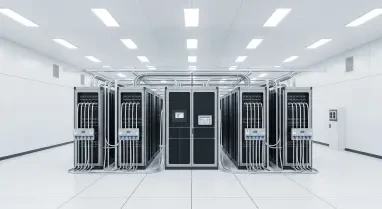
The relentless pursuit of competitive advantage has firmly placed artificial intelligence at the center of modern business strategy, yet many organizations are discovering that their ambitious AI initiatives are being throttled by an often-overlooked and dangerously outdated foundation: their enterprise network. For years, deferred upgrades and patchwork solutions have created a technical debt that is now coming due, transforming what was once a simple utility into a significant liability. With nearly 44% of mission-critical infrastructure approaching its end-of-life, the slow, brittle, and complex networks of the past are ill-equipped to handle the speed, scale, and security demands of AI, edge computing, and cloud-first architectures. This infrastructure gap is no longer a minor inconvenience; it is a critical vulnerability that prevents businesses from keeping pace with more agile, AI-powered rivals, directly hindering growth and innovation in an increasingly unforgiving digital landscape.
The Cracks in the Foundation of Legacy Infrastructure
The fundamental problem with traditional enterprise networks lies in an architecture that was never designed for the dynamic, distributed nature of modern workloads. Many organizations are still reliant on outdated Multiprotocol Label Switching (MPLS) architectures, which are notoriously rigid, expensive, and slow to provision. This legacy model creates significant bottlenecks when attempting to connect a distributed workforce to cloud applications or process the massive datasets required for training AI models. Compounding this issue is a reliance on hardware-heavy security stacks, where traffic is often backhauled through a centralized data center for inspection. This approach introduces unacceptable latency, degrades user experience, and is simply untenable for edge computing scenarios where real-time data analysis is paramount. The result is a brittle, fragmented infrastructure managed by a disparate collection of point solutions, making it impossible to achieve the visibility, agility, and security posture required to support transformative technologies.
Beyond the technological limitations, significant organizational roadblocks often perpetuate this state of inertia, creating a gridlock that stifles modernization efforts. A pervasive issue is the deep-rooted separation between infrastructure and security teams. These siloed departments frequently operate with conflicting priorities and separate toolsets, leading to inconsistent policy enforcement, security gaps, and operational friction that slows down the entire business. This structural problem is exacerbated by a persistent and widening skills shortage, as finding professionals with the expertise to manage both complex legacy systems and modern cloud-native environments becomes increasingly difficult. Furthermore, as organizations push more workloads to the cloud, they are often blindsided by spiraling and unpredictable data egress costs. These fees can quickly erode the financial benefits of cloud adoption and discourage the very data-intensive AI projects that are meant to drive future growth, trapping businesses in a cycle of technical and financial constraint.
Forging a New Path with a Unified Architecture
The most effective path forward involves a fundamental shift away from this fragmented model toward a unified, cloud-based, and software-defined architecture, with Secure Access Service Edge (SASE) at its core. SASE is not merely another product but a transformative framework designed to converge networking and security functions into a single, cohesive service delivered from the cloud. This consolidation brings together critical capabilities—including SD-WAN for optimized connectivity, Zero Trust Network Access (ZTNA) for granular security, secure web gateways (SWG) for threat protection, and cloud access security brokers (CASB) for SaaS application control. By unifying these elements, SASE eliminates the need for a complex patchwork of hardware appliances and disparate management consoles. This provides the technical foundation for CIOs and CISOs to finally merge their agendas, break down organizational silos, and restructure their teams around a streamlined, cloud-native operating model that delivers consistent security and a superior user experience to any user, on any device, anywhere.
The relationship between SASE and AI is profoundly synergistic, creating a virtuous cycle of improvement that enhances both network performance and AI initiatives. Modern SASE platforms increasingly integrate AI and machine learning to automate critical functions that are beyond human scale, such as real-time threat detection, dynamic policy enforcement based on user behavior, and intelligent traffic routing to ensure optimal application performance. This automation strengthens security and frees up skilled personnel to focus on strategic goals. In turn, a robust, AI-powered SASE creates the high-speed, secure, and low-latency data fabric necessary for enterprises to effectively leverage their own AI models and perform sophisticated edge analytics. By intelligently managing data flows and offloading compute-intensive security tasks, a SASE architecture can dramatically improve the return on investment for AI projects by minimizing costly data egress fees and ensuring that performance-sensitive applications receive the priority they need.
A Blueprint for Modernization
The journey from a legacy network to a modern, AI-ready infrastructure represented a strategic imperative that required a clear and practical implementation path. For many organizations, this transformation was achieved through partnerships that combined advanced technology with deep operational expertise. By leveraging a comprehensive, AI-powered SASE platform, businesses could access the core technological components needed for modernization. This was complemented by large-scale planning, deployment, and managed services that addressed the complexities of migrating global networks without disrupting business operations. A crucial element in this process was the integration of the SASE platform with a digital operations platform, which served to automate routine tasks and bridge the talent gap. This combination of technology and service provided a tested blueprint, enabling enterprises to not only overcome their immediate networking challenges but also to build a resilient and agile foundation that accelerated their future innovation.