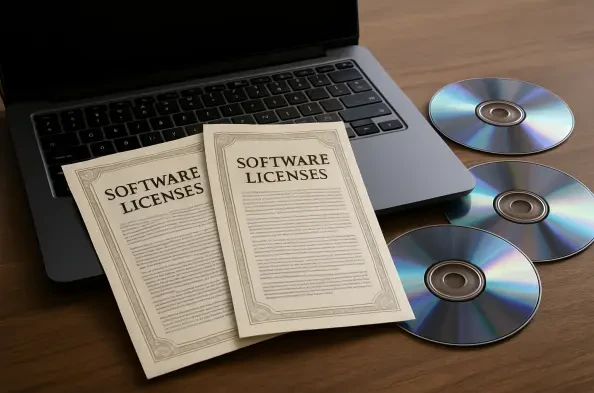
The static, buy-it-once software license that once represented a predictable asset on a company’s balance sheet has quietly transformed into one of its most significant, unmanaged liabilities. In today’s hyper-connected digital ecosystem, clinging to this outdated model is no longer a matter of fiscal prudence but a gamble with security, innovation, and competitive relevance. The conversation has fundamentally shifted from ownership to service, and enterprises that fail to adapt risk being anchored to the past while their industries move forward. This industry-wide pivot is not a manufactured trend but a necessary evolution driven by the relentless pace of technological advancement and the escalating sophistication of cyber threats, forcing a reevaluation of what it means to invest in enterprise technology.
Is Your Enterprise Software a Stable Asset or a Ticking Time Bomb
The perception of a perpetual license as a one-time capital expenditure that provides indefinite value is a dangerous illusion. In reality, aging software accrues a form of invisible debt. Each deferred update and ignored patch adds to a growing mountain of technical debt, making the system progressively more fragile, expensive to maintain, and difficult to integrate with modern tools. This accumulation of outdated code creates a brittle infrastructure where a single failure can cascade into catastrophic operational disruptions, halting productivity and eroding customer trust.
Furthermore, this static asset becomes a glaring vulnerability in an organization’s security posture. Legacy systems, often years past their last major security overhaul, are prime targets for cybercriminals who exploit well-known but unpatched weaknesses. The cost of inaction is no longer a hypothetical risk; it is a quantifiable threat measured in potential data breaches, regulatory fines, and reputational damage. The stability once associated with a perpetual license has been replaced by the constant, low-grade anxiety of waiting for an inevitable security incident or system failure.
The Shifting Landscape: Why End of Availability Is the New Normal
For many organizations, the transition away from legacy systems is initiated by a vendor’s “End of Availability” (EOA) notification, a declaration that an older software version will no longer be sold or supported. This announcement often creates immediate friction, forcing enterprises into an unplanned migration cycle that involves new expenditures, resource allocation for training, and the general disruption of established workflows. The initial reaction is frequently one of frustration, as a predictable tool is forcibly replaced by a new, subscription-based model.
However, this vendor-mandated modernization reflects the unforgiving reality of the current technological environment. The accelerated pace of innovation and the ever-present danger of sophisticated cybersecurity threats make the “stick with what works” approach unsustainable. A software platform designed a decade ago was not built to defend against today’s AI-driven cyberattacks or integrate seamlessly with modern cloud services. Continuing to operate on such a foundation is akin to navigating a modern highway in a vintage car—nostalgic, but dangerously ill-equipped for the demands of the journey.
Beyond mitigating risk, embracing this shift unlocks substantial long-term advantages. Independent research consistently demonstrates that modernizing the software stack yields significant returns, including superior security protocols that are continuously updated to counter emerging threats. Enterprises also gain access to more advanced functionality and AI-driven insights that heighten staff productivity and create new revenue opportunities. The initial cost and effort of migration are ultimately offset by the strategic benefits of operating on a secure, agile, and innovative platform.
The Unseen Forces Driving the Subscription Revolution
It is easy to view EOA policies with cynicism, dismissing them as a ploy by vendors to lock customers into recurring revenue streams. The reality, however, is that this shift is overwhelmingly driven by an engineering mandate, not a sales strategy. The resources required to support a multitude of fragmented, legacy software versions are immense. Engineering teams become mired in maintaining backward compatibility, debugging obsolete code, and creating complex workarounds for technology that no longer aligns with modern standards. This diverts critical talent and funding away from innovation and toward the thankless task of keeping outdated systems on life support.
This engineering imperative is rooted in the concept of risk management. The continued circulation of outdated code introduces an unacceptable level of operational and security risk, not just for the customer but for the entire ecosystem connected to that software. Unlike the seamless, automatic updates on a consumer smartphone, enterprise software updates are notoriously complex, touching interconnected databases, custom integrations, and diverse infrastructure. Maintaining fragmented legacy systems in such an environment is an unpredictable and high-stakes endeavor, where a single compatibility issue can trigger widespread failure. The subscription model, built on a unified architecture, mitigates this chaos.
Consequently, the service-centric subscription model offers a superior framework by aligning the interests of both vendors and customers. In this partnership, the customer’s success is directly tied to the vendor’s ability to provide a stable, secure, and continuously improving service. Modern development frameworks enable this by allowing for the rapid deployment of enhancements and security patches across a unified platform. This agile, cloud-based approach ensures all customers benefit from the latest innovations simultaneously, reducing complexity and creating a predictable and sustainable roadmap for growth.
The Expert Consensus: Why Obsolescence Management Is Non-Negotiable
The practice of retiring old software is not an arbitrary business decision but a core principle of responsible engineering, codified in globally recognized standards. Frameworks like ISO/IEC/IEEE 12207:2017, which governs software lifecycle processes, explicitly define retirement as a crucial and planned phase. This standard treats the orderly decommissioning of outdated software with the same importance as its initial design and deployment. From this perspective, an EOA notification is not an act of customer abandonment but a demonstration of professional product stewardship, ensuring the integrity and security of the technology ecosystem.
This principle is further reinforced by the Software Engineering Body of Knowledge (SWEBOK), a foundational guide for the profession curated by the IEEE Computer Society. SWEBOK emphasizes that managing software obsolescence is a critical discipline, as vital to a product’s health as testing and maintenance. The continued use of unsupported code is identified as a source of unacceptable risk, exposing organizations to security vulnerabilities, performance degradation, and compatibility failures. By adhering to these established best practices, vendors confirm that the move away from perpetual models is a matter of sound engineering governance, prioritizing stability and security over indefinite support for aging, high-risk systems.
A Practical Framework for Embracing the New Paradigm
To navigate this new reality, organizations must fundamentally shift their perspective from viewing software as a one-time product purchase to engaging with it as an evolving, service-based partnership. This mindset accepts that value is delivered continuously through updates, support, and innovation, rather than being encapsulated in a single transaction. It requires a move away from a static ownership model toward a dynamic relationship focused on long-term goals and mutual success.
This new mindset necessitates a complete re-evaluation of risk versus cost. The perceived savings of a perpetual license must be weighed against the high-risk cost of inaction, which includes the financial and reputational fallout from a potential security breach, the inefficiencies of operating on outdated technology, and the opportunity cost of being unable to leverage modern capabilities. The calculation is no longer about the initial purchase price but about the total cost of ownership, including the price of vulnerability.
Instead of reacting to EOA notifications with surprise, forward-thinking enterprises are building proactive modernization strategies. This involves creating a continuous lifecycle management plan for their entire software stack, with scheduled reviews and planned transitions. It means actively seeking out and prioritizing vendors who demonstrate a clear commitment to a disciplined, service-oriented model. The goal is to forge partnerships focused on continuous value and shared success in a constantly evolving digital landscape.
The era of purchasing software in a box and letting it run for a decade has definitively closed. Enterprises that acknowledge this reality and strategically transition to service-based partnerships will position themselves for resilience and growth. By reframing their approach from product ownership to service consumption, they not only mitigate the inherent risks of technological stagnation but also unlock the agility and innovation needed to thrive. The organizations that successfully make this pivot are those that understand the profound engineering and security imperatives behind the industry’s evolution, transforming a perceived burden into a strategic advantage.