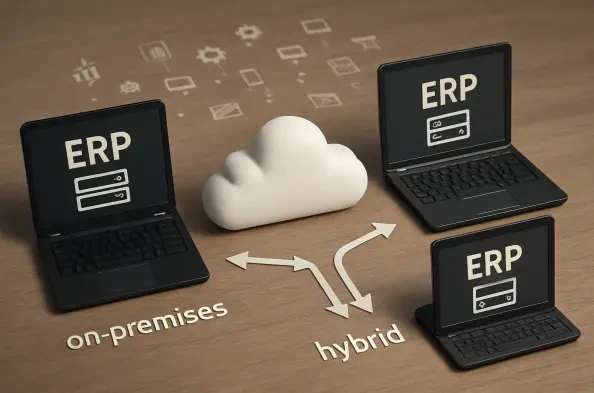
CIOs across the globe are confronting a high-stakes modernization paradox, caught between the immense risk of dismantling mission-critical legacy systems and the urgent demand for digital agility and intelligence. The conventional “rip and replace” strategy, once seen as the only path to innovation, is now understood as a costly gamble with a high probability of operational disruption. This dilemma has given rise to a more pragmatic third path: the hybrid ERP model, a strategic approach that allows organizations to innovate at the edge without jeopardizing the stable, reliable core. This model represents a fundamental shift in thinking, from monolithic replacement to intelligent ecosystem integration. This analysis will explore the key market drivers fueling this trend, deconstruct its core architectural components, examine its future trajectory and strategic benefits, and offer a conclusive look at this new paradigm for enterprise modernization.
The Market Shift Away from Rip and Replace
The Data Behind the Disruption
The move away from all-or-nothing ERP replacement projects is not based on anecdotal evidence but on stark, quantifiable risk. Industry analysis from Gartner consistently highlights the perils of these massive undertakings, with research indicating that over 70% of such projects miss their stated business objectives. More alarmingly, a significant 25% can fail catastrophically, leading to severe financial losses, operational paralysis, and a significant erosion of stakeholder trust. These figures paint a grim picture for CIOs, transforming what is often pitched as a strategic imperative into one of the most hazardous initiatives they can sponsor.
This high rate of failure is compelling a widespread strategic pivot. Organizations are increasingly rejecting the high-risk, high-reward narrative in favor of modernization strategies that prioritize business continuity and mitigate financial exposure. The growing adoption of hybrid models is a direct response to this reality. It is a deliberate business strategy designed to shield foundational functions like payroll processing, financial controls, and regulatory compliance from the inherent volatility of large-scale technology transformations. By isolating these high-consequence operations, companies can pursue innovation without betting the entire enterprise on a single, complex project.
Hybrid ERP in Practice: The PeopleSoft Case
PeopleSoft serves as a prime example of a deeply embedded, mission-critical legacy system that has long been at the center of “rip and replace” debates. For many large organizations, it remains the authoritative system for core functions, from managing payroll for hundreds of thousands of employees to executing the financial close. However, rather than viewing this entrenched system as an obstacle, forward-thinking organizations are strategically repositioning it as a stable, trusted system of record at the heart of a modern technology ecosystem.
This approach reframes the decision to retain a legacy core, shifting the perception from one of technical inertia to one of strategic foresight. In this model, retaining PeopleSoft is not about avoiding change; it is about ensuring unwavering business continuity while actively integrating emerging technologies. The system becomes an anchor of stability, allowing the enterprise to experiment with and deploy innovations like AI and advanced analytics at its periphery without compromising the integrity of its most essential operational data and processes.
Deconstructing the Four-Layer Hybrid Architecture
The ERP Core: A Foundation of Authority and Trust
At the heart of the hybrid model lies the first layer: the legacy ERP system itself. Its primary role is to serve as the unassailable foundation of authority and trust, managing high-consequence transactions where the cost of error is exceptionally high. This core governs the foundational business processes that are non-negotiable for enterprise viability, including payroll, general ledger management, accounts payable, and enterprise-level planning.
Within this architecture, the ERP core is not expected to be the source of agile innovation or cutting-edge user experience. Instead, its value is derived from its absolute accuracy, auditability, and control. Changes to this layer are methodical, rigorously tested, and deliberately paced, reflecting the critical nature of the functions it manages. It is the system of record that guarantees operational integrity, providing a stable base upon which other, more dynamic layers can be built.
The Integration Layer: Building a Responsive Enterprise
The second layer is the integration fabric that connects the stable ERP core to the wider, fast-moving enterprise technology landscape. This layer uses modern APIs and event-driven mechanisms to overcome the limitations of traditional batch processing, which often casts legacy systems as slow and monolithic. By exposing ERP data and functions in real time, this layer allows the core system to participate actively in modern, automated workflows.
This responsive connectivity transforms the ERP from an isolated data silo into a dynamic participant in the enterprise ecosystem. For instance, an employee transaction updated in the core can instantly trigger workflows in downstream systems, propagate data to analytics platforms, and update user-facing portals. This fosters a more composable, API-first architecture, enabling the organization to build and adapt business processes with far greater agility than would be possible within a monolithic framework.
The Intelligence Layer: Augmenting Insight Without Losing Control
The third layer introduces the power of artificial intelligence and advanced analytics, leveraging the rich, authoritative data held within the ERP core to generate predictive insights. This is where organizations can forecast workforce attrition, detect financial anomalies before they escalate, or run sophisticated planning scenarios to inform strategic decisions. The intelligence layer acts as a powerful lens, extracting forward-looking value from historical and transactional data.
A critical governance principle defines the success of this layer: “AI advises. ERP decides.” This framework ensures that while AI-driven insights can profoundly enhance human judgment, they do not bypass the established controls and authoritative processes residing in the core system. AI is not permitted to write data back to the ERP without strict, auditable oversight. This separation maintains the integrity of the system of record while allowing the organization to benefit from advanced analytics, amplifying the ERP’s value without ceding control.
The Experience Layer: Modernizing User Interaction
Addressing one of the most common criticisms of legacy systems—a clunky user interface—is the fourth and outermost layer. The experience layer delivers modern, intuitive user experiences through external dashboards, mobile-friendly self-service portals, and streamlined workflow tools. This layer is designed entirely around the needs of the end-user, providing a contemporary look and feel that stands in stark contrast to traditional ERP screens.
Crucially, this layer does not achieve its modern interface by making risky and complex customizations to the core application itself. Instead, it interacts with the ERP through the secure and managed APIs provided by the integration layer. This decoupling allows organizations to rapidly develop and evolve the user experience in response to changing expectations, all while leaving the stable, validated core system untouched and preserving its long-term viability.
The Future Trajectory of Hybrid ERP
Key Benefits and Strategic Advantages
The primary benefits of adopting a hybrid ERP model are both immediate and strategic. By avoiding a full replacement, organizations significantly reduce project risk, sidestepping the potential for catastrophic operational failures and budget overruns. This approach also accelerates the adoption of innovative technologies; instead of waiting for a multi-year ERP implementation to finish, businesses can begin deploying AI, analytics, and modern UX solutions in months, generating value far more quickly. Furthermore, it maximizes the return on investment in existing ERP systems, leveraging decades of customization and business process refinement rather than discarding them.
Perhaps the most significant advantage is the decoupling of innovation from operational stability. In a hybrid model, the pace of change in customer-facing applications or analytical tools is no longer tethered to the cautious, deliberate update cycle of the core financial or HR system. This architectural freedom allows organizations to become far more agile and responsive to shifting market demands, all without jeopardizing the foundational functions that keep the business running smoothly.
Governance as the Cornerstone of Success
The long-term success of a hybrid ERP strategy is contingent on strong, unambiguous governance. Technology alone is not enough; a clear architectural framework with well-defined rules of engagement is essential to prevent the ecosystem from devolving into a complex and unmanageable web of integrations. This governance must establish clear boundaries, designating the ERP core as the ultimate authority for specific transactions and data domains.
Many hybrid initiatives fail not because of flawed technology but due to architectural ambiguity. Common pitfalls include allowing uncontrolled write-backs from AI systems, which corrupts the integrity of the core data, or replicating critical business logic outside the ERP, which creates conflicting sources of truth. Another frequent mistake is treating the hybrid model as a temporary, tactical stopgap rather than a long-term strategic choice. Without a firm commitment to the architectural principles, the model’s benefits quickly erode.
Long-Term Implications Across Industries
The hybrid trend is fundamentally redefining what enterprise modernization means. The focus is shifting away from monolithic, single-vendor replacement projects and toward the thoughtful curation of flexible, integrated ecosystems. This approach acknowledges that a “one size fits all” cloud ERP solution rarely meets the complex needs of a large, established enterprise. Instead, the future lies in building a composable enterprise where best-of-breed solutions are intelligently integrated around a stable transactional core.
This shift has profound implications for the role of the CIO, who must now act less as a system implementer and more as a strategic integrator and risk manager. The new mandate is to balance the relentless demand for innovation with the non-negotiable imperative of operational resilience. In this landscape, the CIO’s success is measured by their ability to create an architecture that is simultaneously stable, responsive, and intelligent.
Conclusion: The New Paradigm for Enterprise Modernization
This analysis confirmed that the “rip and replace” approach to ERP modernization is an increasingly untenable strategy, fraught with unacceptable levels of risk and a high probability of failure. The hybrid ERP model has emerged as a more resilient, agile, and cost-effective path forward, enabling organizations to achieve cutting-edge capabilities without compromising their operational foundation.
The four-layer architecture—Core, Integration, Intelligence, and Experience—provided a practical and powerful framework for implementing this strategy, while strong governance stood out as the critical factor separating success from failure. Enterprises that successfully navigated this path did so by building a modern, responsive technology ecosystem around a stable, reliable core, effectively reinventing their legacy systems rather than replacing them. This strategic reinvention, not replacement, has become the new paradigm for enduring enterprise modernization.