In the world of artificial intelligence, a misplaced comma in a chatbot’s response is an annoyance. But in the physical world of industrial and mission-critical systems, a single miscalculation can have catastrophic consequences. Navigating this high-stakes environment is Vernon Yai, a data protection expert specializing in the governance and risk management of AI in settings where failure is not an option. He has dedicated his career to developing innovative techniques that safeguard our most essential infrastructure. In this interview, we explore the profound differences between consumer and industrial AI, discussing the unique design philosophies needed for systems built to last for decades, the rigorous simulation processes that replace the “move fast and break things” ethos, the critical importance of building human trust in autonomous systems, and the future of an AI-driven industrial world.
Consumer AI like chatbots can tolerate some errors, but mission-critical systems like power grids demand near-perfect reliability. How do you technically bridge this accuracy gap, and what specific design philosophies are required to achieve this constant, predictable performance in the physical world?
That’s really the core of the challenge and what separates our work from the mainstream AI conversation. In consumer AI, you can often get away with a system that is 90% or even 95% accurate. If a chatbot gives a wrong answer, it’s a minor inconvenience. But in our world, a 95% accurate system is fundamentally unfit for purpose and would never be deployed. We’re talking about managing a nation’s power grid, a city’s railway system, or a critical manufacturing line. An error there isn’t just annoying; it’s a potential disaster. The design philosophy has to be built on absolute reliability and predictability, not just some of the time, but all of the time. This means the AI isn’t a standalone application; it’s an deeply integrated component of a real-world physical system, and it must be engineered with the same rigor as any other piece of critical hardware.
Industrial infrastructure is often designed for decades of continuous operation, unlike typical IT hardware. How does this extreme longevity impact your AI system design, and what challenges does it create for deployment, particularly when standard cloud solutions may not be reliable enough?
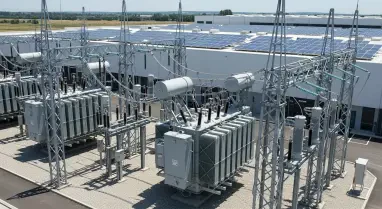
The timescale completely changes the game. We’re developing AI for infrastructure that’s designed to operate continuously for 30, 40, or even 60 years. A massive transformer in the power grid isn’t replaced every five years like a laptop. This reality forces a completely different design philosophy. The AI models and the hardware they run on have to be built for that same level of longevity and resilience. This creates immense challenges for deployment. The cloud, for example, isn’t always the right answer. While it’s great for many applications, 99.9% availability simply isn’t sufficient for systems that truly cannot fail, even for a few minutes a year. There’s a significant cost and complexity involved in designing for something that can never go down, which often means rugged on-premise or edge solutions that can withstand the physical environment and operate independently of external networks.
Given the immense risks, the “release and refine” model common in software is not an option. Could you walk us through your simulation process? Please share some details on how you use synthetic data to ensure a model is fully predictable before it ever goes into production.
You’re absolutely right; we can’t afford to learn from failure in a live production environment. Our approach is the complete opposite of the “release and refine” model. Before an AI model gets anywhere near a real-world system, it goes through an exhaustive simulation phase. We create a digital twin of the environment and use synthetic data to generate millions of different real-world scenarios—from routine operations to the most extreme edge cases we can imagine. We hammer the model with these scenarios over and over again. Only when we are completely confident that the model will behave predictably and safely across every single one of those situations do we even consider putting it into production. It’s about ensuring there are no surprises. Every potential behavior has to be understood, tested, and validated in the simulation before it has the chance to impact the physical world.
There can be a significant fear factor around autonomous systems. To build trust, AI must often exceed existing human safety standards. Could you share a specific example of this in practice and explain how you demonstrate this enhanced assurance to regulators and frontline workers?
Building trust is paramount, and it starts by acknowledging and addressing that “Terminator” fear factor head-on. The public, regulators, and the operators on the ground all demand a demonstrably higher level of assurance from an AI system. It’s not enough for the AI to be as good as a human; it has to be better. We have an expectation that if a human can perform a task to level ‘X,’ the AI must perform it to level ‘X plus Y.’ A great analogy is in cancer detection, where AI is now identifying anomalies that the human eye might have missed just a few years ago. We are bringing that same standard of precision to industrial systems. We demonstrate this by being completely transparent about the system’s capabilities and limitations. It’s also crucial to remember that we aren’t replacing already-safe systems; we are augmenting them to operate more efficiently while maintaining or even enhancing that baseline of safety. We work side-by-side with domain experts and frontline workers, making them partners in the deployment so that trust is earned through collaboration and proven, reliable performance.
Effective industrial AI often requires combining multimodal data, like sensor readings, video feeds, and text logs. Can you describe the challenges of building models that can interpret these varied data types simultaneously and how you deploy them at the edge to meet strict latency requirements?
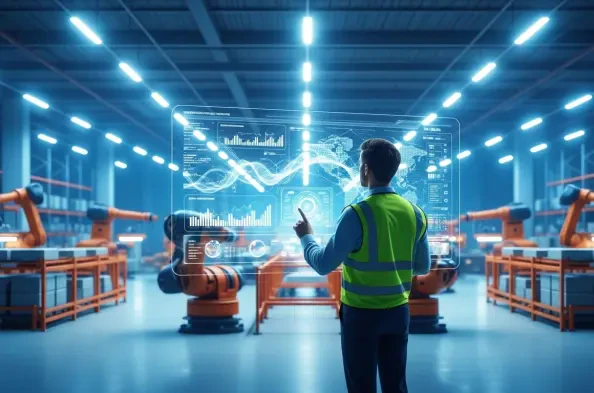
Industrial data is inherently multimodal, which is both a challenge and an opportunity. You have time-series sensor data streaming from equipment, video feeds monitoring a worksite, text from maintenance logs and operating manuals, and discrete event data from operations. The real challenge is building a single, coherent model that can ingest and reason across all these different modalities at once to get a true, holistic understanding of the system’s state. Building on that, the deployment constraints are just as critical. Many of these industrial use cases require decisions in milliseconds. You simply can’t afford the latency of sending terabytes of video, sensor, and log data to a centralized cloud for processing and then wait for an answer. That’s why true edge deployment is non-negotiable. The models have to run locally, right on or near the equipment, to meet the stringent latency, reliability, and data-sovereignty requirements of these mission-critical environments.
What is your forecast for industrial AI over the next decade, particularly regarding the balance between human oversight and true autonomy in managing critical infrastructure?
Over the next decade, I see a fascinating evolution beyond simple prediction and recommendation towards direct actuation and a fundamental redesign of industrial systems. We’re already seeing real impact in productivity and energy reduction, and that trajectory will only accelerate. The future lies in a symbiotic relationship where AI handles the processing of tremendous amounts of information at the machine level—identifying inefficiencies, automating improvements, and forecasting problems before they can occur. This will free up human operators to make the bigger, more strategic decisions. We are steadily moving towards truly autonomous infrastructure: self-balancing power grids, manufacturing lines that self-optimize for quality, and machines that can self-diagnose and schedule their own maintenance. Perhaps most transformative will be the shift toward designing systems with an AI-first mindset from the very beginning. We’re already seeing this in mining, where the move to autonomy is allowing for the use of smaller, more efficient haul trucks because you no longer need to design around a human driver. This is the ultimate form of collaboration—not just using AI to optimize the systems we have, but leveraging it to imagine and build the more efficient, resilient, and safer critical infrastructure of tomorrow.