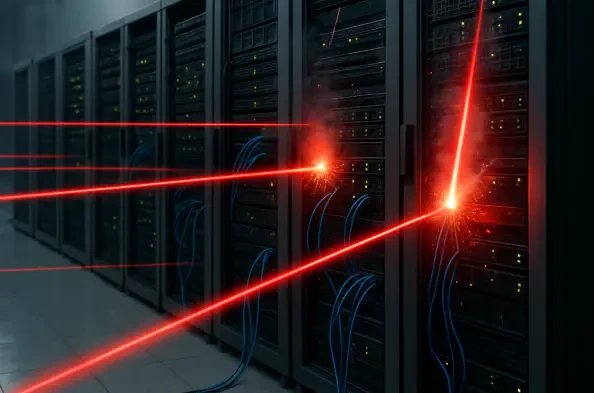
A recent comprehensive analysis by cybersecurity researchers has uncovered critical vulnerabilities within Model Context Protocol (MCP) servers, revealing how these essential AI components can be transformed into potent attack vectors for widespread system compromise. These specialized servers, which act as the crucial intermediaries that allow Large Language Models (LLMs) to interact with the outside world by accessing files, invoking APIs, and utilizing developer tools, have been shown to possess deep-seated security flaws. The investigation highlights a systemic issue where these servers, if improperly configured or left unpatched, create a high-risk attack surface. The exploitation of these weaknesses can lead to severe security breaches, ranging from unauthorized access to sensitive cloud account credentials and arbitrary file manipulation to achieving full remote code execution (RCE) on the host machine. The findings suggest that these are not isolated incidents but rather represent a widespread pattern of insecure implementations that threaten the foundational security of the rapidly expanding AI ecosystem, turning helpful digital assistants into unwitting accomplices in sophisticated cyberattacks.
The Anatomy of an AI-Powered Breach
The fundamental danger stems from the very function that makes MCP servers so powerful; by design, they are gateways that translate the abstract instructions of an AI model into concrete actions in a digital environment. When a user asks an AI assistant to summarize a document or analyze code from a repository, an MCP server is what handles the file access or the API call. This bridge between the AI and external resources, however, is a double-edged sword. If the protocols governing these interactions lack robust security checks, they become a prime target for exploitation. An attacker can craft malicious inputs or prompts that trick the AI into issuing commands that the MCP server will then execute, effectively bypassing traditional security perimeters. The research demonstrates that many of these servers are ill-equipped to distinguish between a legitimate request and a hostile one, creating opportunities for attackers to manipulate the server into performing actions far beyond its intended scope, thereby compromising the integrity and confidentiality of the entire system it operates within.
Exploiting Command Execution in Git Servers
A stark illustration of this threat was discovered in the official Git MCP server provided by Anthropic, which contained a trio of critical vulnerabilities that, when combined, created a clear path to complete system takeover. The first flaw, identified as CVE-2025-68143, involved an unrestricted git_init command that permitted an attacker to create a new Git repository in any location on the server’s filesystem without proper authorization. This was compounded by a second vulnerability, CVE-2025-68145, a path-validation bypass that allowed the server to access files located outside of the designated working directories, effectively breaking out of its security sandbox. The final piece of the exploit chain was CVE-2025-68144, a severe argument-injection weakness that passed unvalidated user input directly into Git command-line operations. An attacker could leverage these flaws sequentially: first, creating a malicious repository in a sensitive system directory, then using the path bypass and argument injection to overwrite critical files or execute arbitrary code. In response, Anthropic released patches that removed the riskiest components and implemented much stricter validation protocols.
Unveiling Server-Side Request Forgery Dangers
Another significant finding centered on a server-side request forgery (SSRF) vulnerability, dubbed “MCP fURI,” within Microsoft’s MarkItDown MCP server, which is designed to process Markdown files. This flaw allows the server to fetch content from any URI provided to it without adequate restriction, meaning an attacker—or a compromised AI agent—could instruct the server to make requests to internal network resources that are normally inaccessible from the outside. The risk is dramatically amplified when the server is hosted on an Amazon Web Services (EC2) instance that uses the older and less secure IMDSv1 metadata service. In such a scenario, an attacker could exploit the SSRF to query the instance’s metadata endpoint. This specific endpoint contains sensitive information, including temporary AWS security credentials. By extracting these credentials, an attacker could gain complete control over the associated AWS account, enabling them to access stored data, launch new resources, and disrupt services. Although Microsoft noted that this scenario requires deliberate misuse, the existence of the vulnerability highlights a critical design oversight with potentially devastating consequences.
A Pattern of Pervasive Risk
The vulnerabilities discovered are not isolated cases but rather indicators of a broader, systemic issue plaguing the AI infrastructure landscape. The reliance on reference implementations and shared codebases means that a single flaw can be replicated across countless systems. Because Anthropic’s now-patched Git server was often used as a template by other developers, it is highly probable that numerous third-party MCP servers inherited the same critical vulnerabilities. Similarly, a wider study of over 7,000 publicly accessible MCP servers revealed that a significant number shared the same SSRF exposure found in the MarkItDown server. This proliferation of risk is exacerbated by the continued use of outdated and insecure configurations in cloud environments, such as the persistence of AWS IMDSv1. Despite the availability of the more secure IMDSv2, which is designed to mitigate SSRF attacks, many organizations have not yet migrated, leaving their AI-powered services exposed to credential theft and cloud account takeovers, turning a localized server vulnerability into a far-reaching cloud security crisis.
The Path to Securing AI Infrastructure
Addressing these pervasive threats demanded a multifaceted security strategy that organizations began to adopt. The core principle of this approach was the enforcement of strict input validation on all data processed by MCP servers, treating any instruction originating from the AI or the user as potentially untrusted until proven otherwise. This was complemented by the implementation of the principle of least privilege, where access controls were tightened to ensure that MCP servers could only interact with the absolute minimum set of resources necessary for their function. Furthermore, developers were urged to bound URI handlers to a strict allowlist of approved domains and protocols, effectively preventing the servers from making unintended network calls to internal or malicious external endpoints. These technical controls were part of a holistic security posture that also emphasized the importance of regular and comprehensive audits of agent permissions to prevent chained exploits.
Fortifying the Ecosystem for the Future
The revelations prompted a necessary industry-wide shift toward more secure development and deployment practices for AI systems. A critical step involved the timely application of security patches as soon as they became available, a fundamental practice that had been overlooked in some rapid development cycles. In the cloud environment, a concerted effort was made to migrate systems from the vulnerable AWS IMDSv1 to the more resilient IMDSv2, a change that significantly reduced the attack surface for SSRF-based exploits. The incidents served as a powerful reminder that as AI models become more integrated with real-world systems, their security can no longer be an afterthought. The focus shifted from merely building powerful AI tools to building powerful and inherently secure AI tools, ensuring that the very mechanisms that enable their remarkable capabilities did not simultaneously serve as the gateways for their compromise.Fixed version:
A recent comprehensive analysis by cybersecurity researchers has uncovered critical vulnerabilities within Model Context Protocol (MCP) servers, revealing how these essential AI components can be transformed into potent attack vectors for widespread system compromise. These specialized servers, which act as the crucial intermediaries that allow Large Language Models (LLMs) to interact with the outside world by accessing files, invoking APIs, and utilizing developer tools, have been shown to possess deep-seated security flaws. The investigation highlights a systemic issue where these servers, if improperly configured or left unpatched, create a high-risk attack surface. The exploitation of these weaknesses can lead to severe security breaches, ranging from unauthorized access to sensitive cloud account credentials and arbitrary file manipulation to achieving full remote code execution (RCE) on the host machine. The findings suggest that these are not isolated incidents but rather represent a widespread pattern of insecure implementations that threaten the foundational security of the rapidly expanding AI ecosystem, turning helpful digital assistants into unwitting accomplices in sophisticated cyberattacks.
The Anatomy of an AI-Powered Breach
The fundamental danger stems from the very function that makes MCP servers so powerful; by design, they are gateways that translate the abstract instructions of an AI model into concrete actions in a digital environment. When a user asks an AI assistant to summarize a document or analyze code from a repository, an MCP server is what handles the file access or the API call. This bridge between the AI and external resources, however, is a double-edged sword. If the protocols governing these interactions lack robust security checks, they become a prime target for exploitation. An attacker can craft malicious inputs or prompts that trick the AI into issuing commands that the MCP server will then execute, effectively bypassing traditional security perimeters. The research demonstrates that many of these servers are ill-equipped to distinguish between a legitimate request and a hostile one, creating opportunities for attackers to manipulate the server into performing actions far beyond its intended scope, thereby compromising the integrity and confidentiality of the entire system it operates within.
Exploiting Command Execution in Git Servers
A stark illustration of this threat was discovered in the official Git MCP server provided by Anthropic, which contained a trio of critical vulnerabilities that, when combined, created a clear path to complete system takeover. The first flaw, identified as CVE-2025-68143, involved an unrestricted git_init command that permitted an attacker to create a new Git repository in any location on the server’s filesystem without proper authorization. This was compounded by a second vulnerability, CVE-2025-68145, a path-validation bypass that allowed the server to access files located outside of the designated working directories, effectively breaking out of its security sandbox. The final piece of the exploit chain was CVE-2025-68144, a severe argument-injection weakness that passed unvalidated user input directly into Git command-line operations. An attacker could leverage these flaws sequentially: first, creating a malicious repository in a sensitive system directory, then using the path bypass and argument injection to overwrite critical files or execute arbitrary code. In response, Anthropic released patches that removed the riskiest components and implemented much stricter validation protocols.
Unveiling Server-Side Request Forgery Dangers
Another significant finding centered on a server-side request forgery (SSRF) vulnerability, dubbed “MCP fURI,” within Microsoft’s MarkItDown MCP server, which is designed to process Markdown files. This flaw allows the server to fetch content from any URI provided to it without adequate restriction, meaning an attacker—or a compromised AI agent—could instruct the server to make requests to internal network resources that are normally inaccessible from the outside. The risk is dramatically amplified when the server is hosted on an Amazon Web Services (EC2) instance that uses the older and less secure IMDSv1 metadata service. In such a scenario, an attacker could exploit the SSRF to query the instance’s metadata endpoint. This specific endpoint contains sensitive information, including temporary AWS security credentials. By extracting these credentials, an attacker could gain complete control over the associated AWS account, enabling them to access stored data, launch new resources, and disrupt services. Although Microsoft noted that this scenario requires deliberate misuse, the existence of the vulnerability highlights a critical design oversight with potentially devastating consequences.
A Pattern of Pervasive Risk
The vulnerabilities discovered are not isolated cases but rather indicators of a broader, systemic issue plaguing the AI infrastructure landscape. The reliance on reference implementations and shared codebases means that a single flaw can be replicated across countless systems. Because Anthropic’s now-patched Git server was often used as a template by other developers, it is highly probable that numerous third-party MCP servers inherited the same critical vulnerabilities. Similarly, a wider study of over 7,000 publicly accessible MCP servers revealed that a significant number shared the same SSRF exposure found in the MarkItDown server. This proliferation of risk is exacerbated by the continued use of outdated and insecure configurations in cloud environments, such as the persistence of AWS IMDSv1. Despite the availability of the more secure IMDSv2, which is designed to mitigate SSRF attacks, many organizations have not yet migrated, leaving their AI-powered services exposed to credential theft and cloud account takeovers, turning a localized server vulnerability into a far-reaching cloud security crisis.
The Path to Securing AI Infrastructure
Addressing these pervasive threats demanded a multifaceted security strategy that organizations began to adopt. The core principle of this approach was the enforcement of strict input validation on all data processed by MCP servers, treating any instruction originating from the AI or the user as potentially untrusted until proven otherwise. This was complemented by the implementation of the principle of least privilege, where access controls were tightened to ensure that MCP servers could only interact with the absolute minimum set of resources necessary for their function. Furthermore, developers were urged to bound URI handlers to a strict allowlist of approved domains and protocols, effectively preventing the servers from making unintended network calls to internal or malicious external endpoints. These technical controls were part of a holistic security posture that also emphasized the importance of regular and comprehensive audits of agent permissions to prevent chained exploits.
Fortifying the Ecosystem for the Future
The revelations prompted a necessary industry-wide shift toward more secure development and deployment practices for AI systems. A critical step involved the timely application of security patches as soon as they became available, a fundamental practice that had been overlooked in some rapid development cycles. In the cloud environment, a concerted effort was made to migrate systems from the vulnerable AWS IMDSv1 to the more resilient IMDSv2, a change that significantly reduced the attack surface for SSRF-based exploits. The incidents served as a powerful reminder that as AI models become more integrated with real-world systems, their security can no longer be an afterthought. The focus shifted from merely building powerful AI tools to building powerful and inherently secure AI tools, ensuring that the very mechanisms that enable their remarkable capabilities did not simultaneously serve as the gateways for their compromise.