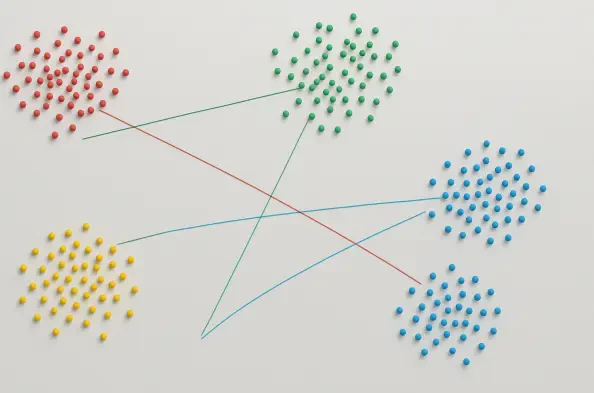
Global prototype matrices in DPAS-Net stabilize the training process by accumulating information across an entire dataset rather than relying on noisy mini-batches. This foundational innovation addresses a persistent headache in the field of unsupervised learning, where multi-view clustering (MVC) attempts to synthesize insights from diverse data sources. In an era where complex objects are defined by a fusion of video, audio, and textual metadata, the ability to find a consensus among these varying representations is paramount for modern artificial intelligence. However, the theoretical elegance of multi-view clustering often collides with the messy reality of data collection, where sensors fail, patients skip specific diagnostic tests, or scraping tools return fragmented results. This leads to the “incomplete data” problem, a scenario where traditional algorithms lose their predictive power because they assume every data point possesses a complete set of views. DPAS-Net, a sophisticated framework developed at Shanghai Maritime University, steps into this gap by providing a deep learning architecture specifically engineered to maintain high clustering accuracy even when the vast majority of data views are entirely missing from the system.
The Structural Deficiencies: Prototype Instability and Blurred Boundaries
Standard prototype-based models suffer from extreme sensitivity to the data samples presented during each training iteration. When dealing with incomplete multi-view data, the information available in a small “mini-batch” is often insufficient to provide a clear signal for the model to update its cluster centers. This leads to erratic updates where the “prototypes”—the representative anchor points in the feature space—fluctuate wildly from one step to the next. Without a stable reference point, the neural network struggles to learn a coherent mapping for the data, ultimately resulting in poor clustering performance. The DPAS-Net framework acknowledges this inherent instability by shifting the focus from fleeting batch-level statistics to a more robust, long-term memory of the dataset’s structure. By smoothing out these fluctuations, the system ensures that the learning process remains grounded in the global distribution of the data rather than being derailed by the noise inherent in fragmented or missing views.
In addition to stability issues, many incomplete multi-view clustering techniques struggle with what researchers call “cluster blurring.” This phenomenon occurs when different clusters drift too close to each other in the latent embedding space, causing their boundaries to overlap and become indistinguishable. When data views are missing, the AI often lacks enough information to draw sharp lines between distinct categories, leading to a “collapsed” representation where everything looks similar. DPAS-Net addresses this by employing deep representation learning to map high-dimensional raw data into a more organized, lower-dimensional space. Through the use of geometric regularization, the model actively manages the distance between these learned representations. This ensures that the space remains discriminative, meaning that even when a data point is missing several views, its remaining features are still mapped into a region of the embedding space that is clearly separated from other, unrelated groups.
Innovative Architecture: Cross-View Attention and Global Matrix Evolution
To effectively fill the gaps created by missing information, DPAS-Net utilizes a cross-view attention mechanism paired with fusion-guided reconstruction. This dual approach allows the network to evaluate the importance of the views that are actually present for a given data point and use them to synthesize the “essence” of what is missing. Unlike simpler models that might just average the available data, this architecture treats each view as a unique contributor to the overall identity of the object. For instance, if an image view is missing but the text description is present, the attention mechanism can prioritize the textual features to reconstruct a compatible latent representation. By enforcing instance-level consistency, the system ensures that whether the model is looking at a complete set of data or just a single surviving view, the object is always mapped to a consistent location in the embedding space. This preservation of identity across modalities is vital for maintaining accuracy in high-stakes environments where data loss is the norm rather than the exception.
At the heart of this technological advancement is the Dynamic Prototype Aggregation system. Traditional deep learning updates are heavily batch-dependent, which creates a significant risk when those batches are sparse or incomplete. DPAS-Net avoids this pitfall by maintaining a global prototype matrix that acts as a central repository for the model’s evolving understanding of the dataset. Instead of making drastic changes based on a few samples, the matrix accumulates information gradually across the entire training duration. This creates a “momentum” effect that allows the prototypes to evolve smoothly, reflecting the macro-level structure of the data rather than the micro-level noise of a single training step. To further refine this process, a separation regularizer is introduced to act as a mathematical “repulsive force” between different prototypes. By forcing the centers of different clusters to maintain a minimum distance from one another, the network ensures that the boundaries between categories remain sharp and distinct, preventing the “blurring” that often plagues less sophisticated models.
Empirical Breakthroughs: Success Amidst Massive Data Scarcity
The performance of DPAS-Net was evaluated through a series of rigorous tests involving twelve competing state-of-the-art methods and four diverse benchmark datasets: Caltec#01-7, HandWritten, Scene-15, and ALOI-100. These datasets represent a wide range of data types, from natural images to digital digits, providing a comprehensive testing ground for the model’s versatility. The results of these experiments revealed that the model is exceptionally robust, consistently achieving the highest mean values across sixty different experimental combinations. Whether measured by Accuracy, Normalized Mutual Information, or F-score, the framework demonstrated a clear superiority over its predecessors. This success is not merely a product of optimized hyper-parameters but is rooted in the architecture’s fundamental ability to extract meaning from fragmentation. The consistency of these results across such varied data types suggests that the principles of dynamic aggregation and geometric separation are broadly applicable to a wide spectrum of multi-view challenges.
One of the most compelling aspects of the research is the model’s performance at the extreme “missing rate” of 90%. In these scenarios, nearly all information for most data points is absent, creating a situation where most traditional clustering tools would fail entirely. Despite this, DPAS-Net achieved a staggering 94.95% accuracy on the HandWritten dataset and an 88.50% accuracy on Caltec#01-7. These figures represent significant leaps over competing methods, sometimes outperforming the next-best model by more than six percentage points. Such substantial margins indicate that the DPAS-Net architecture is uniquely equipped to handle “extreme sparsity,” a condition that is becoming increasingly common as data collection efforts scale into more complex and unreliable environments. The use of statistical significance testing and multiple random training seeds further solidifies these findings, proving that the high accuracy is a direct consequence of the model’s structural design rather than a statistical anomaly or favorable initial conditions.
Real-World Integration: From Medical Diagnostics to Autonomous Observation
Beyond simple random data loss, the researchers explored how DPAS-Net handles structured missingness, where data might be missing based on specific external factors or the nature of the data itself. In many real-world applications, data is “Missing Not at Random,” meaning there is a logical reason for the gap—such as a specific sensor that fails only under high-stress conditions. Most existing models are designed for “Missing Completely at Random” scenarios and struggle when the pattern of missingness becomes more complex. DPAS-Net demonstrated a higher level of resilience in these structured environments, maintaining its lead over other methods even as the complexity of the data gaps increased. This adaptability makes it a highly practical tool for industries like autonomous sensing and remote observation, where the environment is often unpredictable and “messy.” By acknowledging and addressing these complex patterns of data loss, the framework bridges the gap between theoretical machine learning research and the practical requirements of modern industrial AI deployments.
The successful validation of DPAS-Net’s components through ablation studies confirms that its accuracy stems from the synergistic relationship between its architectural elements. The integration of post-training prototype banks, for instance, allows the model to use its most stable, “mature” understanding to refine the clustering of the most fragmented data points. For industries like medical diagnostics, where a patient might have an MRI but be missing a specialized blood panel, this capability ensures that automated screening tools can still provide reliable groupings for diagnostic support. Moving forward, the adoption of dynamic alignment and separation strategies will likely become a standard for any organization managing multi-channel data streams from 2026 to 2030. The next logical steps for practitioners involve integrating these robust frameworks into existing data pipelines to enhance the reliability of unsupervised categorization. This study established that the path to better AI does not always require more data, but rather a more sophisticated way to handle the data that is inevitably missing.