The sudden silence of an autonomous financial agent during a high-stakes market execution often sends shockwaves through a development team, yet the traditional monitoring dashboard remains frustratingly green. This paradox defines the current state of enterprise artificial intelligence, where systems capable of independent reasoning operate within a persistent visibility vacuum. As these agents transition from isolated experiments into the primary engine of digital commerce in 2026, the inability to trace a specific line of logic back to a data source or prompt becomes a significant liability. AWS CloudWatch Omni emerged recently to confront this specific challenge, positioning itself not as a minor iteration of a legacy tool, but as a total reconceptualization of how developers interpret the inner workings of agentic workflows.
The significance of this technical shift cannot be overstated for organizations operating in the high-velocity environment of 2026. While infrastructure monitoring has spent decades perfecting the art of reporting hardware health, the advent of generative AI introduced a layer of cognitive complexity that standard logs simply cannot capture. CloudWatch Omni addresses this by integrating telemetry from disparate sources—ranging from model-specific traces to third-party API performance—into a unified application-centric view. This provides a bridge between the raw data of the cloud and the abstract decision-making of the AI, finally offering a path toward true transparency in autonomous systems.
The End of the Observability Guessing Game
The transition from static, rule-based software to fluid, autonomous AI agents replaced predictable failures with erratic, context-dependent anomalies. In the past, a system failure was usually traceable to a broken link or a crashed server, but an agentic failure is often subtle, manifesting as a hallucination or an incorrect tool invocation. Developers frequently found themselves in a “black box” scenario, where they could see the final, flawed output but had no means of auditing the chain of thought that led to it. CloudWatch Omni seeks to dismantle this barrier by providing the connective tissue necessary to follow an agent from its initial prompt through its recursive reasoning steps.
This shift marks a fundamental departure from the resource-centric monitoring that has dominated the industry for years. Instead of asking if a virtual machine is running, the platform asks if the application logic is fulfilling its intended purpose. This perspective is vital for debugging agentic loops where an AI might get stuck in a repetitive cycle of calls without ever triggering a traditional error alert. By refocusing on the application layer, the platform allows teams to decode the complexity of these workflows without needing to manually piece together logs from various disconnected services.
Why the “Black Box” of AI Agents Demands a New Approach
The movement of generative AI into production environments across 2026 highlighted a critical infrastructure gap: the explainability crisis. Enterprises discovered that even the most advanced models are prone to failure when integrated into complex business logic that involves database lookups and microservice handoffs. When an agent fails, the root cause is rarely found in a single location, making it nearly impossible for operations teams to provide a definitive post-mortem without days of forensic investigation. This lack of clarity created a bottleneck, preventing many companies from moving beyond the pilot phase of their AI initiatives.
Furthermore, the tool fatigue resulting from fragmented telemetry stacks significantly hampered remediation efforts. Teams were forced to pivot between model-specific tracing tools, infrastructure dashboards, and third-party API monitors, losing valuable context with every switch. This fragmentation not only delayed the resolution of system outages but also increased the risk for revenue-generating applications that rely on immediate, accurate responses. A unified approach is no longer a luxury but a requirement for any enterprise that wishes to grant agents the autonomy required to handle high-value business tasks.
Technical Architecture and Feature Breakdown
CloudWatch Omni functions as a central nervous system for telemetry, consolidating a wide array of signals into a single, actionable interface. One of its standout features is the automatic topology mapping, which visualizes the complex web of relationships between AI models, vector databases, and external APIs. This visualization allows developers to see exactly how downstream performance impacts agent decision-making in real-time. If a specific tool call is lagging, the platform highlights how that latency ripples through the agent reasoning process, potentially leading to a timeout or a degraded response.
Interaction with this telemetry data is further simplified through the use of natural language processing. By integrating the AWS DevOps Agent, the platform enables developers to query complex datasets using plain English, bypassing the need for specialized SQL or intricate log-parsing scripts. This democratization of data analysis means that even non-experts can perform root-cause analysis by asking simple questions about system behavior. Additionally, the service supports open frameworks like LangGraph and CrewAI, while offering extensions for VS Code and Cursor, which ensures that tracing begins during the local development phase rather than being an afterthought.
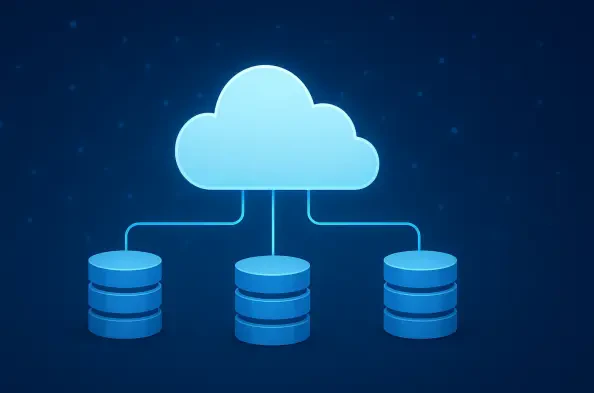
The centralization of telemetry across different geographic regions is another technical pillar that supports global operations. Organizations can now aggregate data from their international clusters into specific, Omni-supported regions, maintaining a holistic view of distributed agentic systems. This cross-regional capability is essential for large-scale enterprises that need to ensure consistent agent performance across various markets. By providing a unified data store for all signals—spans, logs, and metrics—the platform eliminates the data silos that previously obscured the full picture of an application health.
Expert Perspectives on Strategic Enterprise Value
Industry analysts have noted that the forensic capabilities provided by this platform are the missing link for senior leadership teams who have been hesitant to embrace full AI autonomy. CIOs require an audit trail that can withstand regulatory scrutiny and provide clear evidence of why an agent made a specific decision. By transforming what were once considered risky autonomous experiments into transparent business processes, CloudWatch Omni allows organizations to manage AI risk with the same rigor they apply to traditional software. This transparency is key to building the trust necessary for wide-scale deployment.
Early adopters reported that shifting the investigation layer from the infrastructure level to the application level significantly reduced the time spent in “war rooms” during system outages. Instead of debating where the problem might lie, teams could immediately identify the point of failure within the agent logic. However, some experts cautioned that while the tool is powerful, its effectiveness remains tethered to the quality of a company internal evaluation benchmarks. Observability can show what happened, but the enterprise must still define the standards for what constitutes a successful or ethical outcome for their specific use case.
Framework for Implementation and Risk Mitigation
Adopting a robust observability strategy requires a proactive approach to managing the volume of telemetry data generated by active agents. Because autonomous systems can be incredibly noisy, generating thousands of spans for a single user interaction, it is crucial to establish strict filtering rules for ingestion. Without these controls, the cost of storing and analyzing telemetry could quickly exceed the operational budget for the AI itself. Implementing intelligent sampling and filtering ensures that developers have access to critical data without drowning in redundant information.
Organizations must also weigh the trade-offs of a deeply integrated AWS-centric root-cause analysis against the broader requirement for multi-cloud portability. While the seamless integration with the AWS DevOps Agent provides immediate productivity gains, it can also lead to long-term vendor lock-in. To mitigate this risk, teams should leverage Omni compatibility with open standards and third-party evaluation tools like Ragas or Braintrust. This allows for a more flexible architecture that can adapt to changing vendor landscapes while still benefiting from the high-fidelity visibility offered by the native cloud tools.
Finally, a rigorous cost-benefit analysis of AI-assisted monitoring is necessary to ensure that the productivity gains justify the additional service fees. Monitoring the usage patterns of the integrated DevOps Agent helped teams understand the return on investment for automated queries. By correlating real-time performance data with pre-defined quality-assurance metrics, businesses created a feedback loop that continuously improved agent behavior. This strategic alignment between observability and business goals ensured that the pursuit of visibility remained a profitable endeavor. The emergence of CloudWatch Omni signaled a definitive end to the era of guessing in AI operations. By providing a unified framework for tracing, debugging, and auditing autonomous agents, the platform offered the technical maturity required to move these systems to the center of the enterprise. This evolution set a new standard for transparency, ensuring that human oversight of these systems remained grounded in clear, actionable data. Future strategies eventually prioritized predictive analytics to prevent failures before they ever occurred.
WordsCharactersReading time