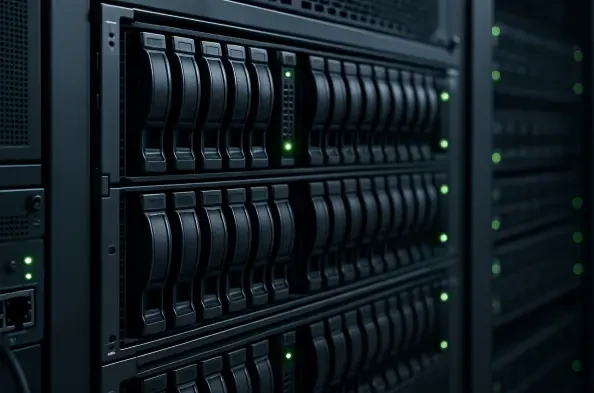
In an era defined by an unprecedented technological gold rush, the race to build the foundational infrastructure for artificial intelligence is reshaping global markets. With tech giants pouring hundreds of billions of dollars into AI-optimized data centers, we’re witnessing what some call the largest infrastructure buildout in human history. To help us navigate this complex landscape, we’re speaking with Vernon Yai, a leading expert in cloud computing and the data center infrastructure powering the AI revolution. Today, we’ll explore the deep partnership between industry titans like Nvidia and specialized providers like CoreWeave, the logistical challenges of building massive “AI factories,” and the strategic dance of competition and collaboration that defines this new industrial age. We’ll also unpack the resource constraints that could temper this explosive growth and look at what the future holds for this critical sector.
With Nvidia’s recent $2 billion investment in CoreWeave, can you elaborate on what “deepening the platform alignment” between the two companies really means in practice for developers on the front lines?
It’s about creating a seamless, purpose-built environment from the silicon all the way up to the software layer. This isn’t just a financial transaction; it’s a deep engineering collaboration. When they talk about aligning infrastructure, software, and platform, they mean co-designing systems where every component is optimized to work together. Think of it like a high-performance race car versus a standard sedan. You could put a powerful engine in the sedan, but the race car is designed from the ground up around that engine—the chassis, the aerodynamics, the transmission. Similarly, CoreWeave’s AI compute hubs are being built specifically around Nvidia’s accelerated computing platform. For developers building massive AI models, this integration removes enormous friction, providing an environment where they can push the hardware to its absolute limits without worrying about interoperability issues or performance bottlenecks.
The ambition to add five gigawatts of specialized “AI factories” by 2030 is staggering. Could you walk us through the primary logistical hurdles in achieving such a massive buildout and how progress will be measured along the way?
Building at this scale is a monumental undertaking that goes far beyond just pouring concrete. The first major hurdle is procuring suitable land with access to immense amounts of power and water for cooling—these “AI factories” are incredibly resource-intensive. You’re not just buying a plot; you’re negotiating with utilities and local governments to ensure the power grid can even handle the load. Then comes the supply chain for the specialized equipment, from the high-performance chips themselves to the advanced networking and cooling systems. Progress won’t just be measured by the number of data centers completed. Key metrics will be the gigawatts of power secured and brought online, the number of compute racks deployed, and the speed at which they can turn a secured land deal into a fully operational AI compute hub. It’s a complex, multi-year puzzle of real estate, energy infrastructure, and technology procurement.
We’re seeing hyperscalers like Google and Microsoft invest a combined total of over $437 billion in AI. In such a competitive environment, how do more specialized “neocloud” providers carve out a niche and differentiate their offerings?
The key differentiator is focus. Hyperscalers are building vast, general-purpose clouds designed to do everything for everyone. It’s an incredible feat of engineering, but it means they have to be a jack-of-all-trades. A neocloud provider, on the other hand, is a master of one. Their entire business, from their network architecture to their software stack, is singularly focused on providing the most performant, efficient environment for large-scale AI and high-performance computing workloads. This specialization allows them to offer a level of performance and expertise that can be hard to match in a generalist environment. As Michael Intrator said, this focus is crucial as AI systems move into large-scale production, where efficiency and raw power are paramount. Enterprises are discovering that for their most demanding AI workloads, a purpose-built environment offers significant advantages.
This trend of circular partnerships, where major tech firms invest heavily in each other’s ecosystems, is becoming more common. What are the core strategic drivers behind this, and what does it mean for the broader market?
These circular partnerships are a powerful strategy for mutual acceleration and risk management in a capital-intensive race. For a company like Nvidia, investing $2 billion in CoreWeave isn’t just a vote of confidence; it helps create and secure a massive, dedicated customer for its advanced technology. It ensures their chips are being deployed at scale in an optimized environment. For a neocloud provider, this financial backing provides the capital necessary to undertake ambitious projects, like procuring land for new data centers. The primary driver is synergy—aligning technology roadmaps and financial interests to build a stronger, more integrated ecosystem faster than either could alone. The impact on the market is twofold: it spurs incredibly rapid innovation within these ecosystems, but it also risks increasing market concentration, making it harder for unaffiliated players to compete at the same scale.
Jensen Huang called this the “largest infrastructure buildout in human history.” Beyond the massive capital investments we’re seeing, what are the most critical non-financial constraints that could potentially slow down this AI industrial revolution?
While capital is flowing freely, it can’t solve every problem. One of the most significant constraints is the availability of sheer power. Data centers for AI are voracious energy consumers, and the capacity of regional power grids is becoming a serious bottleneck. We simply can’t build new power plants and transmission lines overnight. Another major constraint is the talent pipeline. We need a vast number of highly specialized engineers who can design, build, and operate these incredibly complex facilities, and that expertise is scarce. Finally, the supply chain for critical components, especially the most advanced processors and networking equipment, is under immense strain. Any disruption, whether geopolitical or logistical, can have a cascading effect that slows down the entire buildout. Mitigating these risks requires long-term planning with utility companies, massive investment in STEM education, and efforts to diversify and strengthen global supply chains.
What is your forecast for the AI infrastructure market over the next five years?
Over the next five years, I forecast a continued, explosive expansion of the AI infrastructure market, but we’ll also see it mature in critical ways. The initial frenzy of securing compute at any cost will evolve into a more nuanced focus on efficiency, specialized architectures, and energy sustainability. We’ll see a diversification of hardware beyond just GPUs, with more custom silicon and accelerators designed for specific AI tasks. The distinction between public clouds and on-premises infrastructure will continue to blur, with hybrid models becoming the standard for enterprises wanting both scalability and control. Ultimately, the companies that thrive will be those that can not only build bigger but also build smarter, delivering performance that is both powerful and sustainable. The race is far from over; it’s just entering a new, more strategic phase.