Vernon Yai is a titan in the data protection space, having spent years navigating the complex intersection of privacy regulation and technical risk management. As a thought leader who has witnessed the industry’s headlong rush into the cloud, he offers a unique perspective on why some of the most sensitive organizations in the world are now hitting the brakes on cloud-delivered security. His focus on innovative detection techniques makes him the perfect guide to discuss how the next generation of hardware-driven artificial intelligence will redefine sovereignty for defense and government entities.
This discussion explores the resurgence of sovereign, on-premises security architectures designed for high-stakes environments where data control is a non-negotiable requirement. We delve into the integration of disparate data streams into a unified layer, the technical challenges of running localized machine learning, and the strategic shift away from public cloud reliance to meet strict regulatory demands.
How do on-premises hardware platforms bridge the gap for defense and government agencies that are restricted from public cloud infrastructure? Specifically, what are the technical challenges of running high-performance, AI-driven security analysis entirely within a customer’s private environment?
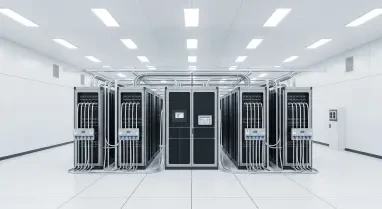
For these high-stakes agencies, the gap is often a chasm of regulatory compliance that prohibits them from sending a single packet of sensitive data to a public server. On-premises hardware acts as a physical fortress, allowing these organizations to leverage advanced analytics while keeping every byte within their own four walls. The technical hurdle here is immense because you no longer have the infinite, elastic compute power of a massive cloud provider to crunch your numbers. You have to build a system efficient enough to run heavy AI workloads locally, ensuring that the hardware can handle massive throughput without the latency that usually plagues isolated systems. It requires a fundamental ground-up redesign of how security software interacts with silicon to provide that “scrappy” startup speed within a rigid, sovereign environment.
When moving away from cloud-based analysis, how can a unified data layer successfully integrate telemetry from disparate sources like network infrastructure and endpoints? What specific machine learning techniques allow for detecting anomalous patterns locally without the compute power of a massive public cloud?
The secret lies in pulling data from network infrastructure, endpoints, and cloud workloads into a single, cohesive data layer rather than letting it sit in silos. By consolidating these sources locally, the system can use specialized machine learning models that are optimized for high-density, local processing rather than broad, cloud-scale generic analysis. These models focus on automated processes designed to spot anomalous patterns by comparing real-time telemetry against a baseline of “normal” behavior specific to that unique environment. It is a more surgical approach to security, where the intelligence is baked into the local architecture to identify potential incidents without needing to phone home to a central cloud for instructions. This localized focus actually allows for more granular detection because the AI is learning the specific “pulse” of a single organization’s private network.
In environments where data control is a non-negotiable requirement, how does an AI-native architecture improve the speed of incident response? Could you walk us through how local models analyze the relationships between activity patterns to provide security teams with a holistic view of their infrastructure?
In a truly AI-native architecture, the response isn’t a secondary thought; it is woven into the very fabric of the data analysis. By analyzing the intricate relationships between events and activity patterns across multiple layers, the platform provides security teams with a holistic view that would be impossible to achieve with fragmented tools. When a suspicious event occurs at an endpoint, the local model immediately correlates it with network traffic and existing security tool logs to see if a broader pattern is emerging. This contextual awareness allows the system to generate alerts that are high-fidelity and actionable, drastically reducing the “noise” that often overwhelms human operators. For an incident response team, this means moving from a state of reactive confusion to proactive defense in a matter of seconds because the context is already there, processed locally and securely.
With commercial availability targeted for 2027, what are the primary milestones for building out a hardware-based security platform from scratch? How do early development partnerships influence the refinement of the architecture to ensure it meets the specific operational realities of highly regulated sectors?
Building a platform of this magnitude from the ground up requires a disciplined roadmap, starting with the core AI-native architecture and the refinement of the localized data layer. With $45 million in backing from Greylock, the current focus is on utilizing those funds to move from a theoretical framework to a functional, hardened hardware reality. Engaging with development partners is a critical milestone because it provides a “boots on the ground” look at the regulatory and operational realities these organizations face every day. These partners help stress-test the system in live, high-security environments, ensuring that by the time 2027 rolls around, the hardware is not just a concept but a battle-tested solution. Their feedback is what shapes the final product, ensuring it can handle the specific, heavy-duty workloads of a defense contractor or a government ministry.
Many established security giants focus heavily on cloud-delivered services. Why is now the right time to pivot back toward sovereign, hardware-based solutions, and what does this shift suggest about the current limitations of the broader cybersecurity market?
The pivot back to hardware is a direct response to a market that has, in many ways, left highly regulated industries behind in its rush to the cloud. While cloud-delivered services offer convenience, they create a massive sovereignty gap for organizations that simply cannot, by law or by mission, outsource their data control. This shift suggests that the “one-size-fits-all” cloud model has reached its limit, especially as geopolitical tensions and data privacy laws become more stringent globally. There is a growing realization that innovation in the cloud hasn’t kept up with the need for absolute, localized control, creating a vacuum that only a sovereign, AI-native hardware platform can fill. By returning to hardware, we are acknowledging that for the most critical infrastructure, the ultimate security is physical and local, not virtual and distant.
What is your forecast for AI-native security?
I expect to see a significant bifurcation in the market where “AI-native” becomes the standard, but the delivery methods will split sharply between the public cloud and sovereign hardware. As we move toward 2027 and beyond, organizations will stop settling for “cloud-first” tools that require them to compromise on data sovereignty and will instead demand platforms that bring the power of AI directly to their data. We will see a massive reinvestment in high-performance local compute specifically designed for security, moving away from generic servers to specialized appliances that can process petabytes of telemetry in real-time. Ultimately, the future of AI-native security isn’t just about better algorithms; it’s about where those algorithms live and who holds the keys to the hardware they run on.