The Paradox of Modern Infrastructure Development
Global technology giants are currently pouring more capital into the digital economy than at any other point in human history, yet the physical expansion of their infrastructure is hitting an invisible wall. This historic contradiction defines the current landscape, where investment reaches unprecedented heights while the actual pace of construction decelerates. As the world navigates the mid-2020s, the race to power artificial intelligence and cloud computing has encountered a complex set of physical and logistical constraints. This analysis explores why the industry experiences a contraction in active buildouts even as hundreds of billions of dollars funnel into the sector, examining the bottlenecks that redefined the relationship between capital and capacity.
From Rapid Expansion to the Great Bottleneck
Historically, the data center industry followed a predictable path of steady growth, accelerating significantly to meet the demands of a remote workforce and a booming digital economy. However, the current landscape shows a distinct decoupling of capital investment and physical footprint. For the first time in over five years, active construction dipped—down nearly 6% year-over-year in late 2025—despite a staggering 57% increase in capital expenditure. Understanding this shift requires looking at how the “easy” expansion of the past was replaced by a much more complex set of infrastructural requirements that the current grid and supply chain were never designed to handle.
Navigating the Physical Limits of Digital Ambition
The Crushing Weight: Power Constraints and Grid Lock
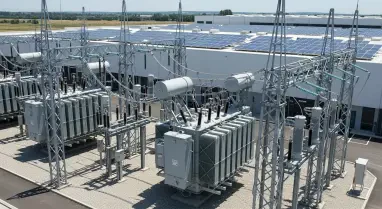
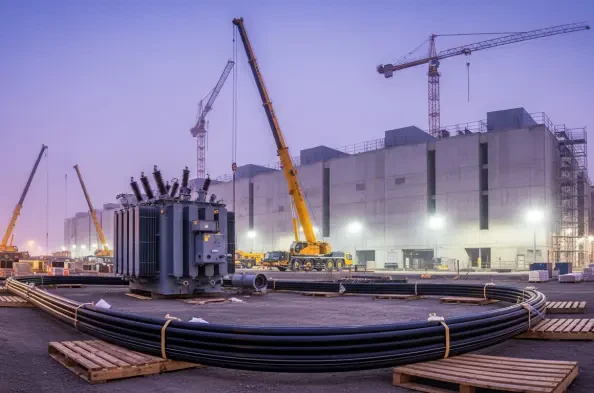
The most significant hurdle facing the industry is no longer a lack of funding, but a fundamental lack of power. Modern artificial intelligence-driven facilities require a level of electricity that dwarfs traditional data centers. This has led to “load queue constraints,” where developers are essentially waiting in a long line for utility providers to upgrade transmission lines or build new power plants. U.S. market capacity additions fell by 50% between the third and fourth quarters of 2025. These delays are systemic; while a data center shell can be built in eighteen months, a high-voltage substation or a new generation source can take five to ten years to materialize. This mismatch in development timelines has created a massive backlog of planned projects that cannot yet break ground.
The Hyperscaler Spending Pivot: Technology Density
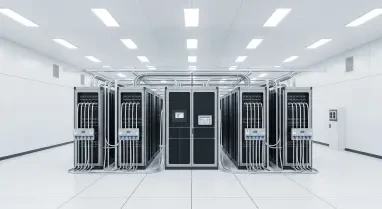
While physical construction has slowed, spending is skyrocketing because the cost of what goes inside the building has changed. The major players—Amazon, Google, Meta, and Microsoft—alongside Oracle, are spending record amounts on high-end CPUs and GPUs. Microsoft alone directed two-thirds of its recent multi-billion dollar investment toward these “short-lived assets” rather than long-term real estate. This represents a shift in industry priorities as companies focus on technological density. They are maximizing the computing power of existing footprints or finishing current projects with incredibly expensive hardware, which explains why spending can reach $700 billion while the number of new cranes on job sites actually decreases.
Regional Variations: The Global Supply Chain Crisis
The slowdown is not felt equally across all geographies, but the underlying supply chain issues are universal. Specialized electrical components, such as transformers and switchgear, currently have lead times that extend into years. Furthermore, the global shortage of high-capacity memory and storage chips continues to act as a governor on how quickly new facilities can be commissioned. In regions where power is more readily available, construction remains aggressive, but in traditional hubs like Northern Virginia or Silicon Valley, the scarcity of land and electricity has forced a shift toward secondary and tertiary markets. These regional complexities mean that record spending is often being redirected to solve logistical puzzles rather than simply pouring more concrete.
Predicting the Trillion-Dollar Infrastructure Future
The trajectory of the data center market suggests that the current construction slowdown is a temporary friction point rather than a permanent decline. Global data center spending is expected to cross the $1 trillion threshold by 2028. To overcome current obstacles, a surge in “behind-the-meter” power solutions is likely, where data centers build their own small modular reactors or massive on-site renewable energy arrays. Additionally, as workloads become more efficient, the industry may move toward liquid cooling and more compact hardware configurations. Regulatory shifts will also play a role, as governments are forced to choose between prioritizing industrial power for tech giants or maintaining residential grid stability.
Strategic Realities: The Data Center Economy
The takeaway for stakeholders is clear: the data center market has transitioned from a real estate play to a complex energy and logistics play. For businesses and investors, the key strategy should be focusing on “speed to power” rather than just “speed to market.” Companies must secure long-term energy agreements and diversify their supply chains to include alternative hardware vendors. For professionals in the field, success now requires a deep understanding of electrical engineering and utility-scale planning as much as server architecture. The current environment favors those who can navigate the physical limitations of the grid, as the demand for capacity remains at an all-time high with vacancy rates hovering near zero.
Closing the Gap: Capital and Capacity
In conclusion, the late 2025 slowdown in data center construction functioned as a symptom of an industry outgrowing its physical environment. The paradox of record spending occurring alongside decreased buildouts revealed a sector that doubled down on high-cost technology while struggling against a strained electrical grid and a sluggish supply chain. As annual investments moved toward the $1 trillion mark, the long-term significance of this sector became undeniable. The digital economy demanded more power and more processing, and the observed friction served as the precursor to a massive, inevitable reconfiguration of how the world powered its digital backbone. The future belonged to those who bridged the gap between financial ambition and physical reality.