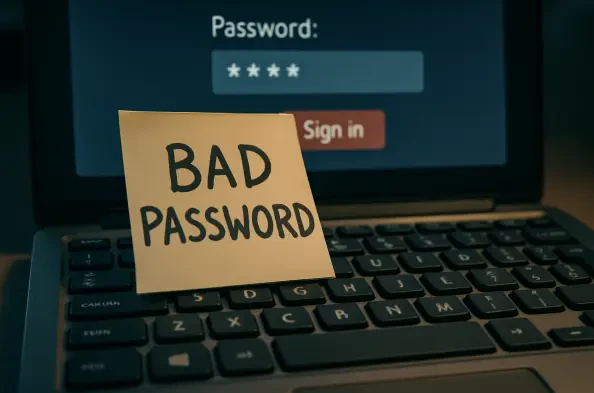
When a nation’s power grid flickers and dies, the immediate search for a sophisticated cyber weapon often overlooks the possibility that the key to the entire kingdom was a simple, stolen, or guessable password. In an industry where reliability is measured in milliseconds and failure can plunge millions into darkness, the most profound vulnerabilities may not hide in complex code but in the common practices of human access. This stark reality forces a critical reevaluation of security, shifting the focus from impenetrable firewalls to the fundamental credentials that grant entry. The security of national infrastructure, it appears, may hinge on something as mundane as a string of characters.
When the Lights Go Out Was It a Hacker or a Password
The central question facing every energy executive and plant operator today is disarmingly simple: in a system where a single failure can trigger a cascading blackout, how much of that risk originates from a compromised credential? The answer is far more significant than many assume. A single password, harvested through a phishing email or discovered in a public data breach, can provide an adversary with the initial foothold needed to navigate a network, escalate privileges, and ultimately seize control of the physical world.
This is not a theoretical exercise. The pervasive nature of this threat was laid bare by statistics showing that 90% of major energy companies experienced a cyber breach in 2023, a figure that underscores the relentless and successful targeting of critical infrastructure. This high frequency of successful attacks demonstrates that adversaries have found reliable methods to bypass traditional defenses, often by exploiting the weakest link in the security chain: the human user and their password.
Ultimately, the stakes in the energy sector extend far beyond the data theft that characterizes breaches in other industries. A security failure here translates into tangible, physical consequences. A compromised system can lead to the intentional disruption of the power grid, the manipulation of controls at a refinery resulting in an environmental disaster, or the shutdown of a pipeline that cripples an economy. Public safety, national security, and economic stability are all directly threatened by a failure to secure the digital gateways to these physical assets.
The New Battlefield Where Digital Grids and Physical Dangers Meet
The modern energy landscape is defined by the convergence of Information Technology (IT) and Operational Technology (OT). Historically, OT systems that control physical processes were protected by an “air gap,” meaning they were physically isolated from corporate and external networks. However, the drive for efficiency, remote monitoring, and predictive maintenance has dismantled this barrier, creating a digital bridge. This integration, while operationally beneficial, allows threats to cross over from the relatively open IT environment into the highly sensitive OT domain that manages turbines, valves, and circuit breakers.
This interconnectivity fundamentally changes the nature of a cyber attack. In a typical corporate breach, the goal is often data exfiltration or financial theft. In contrast, an attack on an energy provider’s OT network has a far more ominous objective. A compromised login in this environment does not just give access to files; it can grant an attacker direct, real-time control over heavy machinery and critical processes. The ability to manipulate a valve, overload a generator, or shut down a cooling system transforms a digital intrusion into a potential physical catastrophe.
Furthermore, the adversaries targeting the energy sector are evolving. While financially motivated cybercriminals remain a threat, the most significant danger now comes from state-sponsored groups and ideologically driven hacktivists. The primary goal of these actors is not profit but disruption, chaos, and geopolitical leverage. Their methods are patient, their resources are extensive, and their attacks are designed to cause maximum physical impact, making them a uniquely dangerous and unpredictable threat to national infrastructure.
The Password Paradox The Tug of War Between Security and Uptime
At the heart of the energy sector’s security challenge lies a fundamental conflict between implementing robust cybersecurity protocols and the absolute necessity for immediate, uninterrupted access to critical systems. During an emergency, such as a plant malfunction or a natural disaster, operators must be able to respond instantly without being hindered by complex login procedures. This operational reality creates an inherent friction with security best practices, leading to a dangerous trade-off where convenience often overrides security.
This paradox gives rise to several key vulnerabilities. One of the most common is the use of shared accounts, where multiple operators use a generic login like “operator1” to access a control interface. This practice eliminates individual accountability, making it impossible to trace actions back to a specific person and complicating forensic investigations after an incident. Similarly, the prevalence of legacy OT equipment, designed decades ago without modern security in mind, presents a formidable challenge. Many of these older systems are incapable of supporting strong passwords or integrating with multi-factor authentication, leaving them as permanent weak points.
Compounding these issues is the proliferation of unsecured gateways. The increased need for remote access for employees and third-party vendors has created numerous entry points into critical networks. If these connections are secured only by a username and password, they become prime targets for brute-force attacks and credential stuffing campaigns, where attackers use lists of stolen passwords from other breaches to try to gain access. Each of these vulnerabilities is a direct consequence of prioritizing uptime at the expense of robust identity security.
A Mandate for Change How Breaches and Regulations are Forcing an Industrys Hand
In response to this escalating threat level, governing bodies are imposing stricter cybersecurity mandates on the energy sector. Regulations like the North American Electric Reliability Corporation Critical Infrastructure Protection (NERC CIP) standards are no longer recommendations but are becoming rigorously enforced requirements. This increasing regulatory pressure is compelling organizations to move beyond basic security hygiene and adopt far more sophisticated Identity and Access Management (IAM) controls across both their IT and OT environments.
The urgency of this shift is amplified by the changing motivations of attackers. A projected hacktivist-led breach in 2025 serves as a stark illustration of this new reality, where the goal is not monetary gain but purely ideological disruption. Such attacks are unpredictable and designed for maximum impact, demonstrating that even organizations without significant financial data to steal are high-value targets. This forces the industry to prepare for adversaries whose sole intent is to turn the lights off.
Ultimately, the sheer frequency of successful breaches is the most compelling catalyst for change. The persistent failure of traditional defenses has made it clear that a reactive posture is insufficient. The industry is being forced to confront the reality that passwords alone are a failed security control. This realization is driving a fundamental shift toward proactive and intelligent identity solutions that can verify users with greater certainty and protect critical systems from unauthorized access.
Building a Modern Fortress Actionable Strategies for Credential Security
The path toward a more secure future for the energy sector requires a modern fortress built on a layered, context-aware defense, not a rigid application of one-size-fits-all IT policies. This strategy must respect the non-negotiable demand for operational continuity while dramatically strengthening the authentication process. It begins with reinforcing the most common point of failure: the password.
The first pillar of this fortress involves strengthening the first line of defense with intelligent password policies. This means shifting the focus from arbitrary complexity requirements toward promoting length, encouraging the use of longer, more memorable passphrases that are exponentially harder to crack. Critically, this must be paired with dynamic, breach-aware defenses that actively block the use of common, reused, or publicly exposed passwords. To ensure these stronger policies do not hinder emergency response, secure self-service password reset tools are essential to prevent operational lockouts at critical moments.
The second pillar is the strategic deployment of Multi-Factor Authentication (MFA). Recognizing that universal MFA may not be feasible in all OT environments, a risk-based model is necessary. This “contextual MFA” approach involves applying the strongest, phishing-resistant methods—such as FIDO2 security keys or smart cards—to the highest-risk access points. These include remote connections for employees and vendors, administrative consoles, and any gateway that bridges the IT and OT networks.
For legacy systems that cannot be upgraded to support modern authentication, the third pillar is the implementation of compensating controls. This involves creating layers of security around the vulnerable asset. Network segmentation can be used to isolate legacy systems, containing any potential breach to a small part of the network. Secure “jump hosts” can serve as a single, heavily monitored gateway for all administrative access. Finally, continuous network monitoring provides the visibility needed to detect and respond to anomalous activity in real time, serving as a crucial backstop for systems where credentials cannot be sufficiently hardened.
The comprehensive review of the challenges facing the energy sector made it evident that the industry stood at a critical crossroads. The analysis established that the convergence of IT and OT, coupled with an evolving threat landscape, rendered traditional security models obsolete. The exploration of the “Password Paradox” revealed the deep-seated conflict between operational necessity and security protocols, a friction that created systemic vulnerabilities. It became clear that the path forward demanded a nuanced strategy that balanced these competing priorities. The solutions proposed—from intelligent password management and strategic MFA deployment to compensating controls for legacy systems—offered a roadmap for building a resilient defense. This framework provided a way to fortify critical infrastructure against modern threats without sacrificing the uptime and safety upon which society depends.