In the hyper-competitive landscapes of drug discovery and advanced manufacturing, proprietary knowledge graphs represent a crown jewel of corporate intellectual property, structuring vast amounts of complex data that power cutting-edge AI systems. However, the very value of these intricate data structures makes them a prime target for a particularly insidious form of theft, where attackers exfiltrate the entire dataset for offline exploitation, bypassing traditional security measures like real-time access controls and watermarking. This challenge has prompted a radical rethinking of data security, leading to an innovative framework that does not try to build higher walls but instead poisons the well for any would-be thief, rendering stolen information worthless. This approach marks a significant departure from conventional cybersecurity, shifting the focus from preventing a breach to ensuring that a successful breach yields no reward.
A New Paradigm in Data Protection
The Core Philosophy of Active Degradation
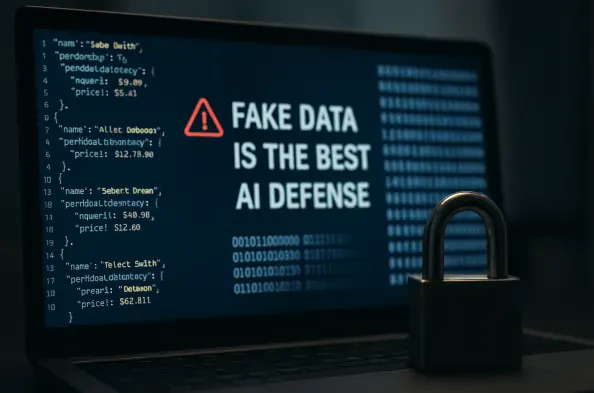
A groundbreaking security framework, known as AURA, introduces the concept of “active degradation” to protect these invaluable knowledge graphs (KGs). Instead of focusing on theft prevention, which has proven increasingly difficult against sophisticated attackers, AURA devalues the data itself, making any stolen copy functionally useless. The strategy revolves around strategically injecting a minimal number of fake but highly plausible data triples, referred to as “adulterants,” into the most critical nodes of the KG. For an unauthorized user who has stolen the dataset, these adulterants act as silent saboteurs. When an AI model, such as those used in GraphRAG systems, queries the compromised KG, it inevitably ingests this false information, leading to the generation of wildly inaccurate and unreliable outputs. This effectively corrupts the entire dataset from the inside out, turning a valuable intellectual asset into a source of misinformation. Crucially, this defensive mechanism is completely transparent to authorized users, who retain access to a system with 100% data fidelity, ensuring that operational integrity is never compromised.
The Intricate Process of Data Adulteration
The implementation of AURA is a sophisticated, multi-step process designed for maximum impact with minimal interference for legitimate operations. The framework first identifies the most influential nodes within the knowledge graph to target, employing the Minimum Vertex Cover algorithm to pinpoint locations where the fewest adulterants will cause the most widespread disruption. Once these critical points are selected, the system generates the fake data using a novel hybrid method. It combines link prediction models to ensure the adulterants maintain structural integrity within the graph, making them appear as natural connections, and then leverages large language models (LLMs) to ensure they are semantically coherent and contextually plausible. This dual approach creates fake data that is nearly indistinguishable from real information, even to a domain expert. To manage this system, each adulterant is tagged with encrypted AES metadata. For an authorized system holding the secret key, this tag allows the fake data to be seamlessly filtered out after retrieval, preserving the accuracy of the output with only a marginal increase in query latency.
Demonstrating Real World Efficacy
Measuring the Impact on Stolen Data
The theoretical promise of AURA was validated through extensive testing against some of the most advanced AI models available, including GPT-4o and Gemini. Researchers applied the framework to multiple datasets and measured its ability to corrupt the answers generated by AI systems using the adulterated, “stolen” knowledge graphs. The results were profound, with the framework achieving a “Harmfulness Score” of 94-96%. This metric indicates that in nearly all test cases, the answers produced by the AI based on the compromised data were successfully corrupted, rendering them inaccurate and unreliable for any practical application. Such a high rate of degradation confirms that AURA does not just introduce minor errors; it systematically dismantles the utility of the entire dataset. For any organization or attacker hoping to exploit stolen data for research, product development, or competitive analysis, this level of corruption makes the intellectual property functionally worthless, thereby neutralizing the primary incentive for the data theft in the first place.
Building a Resilient and Evasive Defense
A critical aspect of any data poisoning defense is its ability to withstand countermeasures, and AURA has demonstrated remarkable resilience in this regard. The adulterants created through its hybrid generation process are not easily identifiable or removable. Because they are designed with both structural and semantic plausibility, they blend seamlessly with the legitimate data. Common sanitization techniques, which often look for statistical anomalies or logical inconsistencies, were found to be largely ineffective at detecting and purging the AURA-generated fakes. Attempting to manually clean the dataset would require an impractical level of domain expertise and would carry a significant risk of accidentally removing valid data points, further degrading the KG’s value. This inherent evasiveness ensures that the protective measures remain effective long after a breach has occurred, providing a persistent defense that turns the stolen asset into a persistent liability for the attacker, who cannot trust the information it contains.
A Proactive Stance on Data Security
The development and successful testing of the AURA framework represented a pivotal moment in the ongoing battle to secure intellectual property in the age of AI. It signaled a departure from the traditional, passive defense postures of encryption and access control, which had often failed against determined adversaries. Instead, it introduced an active, aggressive strategy that turned the data itself into a defensive weapon. This model of “active degradation” provided enterprises with a powerful new tool, shifting the security paradigm from breach prevention to incentive removal. The framework’s success demonstrated that by devaluing stolen assets at their source, organizations could create a far more robust and resilient defense against the growing threat of AI-driven data heists, establishing a new best practice for protecting the knowledge that drives modern innovation.