
Privacy by Design
Vernon Yai stands at the critical intersection of patient safety and data integrity, serving as a leading voice in the urgent transition to post-quantum security. As an expert in data governance and risk management, he has spent years advising healthcare delivery organizations on how to shield their most sensitive assets from emerging digital

Users are encouraged to treat Meta’s Muse as a digital subordinate that requires constant monitoring and strict management of application permissions. As 2026 progresses, the landscape of artificial intelligence is shifting from static, query-based interactions to a more dynamic ecosystem of active agents. Meta’s Muse stands at the forefront of

Under the proposed legal framework, the burden of proof falls on the Church to demonstrate that retaining personal data is strictly necessary for the proper administration of sacraments. This developing legal battle within the European Union represents a fundamental clash between secular privacy rights and the ancient tradition of ecclesiastical

In a server-side encryption model, data is usually transmitted via an encrypted tunnel like HTTPS before being locked away using keys controlled by the service provider. This approach has dominated the digital landscape for years because it offers a seamless user experience where the provider manages all the technical heavy lifting, including key
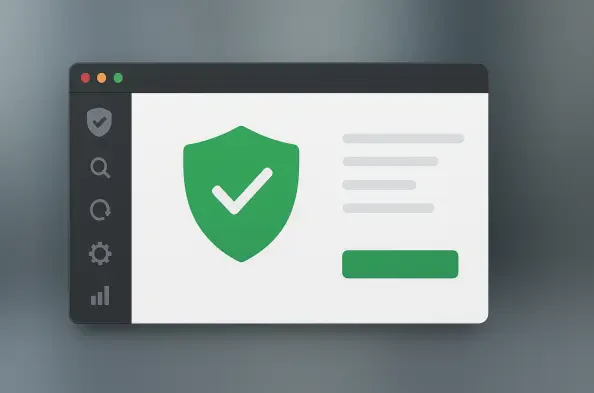
ClamUI provides a modern GTK4 and libadwaita graphical interface for the venerable ClamAV engine to simplify antivirus management on Linux distributions. While the Linux ecosystem has historically relied on the security of its permission structures and the relative scarcity of targeted malware, the interconnected nature of 2026 computing

Communication overhead for distributed AI projects often acts as a silent killer, but newer frameworks have successfully reduced this metric to approximately 42.3 megabytes. This breakthrough addresses the fundamental paradox of the information age: while artificial intelligence requires massive, high-quality datasets to function, the most