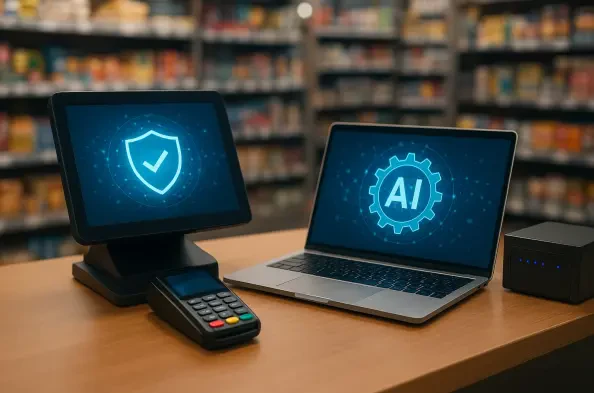
Relying on isolated security tools is no longer a viable strategy for retailers who require visibility across their entire ecosystem of endpoints, networks, and cloud services. The modern retail landscape currently faces a period of intense digital risk, as organizations navigate a reality where digital threats and traditional inventory challenges have become inseparable. As companies continue to digitize their operations to meet consumer demands for frictionless shopping, the surface area for potential cyberattacks expands, creating a complicated environment where every smart shelf and mobile point-of-sale device becomes a potential entry point. This vulnerability acts as a beacon for sophisticated threat actors who are constantly looking for the weakest link in the retail supply chain to exploit. Security leaders have noticed a distinct change in how these attackers operate within the retail space, shifting from simple credit card theft to the systematic harvesting of internal credentials and proprietary data.
Strengthening Defensive Capabilities With Artificial Intelligence
Detection Evolution: From Simple Identification to Behavioral Baselines
The evolution of artificial intelligence in retail defense has progressed through several critical stages, beginning with basic malicious file identification and moving toward the sophisticated behavioral analysis seen today. These systems have matured into tools capable of network baselining, which allows security layers to learn the typical activity patterns of a specific network environment. This capability enables the system to automatically lock down unused functions and alert security staff to any activity that deviates from the established norm before a breach can escalate. In the current environment, AI-driven tools do not just look for known signatures; they analyze the intent behind a process, identifying when a legitimate administrative tool is being misused for malicious purposes. This shift toward intent-based detection ensures that retailers can stay ahead of the ingenuity of global cybercriminals who use automated scripts to find vulnerabilities at a speed that exceeds human response capabilities.
Alert Correlation: Synthesizing Signal Data Into Actionable Narratives
Beyond simple detection, the most recent advancement in AI technology involves the correlation of alerts from various security control points to form a unified defensive front. Instead of overwhelming security teams with a flood of disconnected notifications, AI can now synthesize these signals into a single, high-fidelity narrative of an attack in progress across multiple vectors. This streamlining of information is essential for reducing the immense pressure on IT staff, allowing them to focus on the most critical threats in a manageable and prioritized way. By connecting the dots between an unusual login at a remote warehouse and a sudden increase in data traffic from a corporate database, AI provides the context necessary for rapid intervention. This level of synchronization effectively closes the gap between the initial intrusion and the response, significantly limiting the window of opportunity for an attacker to move laterally through the internal network or establish persistence within the retail cloud infrastructure.
Implementing Strategic Endpoint Management
Asset Management: Centralizing Inventory Oversight for Diverse Hardware
Retailers currently manage a unique level of hardware diversity, ranging from mobile tablets used on the sales floor for inventory checks to fixed self-checkout terminals and high-performance corporate laptops. Unified Endpoint Management has become a strategic necessity for managing these diverse systems across thousands of physical locations while maintaining a consistent security posture. A central platform provides a single, authoritative inventory of all devices, which serves as the first critical step in ensuring that no shadow devices are operating outside of corporate oversight. This centralized visibility allows for the automated deployment of security patches and configuration updates, ensuring that every endpoint remains compliant with the latest security standards. Furthermore, the ability to remotely wipe or lock a lost or stolen device is paramount in a retail setting where hardware is frequently handled by both employees and customers, making the physical security of the device just as important as the digital integrity of the data it contains.
Policy Enforcement: Applying Granular Controls Within a Zero Trust Framework
Effective management of this ecosystem does not mean applying a single, broad policy to every device; rather, it requires granular, device-specific controls tailored to the specific function of the hardware. For example, a self-checkout terminal requires a much more restrictive set of permissions and a locked-down operating environment compared to a standard back-office laptop used for administrative tasks. Beyond just managing the devices themselves, retailers must integrate data from endpoints, networks, and the cloud to gain a holistic view of the entire attack chain. Relying on fragmented tools leads to blind spots that attackers are quick to exploit, particularly when moving between on-premises systems and cloud-based customer databases. By consolidating these disparate data streams into a unified framework, security teams can implement a zero-trust architecture where every access request is verified based on the context of the device, the user, and the network location, regardless of whether the transaction is physical or digital.
Mitigating Advanced Threats and Ensuring Continuity
Stealth Prevention: Combatting Living off the Land Attacks and Intrusions
A major shift in the current threat landscape is the rise of malware-free intrusions, often referred to as living off the land attacks, which pose a significant challenge to traditional defenses. In these cases, attackers use legitimate administrative tools and unpatched servers to move through a network undetected, avoiding the triggers that usually catch malicious software. Because these actions mimic legitimate business processes, AI-driven behavioral analysis remains the only effective way to flag these patterns and stop data exfiltration before it causes significant damage. These attackers often target the high-volume data exchanges inherent in retail, such as supply chain updates or customer loyalty synchronizations, to hide their tracks within the noise of daily operations. Detecting these stealthy intrusions requires a constant monitoring of process behaviors, looking for subtle anomalies like a script executing at an odd hour or a sudden change in administrative privileges that could indicate a compromised account being used to facilitate a breach.
Business Resilience: Preserving Operational Uptime and Brand Integrity
During high-stress periods such as seasonal shopping rushes, maintaining system uptime remained the top priority for any retail organization seeking to protect its revenue. Predictive security models, which treated attack chains like a language to predict an intruder’s next move, allowed for surgical containment of threats without the need to shut down entire networks. This proactive approach not only protected financial assets but also preserved the consumer trust and brand reputation that were vital for long-term business resilience in a competitive market. Retailers who successfully navigated these challenges prioritized the integration of automated response protocols that isolated infected segments while allowing the rest of the business to operate normally. Moving forward, the focus shifted toward refining these predictive capabilities and expanding zero-trust principles to every third-party vendor in the ecosystem. Organizations that embraced this unified, AI-enhanced strategy ensured that their defensive postures evolved at the same pace as the threats they were designed to stop.