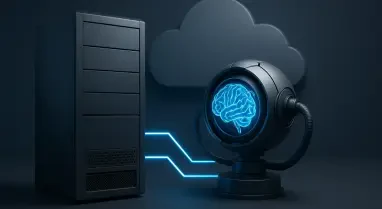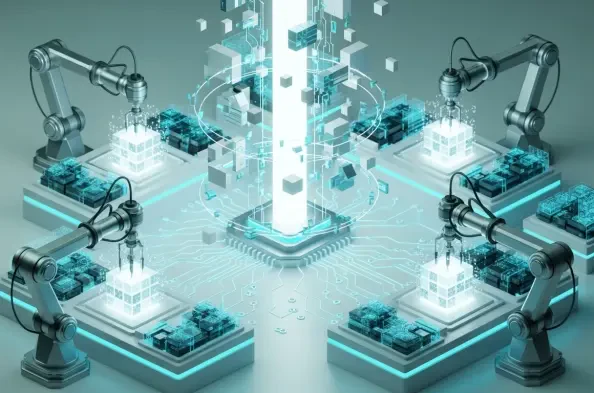
The global software engineering ecosystem is undergoing its most radical transformation since the invention of the compiler as production moves from the steady rhythm of human typing to the blistering, non-stop pace of autonomous machine execution. This review examines the emergence of AI-driven development, a paradigm where software is no longer merely assisted by artificial intelligence but is increasingly authored, tested, and maintained by it. The technology represents a move toward “machine-scale” production, necessitating a complete overhaul of traditional workflows, economic models, and infrastructure. As enterprises integrate these capabilities, the focus shifts from individual productivity to the orchestration of vast fleets of autonomous agents capable of generating code at volumes that would overwhelm a human-centric organization.
The Paradigm Shift Toward Autonomous Development
The evolution of software creation has moved through distinct phases, beginning with manual logic and progressing to integrated development environments. However, the current transition marks a departure from human-centric workflows toward a landscape defined by AI-augmented and eventually autonomous production cycles. In this new context, the role of the developer shifts from a primary creator to a strategic architect who supervises high-level logic while leaving the execution to specialized algorithms. This shift is not merely about speed; it is about a fundamental change in the core principles of development, where the system itself possesses the agency to identify bugs and suggest architectural improvements without direct human prompting.
This transition is highly relevant within the broader technological landscape because it addresses the growing complexity of modern cloud-native environments. As software systems become too large for any single human or even a large team to fully comprehend, autonomous systems provide a way to manage this complexity. The emergence of these platforms signifies the end of the “copilot” era, where AI was a passive assistant, and the beginning of an era where machine intelligence serves as a proactive driver of the development life cycle.
Core Pillars of AI-Integrated Platforms
Autonomous AI Agents and Machine-Scale Workloads
At the heart of this technology are autonomous AI agents that function deep within the dev-ops life cycle. Unlike standard automated scripts, these agents utilize Large Language Models to understand the intent behind a codebase, allowing them to perform complex tasks such as feature implementation and comprehensive testing. Their significance lies in their ability to handle machine-scale workloads, operating twenty-four hours a day to push commits and manage merge requests. This level of activity creates a continuous flow of production that traditional human teams cannot match, fundamentally altering how development velocity is measured.
Infrastructure and CI/CD Orchestration
The integration of AI requires a total re-engineering of foundational architectures like Git, which were originally designed for human-driven inputs. Modern platforms are evolving into orchestration runtimes that treat machine-generated code as the primary input, optimizing continuous integration and continuous delivery (CI/CD) pipelines for high-frequency commits. This orchestration ensures that the massive volume of code produced by AI agents does not lead to bottlenecks, instead using AI to manage the very pipelines that verify and deploy the machine-written logic.
Emerging Trends in Software Economics and Architecture
A profound economic shift is accompanying these technical changes, as the industry moves away from per-seat subscription models toward consumption-based billing. Because AI agents consume significant compute power and model tokens, the traditional “tidy fiction” of a fixed monthly cost per developer is no longer sustainable for vendors. This change transforms software development spend into a “living meter,” where costs are directly tied to the volume of work and the intensity of the machine labor utilized. Organizations must now learn to budget for non-human labor, a challenge that requires new financial oversight tools.
Furthermore, these economic pressures are driving a trend toward flattened organizational structures and leaner, research-heavy teams. As AI takes over the bulk of routine coding and maintenance, the need for expansive management hierarchies decreases. Companies are increasingly partitioning their R&D departments into smaller, highly focused teams designed to support rapid innovation and direct interaction with AI tools. This structural rebirth allows for greater agility but also necessitates a workforce that is deeply specialized in managing automated systems.
Real-World Applications and Industrial Deployment
In sectors like enterprise SaaS and cloud infrastructure, AI agents are already being deployed to handle high-stakes tasks with minimal supervision. One of the most effective use cases is automated code refactoring, where AI identifies and updates deprecated libraries across massive codebases in a fraction of the time a human would require. Similarly, continuous documentation ensures that every change in logic is immediately reflected in the technical guides, preventing the “documentation debt” that often plagues large-scale projects.
Other unique applications include AI-driven workflow routing, where agents analyze the complexity of a task and automatically assign it to either a human expert or another specialized AI bot. This creates a highly efficient industrial deployment model where the platform itself optimizes the path from a feature request to a live production update. Such implementations prove that AI is no longer a peripheral tool but a central component of the industrial software factory.
Navigating Technical and Economic Hurdles
Despite the rapid advancement, significant hurdles remain, particularly regarding the volatility of consumption-based costs. CIOs face immense difficulty in budgeting when the cost of a project is tied to the unpredictable number of tokens consumed by a machine agent. The “sticker shock” associated with complex AI tasks can lead to friction within organizations that are accustomed to the predictability of traditional SaaS contracts. Mitigating these risks requires the development of stricter governance frameworks and more efficient resource management to prevent runaway expenses.
Technical limitations also persist, such as the high cost of Large Language Model resources and the occasional “hallucinations” where AI produces incorrect but plausible-looking code. Ongoing development efforts are focused on creating smaller, more specialized models that reduce compute requirements without sacrificing accuracy. Additionally, the industry is grappling with the need for security protocols that can keep pace with machine-generated code, ensuring that the speed of production does not come at the expense of system integrity.
Future Outlook and the Era of Machine Production
The future of software development points toward a complete transition where AI becomes the primary producer rather than a supportive tool. We are entering an era of “machine-scale” architecture, where the entire global software labor market will be recalibrated around the efficiency of autonomous agents. Potential breakthroughs in hardware and algorithmic efficiency will likely lower the barrier to entry, allowing even small teams to manage massive, high-performance systems that previously required hundreds of engineers.
Long-term, the speed of production will reach levels that are currently difficult to quantify. As AI agents learn to collaborate with one another, the time from conceptualization to global deployment could shrink from months to hours. This shift will inevitably impact the global labor market, placing a premium on those who can govern these autonomous systems and design the high-level architectures that guide machine creativity.
Conclusion and Assessment
The evolution of software development into an AI-driven discipline represented a structural rebirth of the entire technological platform. This review established that the transition from human-centric to machine-scale production was not merely an incremental upgrade but a total reimagining of how value is created and measured. The integration of autonomous agents and the subsequent shift toward consumption-based economics broke the long-standing models of the SaaS industry, forcing a new level of accountability in infrastructure and resource management.
Ultimately, the move toward autonomous production proved to be an inevitable response to the increasing complexity of modern technology. Organizations that successfully adapted to the new “living meter” of compute-driven costs and flattened their hierarchies to support machine innovation gained a massive competitive advantage. While the transition introduced significant budgeting challenges and governance hurdles, the resulting increase in production speed and systemic efficiency defined the new standard for enterprise software production. This shift solidified the role of the developer as a high-level orchestrator in a world where the heavy lifting of code creation was finally handled by intelligent systems.