The global corporate landscape is currently witnessing a tectonic shift as artificial intelligence transitions from a series of isolated experiments into the bedrock of industrial-scale operations. This evolution is moving at an unprecedented pace, with organizations racing to construct massive AI factories that can handle the sheer volume of data processing required for modern competitiveness. By 2028, the majority of large-scale enterprises expect to have fully transitioned their AI capabilities into production-ready environments, signaling the end of the “pilot” era. This growth is driven by a move toward token economics, where the consumption of data units by large language models becomes a core business utility akin to electricity or internet bandwidth. As organizations scale their operations to process billions of tokens monthly, the focus is shifting from small-scale testing to maintaining dozens of high-impact use cases that drive daily business value and operational efficiency.
The Infrastructure Revolution
Architecting the Hybrid Enterprise: Balancing Control and Scalability
Modern Chief Information Officers are navigating a landscape that requires a delicate balance between local control and cloud-based scalability. The emergence of specialized on-premises hardware has created a hybrid environment where data no longer lives in a single silo but flows across a distributed network designed to minimize latency. This strategy spans cloud and edge environments to ensure high performance while maintaining strict control over data security. However, this architectural complexity introduces significant hurdles, as legacy systems and budget constraints often clash with the massive computational loads required for a truly distributed AI network. To overcome these barriers, firms are investing heavily in middleware that can bridge the gap between systems, allowing for a more fluid exchange of information across the enterprise. The goal is a seamless infrastructure that can support real-time decision-making without the bottlenecks associated with centralized processing.
Beyond the technical specifications, the shift toward distributed AI reflects a fundamental change in how data is perceived within the corporate hierarchy. Edge computing has become a necessity for industries requiring immediate feedback, such as autonomous manufacturing and real-time logistics tracking. By processing data closer to the source, enterprises reduce the heavy costs associated with backhauling massive datasets to central servers. This approach naturally leads to a more resilient architecture that can function even when primary connections are intermittent. Building on this foundation, developers are focusing on containerized applications that can be deployed across various hardware configurations with minimal reconfiguration. This modularity is essential for scaling AI use cases from a handful of regional sites to a global footprint within the next two years. The transition remains difficult, however, as it requires a complete rethinking of security protocols that were originally designed for much simpler, more centralized environments.
Powering the Next Generation: Energy Demands and Thermal Management
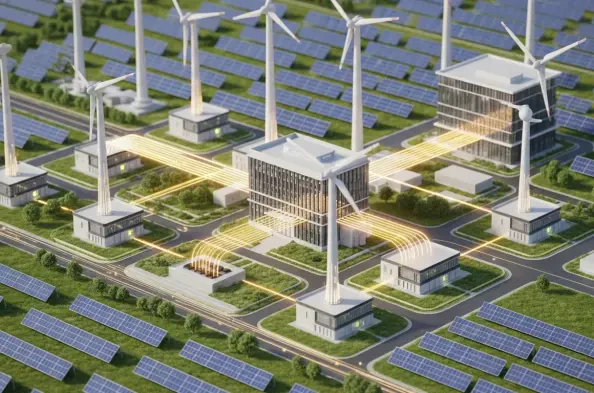
The massive power requirements for industrial-grade AI are shifting from the megawatt to the gigawatt level, forcing enterprises to become active participants in the energy market. As data centers expand to accommodate high-density GPU clusters, the strain on public utilities has reached a breaking point, leading many organizations to seek alternative energy sources. Traditional cooling methods, such as standard HVAC systems, are becoming obsolete because they cannot dissipate the intense heat generated by modern AI hardware. This has led to a surge in liquid cooling and advanced thermal management systems that can maintain optimal temperatures for hardware running at maximum capacity. To ensure a stable power supply, some forward-thinking organizations are even considering building their own generation facilities or securing long-term power purchase agreements with renewable energy providers. This shift represents a total overhaul of traditional utility strategies, moving IT departments into the realm of energy procurement.
Sustainability is no longer just a regulatory checkbox but a core component of the AI infrastructure strategy. As energy consumption climbs, enterprises are under increasing pressure to report on their carbon footprint and energy efficiency metrics. The adoption of liquid cooling is just one part of a broader move toward “green” AI factories that utilize waste heat for local heating or other industrial processes. This circular energy model helps offset the rising costs of electricity and mitigates the environmental impact of large-scale computational tasks. Furthermore, the integration of energy management software allows CIOs to monitor power usage in real-time, optimizing workloads based on current energy prices or the availability of renewable power. This level of granular control is necessary for maintaining profit margins as the cost of tokens and computational power fluctuates. By 2028, the ability to manage energy as efficiently as data will be a primary differentiator between market leaders and those struggling.
Bridging the Human and Strategic Gap
Addressing the Talent Shortage: Specialized Skills and Leadership Alignment
A critical barrier to scaling AI is the widening gap in specialized talent, particularly in fields like robotics, energy management, and carbon monitoring. While most organizations have bolstered their data science teams, they often lack the engineering depth required to integrate AI into physical systems or manage the complex hardware stacks. This shortage is exacerbated by a significant confidence gap between technical teams and business leadership regarding their readiness to scale these technologies. IT professionals often feel more prepared for the transition than the product managers and executives who must oversee the commercial application of AI tools. Closing this gap requires a cross-functional model where business units are deeply involved in technology decisions and incentives are aligned with enterprise-wide performance rather than departmental silos. Training programs must go beyond basic AI literacy to include specialized tracks for maintenance and strategic oversight.
This disconnect between the technical staff and the boardroom can lead to strategic misalignment, where technical capabilities are not effectively translated into market value. To bridge this divide, enterprises are increasingly adopting a “pod” structure, where developers, security specialists, and business analysts work in tandem on specific AI use cases. This approach ensures that technical development is always tethered to a clear business outcome and that potential risks are identified early in the development cycle. Moreover, the role of the Chief AI Officer has emerged as a vital link between technological potential and corporate strategy. This executive is responsible for harmonizing the competing demands of innovation and risk management, providing a unified vision that spans the entire organization. By fostering a culture of collaboration, firms can overcome the internal resistance that often accompanies large-scale digital transformations. Success depends on a leadership team that is comfortable discussing GPU utilization and revenue growth.
Mastering the Economics: Governance and Long-Term Value Creation
To succeed in the industrial era of AI, organizations must ensure that their investments translate into genuine business value rather than architectural waste. The cost of token consumption and hardware maintenance can quickly spiral out of control if not managed with a rigorous, ROI-focused framework. Success depends on integrating governance across finance and operations, ensuring that every AI project has a clear path to profitability and a mechanism for tracking its long-term impact. The companies that lead the market by 2028 will be those that master these complex economics early while maintaining a holistic, energy-conscious strategy. This involves optimizing infrastructure for performance through a combination of proprietary and open-source models, allowing for greater flexibility and cost control. Additionally, seeking external expertise to manage specialized cooling and power needs can prevent costly errors and accelerate the deployment of high-density clusters. Treating AI as a capital investment builds a foundation for growth.
The organizations that successfully navigated this transition prioritized the alignment of their physical infrastructure with their strategic objectives. They moved beyond simple cloud-based solutions to embrace a hybrid model that offered both agility and control. Leadership teams took proactive steps to close the talent gap by investing in specialized training and fostering a culture of cross-departmental collaboration. These firms also recognized that energy management was no longer a peripheral concern but a central pillar of their operational strategy. By integrating sustainability and power efficiency into their core planning, they managed to scale their AI factories while keeping overhead manageable. Moving forward, enterprises focused on establishing robust governance frameworks that included finance and risk departments early in the AI lifecycle. It was also critical to develop partnerships with energy providers and hardware vendors to ensure stability. The leaders of 2028 were defined by their ability to treat AI as a comprehensive industrial system.