Lead: The Unseen Keys That Open Everything
Machine-minted credentials now outnumber employees across cloud estates, yet countless tokens stay untracked, unrotated, and dangerously overprivileged while teams focus on human logins. The quiet shift has been striking: CI/CD systems, SaaS connectors, APIs, and AI agents mint identities at machine speed, then leave them behind when projects end or owners depart. Meanwhile, attackers favor what defenders rarely watch.
Nut Graph: Why This Story Matters Now
In 2024, analysts attributed 68% of cloud breaches to non-human identities—service accounts, API tokens, OAuth grants, and workload roles. That tilt reflected a broader pattern: many enterprises now carry 40–50 automated credentials per employee, far beyond manual governance.
The risk is not abstract. Overprivileged, stale, or orphaned tokens behave like keys left in the door, enabling lateral movement with little noise. Average dwell time on machine credentials reportedly exceeds 200 days, expanding incident scope and cost while boards and auditors press for proof of least privilege.
Body: Where Ghost Identities Hide and How They Spread
Non-human identities scatter across code repos, build logs, IaC templates, serverless configs, and even chat threads where tokens get pasted in a rush. A deprecated service account from a pilot can persist with write access long after its owner exits, drifting from intent to exposure. Moreover, permission wildcards on data stores and message buses widen the blast radius.
Attackers capitalize on inertia. They find leaked secrets, persist with “temporary” tokens that never expire, then expand through quiet API calls that blend into background traffic. One composite case stands out: a leftover OAuth grant from a hackathon app kept broad read/write to a production bucket; logs were siphoned for seven months before anyone noticed.
Body: Voices From the Front Line
“Identity is the new perimeter, and machines outnumber people,” a cloud security leader said, explaining a budget shift from endpoint agents to identity governance. A DevOps manager echoed the surprise: “The biggest shocks weren’t zero-days—they were tokens we forgot we had.”
Teams described familiar trade-offs. Under deadline pressure, a serverless function ran on a broad role because scoping felt hard; weeks later, an external pen test flagged it as a pivot path. Elsewhere, a CI job minted per-PR tokens; merges closed, tokens lived on.
Conclusion: From Sprawl to Governance
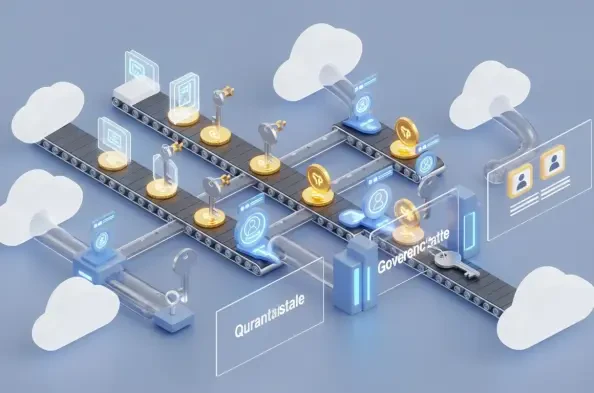
The path forward was clear: discover every non-human identity across clouds, repos, pipelines, secrets managers, and chat; map owners, scopes, last use, and resource graphs. Permissions were right-sized to real call patterns, permission boundaries and just-in-time elevation curbed excess, and lifecycle rules enforced rotation and expiry. Continuous discovery, drift detection, and auto-quarantine turned one-off cleanups into durable control.
For leaders seeking momentum, the next steps were practical: baseline the machine-to-human ratio, cut orphaned credentials first, measure time-to-revoke, and hold quarterly reviews to retire unused scopes. A focused webinar then delivered live discovery walkthroughs, least-privilege templates for service accounts and AI agents, and a checklist that standardized remediation—so ghost identities became visible, governed, and far less dangerous.