The Lead
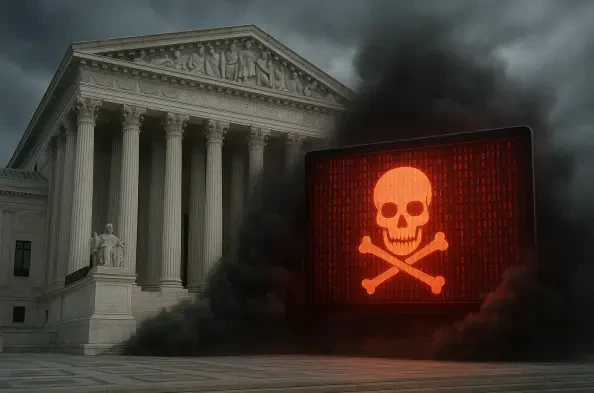
Twenty minutes into a routine payroll run, a silent glitch halted deposits across three states, freezing rent money, pharmacy purchases, and weekend paychecks while status pages still showed serene green. By the time chat channels filled and the incident bridge lit up, one question defined every choice: optimize for fast recovery, or trade minutes now for fixes that would prevent a repeat next month.
The answer shaped more than uptime. It touched customer trust, regulatory scrutiny, and the credibility of leaders who promised that controls actually controlled. A narrow focus on restoring service cleared the immediate roadblock; a broader view used the moment to reroute the highway.
Why This Story Matters
In financial services, reliability is an obligation, not an aspiration. A stalled batch can delay wages, shut off access to funds, and ripple through local economies in hours. Boards want assurance that the system is not only back but safer than it was before. Regulators expect concrete evidence that controls, recovery steps, and communications plans are proven, not paper.
Modernization has become a resilience strategy rather than a status play. Breaking monoliths into smaller services reduces blast radius. Automation across build, test, and deploy cuts change failure rates while increasing delivery speed. Crises compress months of debate into hours of decisive action, aligning risk, product, and operations around customer impact. The best leaders hold on to that clarity after the alarms quiet.
What Crises Expose
Incidents surface the fragility of both code and coordination. Tight coupling lets a single faulty deployment cascade through critical paths. Sparse tests and nonrepresentative environments allow defects to sneak into production, where rollback plans rely on outdated runbooks and the one engineer who remembers a buried flag.
The human system strains, too. Manual handoffs delay triage and blur ownership. Large batch releases complicate rollbacks and obscure the true source of failure. If a culture leans on blame, it often misses the system factors—ambiguity, brittle processes, incomplete signals—that made the “human error” inevitable.
How Urgency Sharpens Decisions
Under pressure, decision cycles shrink and quality improves for the problems that matter most. Clear command structures replace wandering committees. Trade-offs become explicit: restore customer value now, perfect later. Shared dashboards and a single war room reduce contradictory narratives and focus energy where it counts.
That clarity is powerful but perishable. Once service returns, organizations drift back to old cadences, broad scopes, and diffuse accountability. Capturing the crisis cadence—short loops, crisp ownership, outcome alignment—turns emergency reflexes into everyday muscle.
From Recovery to Reinvention
Lasting advantage comes from turning post-incident momentum into architectural and delivery leverage. Decoupling high-change domains reduces cognitive load and isolates failures. Standard patterns—timeouts, retries, circuit breakers—make resilience routine instead of heroic. Observability becomes a product with customers, roadmaps, and service levels.
Quality scales when automation does. Expanding unit, integration, and contract tests and gating builds on those results lowers change failure rates and shortens mean time to recovery. Production-like environments provisioned on demand end the config-drift surprises that inflate incident counts.
Proof Points and Field Notes
Research has been unambiguous about the path forward. “High performers deploy more frequently and recover faster without sacrificing stability,” reported the authors of Accelerate, who linked trunk-based development, small batch sizes, and automated testing to improved outcomes. Google’s SRE guidance echoes the balance, noting that “error budgets” and “blameless postmortems” sustain reliability while leaving room for innovation. Thoughtful chaos engineering, used to validate steady-state assumptions, catches weaknesses before they bite.
Real incidents reinforce the data. A regional bank’s nightly batch jam once relied on manual retries and guesswork; the postmortem funded an event-driven refactor and telemetry upgrades that cut recovery time from hours to minutes. A payments provider traced an outage to environment drift; the fix—immutable infrastructure and contract tests—eliminated the top recurrence driver and shortened lead times for change.
A Playbook Leaders Can Use
A six-step cadence converts emergency grit into ongoing advantage. Stabilize with discipline through a single incident commander and clear communications. Learn without blame and document contributing conditions, not just the spark that lit the fire. Reprioritize with courage by pausing nonessential work and funding foundational fixes tied to service-level objectives and customer value.
Modernize at the right seams, focusing on domains with high change frequency and high impact when they fail. Institutionalize what worked under pressure—short decision cycles, cross-functional squads, crisp ownership boundaries—and convert ad-hoc rituals into operating mechanisms. Measure and reinforce using recovery time, change failure rate, deployment frequency, and SLO compliance, and celebrate reliability wins to lock in habits.
Risk, Governance, and Culture
Risk and compliance leaders often become allies when modernization maps cleanly to control objectives. Smaller deployments reduce operational and regulatory exposure; explicit SLOs translate technical investments into board-ready language. Involving legal and risk early smooths approvals and replaces last-minute friction with predictable, auditable flow.
Culture ultimately decides whether gains endure. Psychological safety enables honest reporting, while accountability ensures action. Leaders who recognize cross-silo coordinators during incidents and promote them into roles with end-to-end scope send a durable signal: reliable systems and credible learning matter more than handling optics.
The Takeaway
Crises had revealed, with unforgiving clarity, where systems, processes, and habits fell short—and where decisive leaders could build lasting strength. The next steps were concrete: keep the short loops that worked under stress, fund tests and environments before features, decouple the hot spots, and manage reliability with explicit error budgets and clear SLOs. Organizations that treated urgency as a teacher rather than a fire drill emerged with faster delivery, fewer incidents, and stronger trust. Most of all, they left the habit of patching in the past and replaced it with a practiced discipline: learn quickly, modernize deliberately, and make resilience the standard rather than the exception.