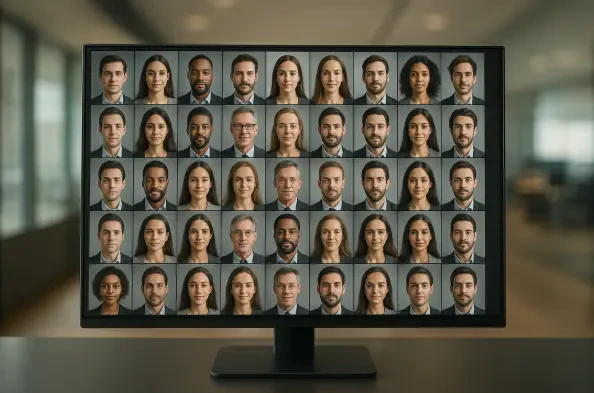
The digital ghost of a person’s identity is often marketed as a high-tech tool for safety, yet when that security fails, the physical features that make individuals unique become permanent liabilities in the hands of unknown actors. ClarityCheck, a platform specializing in reverse-lookup and “secure” identity searches, recently demonstrated this fragility. Despite its marketing focus on safety and privacy, the service left an astronomical amount of sensitive information completely exposed to the public internet.
Independent security researcher Jeremiah Fowler uncovered the lapse, identifying a massive trove of 450 GB of data stored within an unencrypted Amazon S3 bucket. The scale of the exposure was significant, containing approximately 9 million biometric images. This discovery highlights the persistent irony of companies that sell security services while failing to implement the most basic cloud security protocols, leaving millions of individuals vulnerable to potential exploitation.
The Hidden Fragility: “Private” Identity Search Services
The promise of a “secure” way to search for individuals online often masks the underlying technical weaknesses of the platforms providing these services. ClarityCheck marketed itself as a tool for safety, yet the failure to secure a cloud storage bucket suggests that marketing rhetoric often outpaces technical reality. This specific incident is particularly troubling because it involves a company whose primary business is the handling of sensitive personal data for identification purposes.
When a platform dedicated to identifying strangers fails to secure its own database, it creates a privacy paradox. Many of the 9 million individuals whose images were stored in the unencrypted bucket likely never interacted with the service directly. Instead, their data was gathered through various scraping and aggregation techniques, meaning they were exposed by a service they never even chose to use.
Permanent Security Risk: Why Biometric Exposure Matters
Biometric exposure introduces a level of risk that traditional data breaches cannot match. Unlike a password or a credit card number, a facial profile cannot be reset or replaced once it is compromised. When facial geometry and high-resolution images are leaked, the victim faces a permanent security hazard. The “people-finder” industry has faced increasing scrutiny for its habit of aggregating such data without explicit consent, building massive databases that profit off public likenesses while providing minimal protection.
The long-term implications for identity theft are profound. As facial recognition technology becomes more integrated into banking, law enforcement, and personal devices, the availability of these 9 million images provides a goldmine for malicious actors. These identifiers can be leveraged for sophisticated deepfakes or unauthorized access to secure systems, turning a person’s physical likeness into a weapon against their digital and physical security.
The 450 GB Breach: Analyzing the Unsecured Database
The database itself revealed a highly organized but completely vulnerable structure. Folders were explicitly labeled for “faces” and “profiles,” making it easy for anyone with the correct URL to navigate the sensitive contents. Perhaps most distressing was the inclusion of facial photographs belonging to both adults and children, raising significant ethical questions about the collection and storage of minors’ data in commercial search tools.
Beyond the images, the breach included secondary personally identifiable information such as email addresses and phone numbers. This combination of data significantly increases the effectiveness of phishing campaigns and social engineering attacks. Moreover, the public nature of the bucket made it an easy target for AI bots designed to harvest biometric data for training unauthorized facial recognition algorithms, further stripping individuals of their digital autonomy.
Corporate Narrative vs. Cybersecurity Standards: The Conflict
ClarityCheck responded to the discovery by arguing that the data was not technically “exposed” because the URLs were unindexed and required specialized knowledge to find. However, this defense contradicts the standing consensus among cybersecurity professionals and the U.S. federal government. The standard definition of exposure remains clear: if data is reachable on the open internet without an authentication barrier, it is unsecured.
Jeremiah Fowler noted that the URL for the storage bucket was embedded within the website’s public code, making it accessible to anyone with basic technical curiosity. This incident illustrates a recurring problem in cloud computing where simple technical misconfigurations persist for months. Even when a corporation promises a “private” environment, the absence of a username and password requirement renders those promises moot in the eyes of security experts.
Practical Strategies: Protecting Biometric Identity and Digital Privacy
Taking proactive control over a personal digital likeness involved more than just checking privacy settings on social media platforms. Users initiated removal requests by searching for their own names on these reverse-lookup databases and citing regional privacy laws like the CCPA or GDPR. Organizations implemented strict multi-factor authentication protocols for all cloud storage containers to prevent similar misconfigurations from occurring. This shift toward total data ownership served as a crucial defense against the rising tide of unauthorized biometric harvesting.
Securing the digital footprint required a combination of individual vigilance and systemic accountability. Developers focused on automating the encryption of all S3 buckets by default, ensuring that sensitive data remained protected even if a URL became public. By reducing the volume of information shared with third-party tools and using privacy-focused browsers, individuals limited the ability of scraping tools to build unauthorized profiles. These combined efforts established a new standard for biometric protection in an increasingly transparent world.