The Vital Intersection: Infrastructure and Intelligence
The widespread fascination with generative algorithms has masked a fundamental truth: digital intelligence cannot exist without a sophisticated, elastic, and highly disciplined architectural skeleton. Modern enterprise leaders currently navigate a landscape dominated by a singular focus on the rapid deployment and scaling of Artificial Intelligence (AI). However, a critical disconnect has emerged between these organizational ambitions and the underlying technical foundations. While the promise of generative models and machine learning captures the imagination of executive boards, the actual effectiveness of these technologies remains strictly limited by the maturity of the host cloud infrastructure.
A sophisticated cloud strategy is not merely a supplementary asset but a mandatory prerequisite for operational success in this new era. By examining the growing maturity gap and the hazardous trend of reallocating infrastructure budgets to fund experimental pilots, this analysis uncovers why a unified digital foundation is the only viable path toward operationalizing AI at scale. Without this stability, the most advanced algorithms fail to deliver on their transformative potential, leaving organizations with expensive prototypes that cannot survive the transition to real-world application.
Understanding the Evolution of the Cloud Landscape
To grasp the current dependency between AI and the cloud, one must examine how enterprise computing has shifted over the recent decade. Initially, cloud adoption was driven primarily by cost-saving initiatives and the desire to move from capital expenditure to operational expenditure models. This shift eventually transitioned toward a focus on agility and the adoption of cloud-native services, establishing the expectations for modern computing: near-infinite scalability, on-demand resources, and global reach. Today, AI represents the next logical layer built upon this robust ecosystem, rather than a standalone innovation.
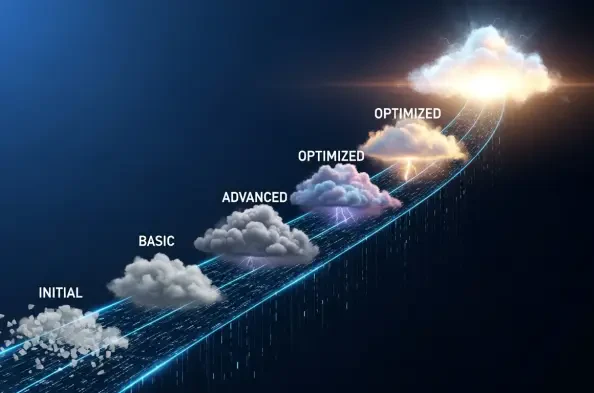
As intelligence enters the mainstream, it demands a level of sophistication—often referred to as cloud maturity—that many organizations have yet to achieve. This historical progression is vital because it demonstrates that the cloud has moved beyond being a mere storage utility to becoming the central nervous system of the intelligent enterprise. Those who viewed the cloud as a simple destination for data migration are now struggling, while those who treated it as an evolving platform for innovation find themselves better positioned to integrate large-scale models into their business logic.
Navigating the Cloud Maturity Gap
The Reality of Infrastructure Readiness
Data from recent industry assessments reveals a stark disparity in readiness across the corporate world. Currently, only a small fraction of organizations—approximately 14 percent—can be classified as cloud evolved. This elite group represents the optimal level for AI success, characterized by cloud-led innovation that accelerates business transformation and the deep integration of cloud-native services into core strategies. Beyond this top tier, 34 percent of organizations are considered mature, possessing broad strategic cloud use and strong governance.
This leaves more than half of all organizations lagging significantly behind the curve. Specifically, over 25 percent are merely cloud enabled, while nearly another quarter are categorized as cloud novices. This lack of proficiency is a significant barrier; without a mature foundation, organizations lack the scalability and governance necessary to move AI from the experimental phase into a functional, value-generating reality. The transition from a pilot to a production-ready system requires a level of orchestration that novice-level infrastructures simply cannot sustain.
The Financial Paradox: Robbing Peter to Pay Paul
A primary challenge identified in the market is a counterproductive shift in financial prioritization. A staggering 88 percent of technology leaders express concern that insufficient cloud investment will jeopardize their modernization goals. Despite the fact that AI development inherently drives increased cloud consumption, 84 percent of surveyed organizations reported that their cloud spending remained flat over the past year. This phenomenon occurs when financial officers are forced to reallocate existing funds from infrastructure maintenance to finance AI pilots.
While these pilots may demonstrate potential, they often fail because the necessary cloud resources—which provide the requisite computing power and data accessibility—are starved of investment. Leaders find themselves in a paradoxical situation where they are expected to deliver advanced solutions without the budget to maintain the environments those solutions require to function. This short-sighted reallocation creates a fragile environment where the AI project might succeed in isolation but collapses when integrated into the broader corporate network.
Technical Hurdles: The Production Wall
The necessity of the cloud for AI is rooted in two primary technical requirements: immense processing power and data integrity. Modern AI models require humongous scales of data and processing power that cannot be sustained by traditional, on-premise hardware. Furthermore, cloud maturity is inextricably linked to data maturity. A fragmented or immature strategy results in siloed data, leading to information characterized by poor governance and a lack of standardization.
There is a consensus among architects that while it is possible to create a functional contained assistant on a subpar cloud estate, scaling that project into a production-level system is nearly impossible. This production wall is where weaknesses become visible through brittle integrations, weak governance, and runaway compute costs. Organizations that fail to address these architectural deficiencies find themselves stuck in a cycle of perpetual prototyping, unable to realize the efficiency gains promised by automated intelligence.
Future Trends in Integrated Intelligence
Looking ahead from the current landscape, the evolution of AI will likely force a consolidation of cloud and data strategies. Emerging trends suggest a move toward autonomous cloud management, where AI itself is used to optimize the infrastructure it runs on, creating a self-sustaining loop of efficiency. Additionally, a rise in industry-specific clouds designed to meet unique data residency and regulatory requirements is expected. These vertical clouds will offer pre-configured compliance frameworks for sectors like healthcare and finance, reducing the barrier to entry for complex AI deployments.
As regulatory frameworks around AI ethics and data privacy tighten, cloud maturity will become the primary mechanism for ensuring compliance. Organizations that can seamlessly integrate these technological and regulatory shifts into their cloud environment will gain a significant competitive advantage. The move from speculative experiments to reliable, large-scale deployments will depend on the ability to manage multi-cloud environments with a high degree of automation and transparency, ensuring that AI remains both powerful and accountable.
Strategic Recommendations for Enterprise Leaders
To bridge the maturity gap and ensure success, organizations must view cloud and AI as two parts of a single, integrated strategy. The following best practices offer a roadmap for navigating this transition:
- Prioritize Infrastructure Funding: Leaders should avoid the trap of reallocating cloud maintenance budgets to AI pilots and instead treat infrastructure as a core component of the AI budget.
- Invest in Data Governance: Before scaling models, organizations must ensure their cloud environment provides a centralized and clean data ecosystem to avoid the garbage-in, garbage-out cycle.
- Embrace Cloud-Native Services: Utilizing built-in scalability and processing tools offered by providers helps manage the heavy computational loads of model training.
- Focus on Production-Ready Architecture: Designing initiatives with scaling in mind from the beginning ensures that integrations are resilient and compute costs are monitored.
Building a Foundation for Lasting Innovation
The symbiotic relationship between cloud maturity and Artificial Intelligence was undeniable throughout this analysis. Organizations that neglected their cloud infrastructure to fund AI were essentially building on a foundation of sand. To avoid wasting resources on failed initiatives, it was essential for leaders to recognize that the path to excellence was paved with a mature, well-funded, and governed cloud strategy. By closing the maturity gap and aligning technical infrastructure with business goals, enterprises moved beyond the excitement of experimental demos and achieved the transformative power of operational AI. In the modern era, a sophisticated cloud estate was not just a technical requirement; it became the bedrock of future innovation and long-term success. The industry eventually learned that the most intelligent software was only as strong as the cloud that supported it.