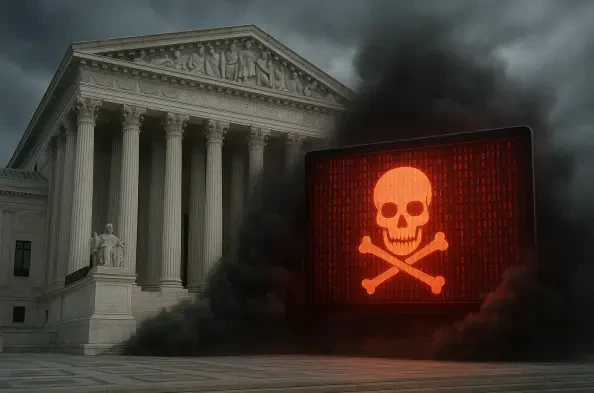
This security failure demonstrates that even robust central servers remain vulnerable to the security hygiene lapses of authorized third-party users in local municipalities. The Florida Department of Highway Safety and Motor Vehicles (FLHSMV) found itself at the center of a massive cybersecurity controversy in September 2026 after a breach of the Driver and Vehicle Information Database (DAVID) was made public. This system serves as a primary repository for the sensitive personal data of millions of Floridians, including driver’s license numbers, home addresses, and insurance information. The intrusion highlights a critical vulnerability in the way state-level data is accessed by local agencies, where a single point of failure can jeopardize the privacy of an entire population. As officials scrambled to contain the fallout, the incident sparked a statewide conversation regarding the balance between rapid information access for law enforcement and the stringent protection of citizen privacy. The breach was not a result of a direct attack on the state’s primary data center but rather a failure of peripheral security protocols that allowed unauthorized actors to walk through a front door that had been left unlocked by a trusted user.
The Anatomy of the Attack
Discovery: Threat Actor Claims
The timeline of the crisis began on September 3, 2026, when an international cybercriminal collective known as ShinyHunters posted a provocative claim on a prominent dark-web forum. The group asserted that they had successfully exfiltrated a massive cache of records from the Florida DAVID system, totaling more than 200,000 individual files. To validate their claims and pressure state officials, the hackers released a sample of the stolen data, which purportedly included the private driver record of the deceased and high-profile figure Jeffrey Epstein. This tactical move was designed to generate maximum media attention and create a sense of urgency, signaling that the group possessed high-value information that could be used for identity theft or political leverage. The public disclosure of the breach before the state had even acknowledged it put the FLHSMV in a reactive position, forced to verify the claims while under the threat of a complete data dump by the attackers.
Following the initial claim by ShinyHunters, the FLHSMV initiated an intensive forensic investigation that lasted approximately one week before a formal public confirmation was issued on September 11. During this window, the state worked to identify the specific vector of intrusion and determine the extent of the unauthorized access. The seven-day period between discovery and public acknowledgment is relatively short compared to historical data breaches, reflecting the high-pressure environment created by the cybercriminals’ public ultimatum. The state confirmed that an international criminal organization was indeed behind the attack and that the intrusion had been mitigated by revoking the compromised access points. However, a significant gap remained between the state’s tactical silence on the volume of stolen data and the hackers’ claim of hundreds of thousands of records. This discrepancy left millions of Florida residents in a state of uncertainty, unsure whether their personal identifiers had been sold to the highest bidder on the dark web or if the breach had been more localized than the criminals suggested.
Exploitation: Credential Hygiene
Investigators eventually traced the breach back to a specific set of credentials belonging to the Plant City Police Department. The most alarming aspect of this discovery was that the intrusion was not the result of a sophisticated software exploit or a complex phishing campaign targeting the state’s IT infrastructure. Instead, the breach was facilitated by a fundamental lapse in security hygiene: a local police department employee had improperly stored their official login and password on a personal electronic device. This device, which was not managed by the government’s rigorous security protocols, became a gateway for the cybercriminals. Once the attackers harvested the credentials from the personal hardware, they were able to log into the DAVID system as a legitimate, authorized user. This allowed them to perform queries and exfiltrate data without triggering the immediate alarms that a brute-force attack on the central server would have surely set off.
This specific failure underscores the persistent “personal-device credential problem” that continues to plague large-scale government organizations in 2026. While the FLHSMV may have implemented multi-million dollar firewalls and advanced encryption at the state level, the security of the entire database was ultimately compromised by the decision of a single individual at a local municipality to bypass safety protocols for the sake of convenience. The incident proves that in a highly interconnected digital ecosystem, the perimeter of the network extends all the way to the personal smartphones and laptops of every authorized user, from high-ranking state officials to local patrol officers. The breach at the Plant City Police Department served as a wake-up call for the entire state, demonstrating that technical defenses are only as effective as the human policies that govern their use. The move toward remote work and the blending of personal and professional digital lives has created a “shadow infrastructure” that remains the primary target for modern cyber-extortionists.
Institutional and Legal Repercussions
Systematic Vulnerabilities: Market Impact
The Florida DMV breach is not an isolated event but rather part of a broader trend observed throughout 2026 where critical public infrastructure has become a prime target for international cyber-syndicates. Similar incidents involving third-party vendors and municipal databases, such as the IDScan.net exposure that allegedly put 153 million identities at risk, suggest that the current model of inter-agency data sharing is fundamentally fragile. These systemic vulnerabilities are forcing a shift in the government technology market, as agencies now seek more aggressive solutions for privileged access monitoring and automated credential vaulting. The market for cyber-insurance is also undergoing a period of hardening, with providers no longer satisfied by simple check-the-box technical audits. Instead, insurers are beginning to demand documented proof of strict policy enforcement and mandatory training across all sub-agencies as a prerequisite for coverage, effectively forcing a higher standard of security on local governments through financial pressure.
Beyond the immediate technical fix, the breach has profound implications for how state agencies interact with their local partners. For years, the FLHSMV operated on a model of high trust with local police departments, providing broad access to DAVID to ensure officers could perform their duties with maximum efficiency. However, the 2026 breach has necessitated a transition toward a “Zero Trust” architecture, where every request for data must be independently verified and authenticated regardless of where it originates. This change is already impacting the operational workflows of small-town police departments, which may lack the IT resources to implement the advanced multi-factor authentication systems now being mandated by the state. The tension between maintaining public safety through rapid information access and protecting citizen data through restrictive security measures is reshaping the landscape of state-local relations, potentially leading to a more centralized and tightly controlled data management structure that could slow down legitimate law enforcement activities in the short term.
Diplomatic Friction: Operational Shifts
The fallout from the Plant City Police Department incident has created a palpable sense of diplomatic friction within Florida’s administrative hierarchy. State officials have been forced to confront the reality that their security is being dictated by the weakest links in thousands of municipal offices across the state. This has led to the introduction of more stringent auditing processes, where the FLHSMV is now conducting unannounced “security health checks” on the digital infrastructure of local agencies that access state databases. These audits are designed to root out the improper use of personal devices and ensure that login credentials are never stored in unencrypted environments. While these measures are necessary for data protection, they have been met with resistance from local administrators who view them as an unfunded mandate and an overreach by state-level bureaucracy into local law enforcement operations.
Furthermore, the breach has accelerated a shift in the types of technology being deployed at the front lines of government service. In response to the credential theft, there is a growing push for the total elimination of password-based logins for sensitive databases, moving instead toward biometric authentication and physical hardware keys. By 2027, it is anticipated that every officer in Florida will be required to use a physical security token to access the DAVID system, effectively closing the loophole that allowed the 2026 breach to occur. This technological shift represents a major capital investment for the state and local governments, necessitating new budget allocations and comprehensive retraining for thousands of employees. The operational reality of 2026 is one where “convenience” is increasingly viewed as a security liability, and the once-simple task of looking up a license plate now involves multiple layers of identity verification that were previously reserved for the most sensitive military or financial systems.
Legal Risks and Future Outlook
Liability: Policy Shifts
The legal ramifications of the Florida DMV breach are substantial, particularly concerning the federal Driver’s Privacy Protection Act (DPPA). This legislation provides a clear framework for seeking damages when sensitive DMV data is disclosed without a permitted purpose, and the 2026 breach potentially qualifies as a massive violation of these protections. Legal experts suggest that if the claim of 200,000 compromised records is verified, the state could face a wave of class-action lawsuits with theoretical statutory damages reaching into the hundreds of millions of dollars. Even if the state argues that it was not the direct perpetrator of the disclosure, the failure to enforce adequate security protocols on its third-party users could be interpreted as a form of negligence. This legal pressure is acting as a catalyst for rapid policy reform, as the state legislature considers new amendments to the Florida Information Protection Act that would impose stricter penalties on any agency—state or local—that fails to maintain proper credential hygiene.
The incident is also serving as a catalyst for national policy discussions led by organizations like the American Association of Motor Vehicle Administrators (AAMVA). There is an emerging consensus that the security of driver data can no longer be left to the discretion of individual states or local municipalities. Instead, there is a push for federally-backed security standards that would harmonize the protection of DMV data across the country, ensuring that a security lapse in one state does not compromise the data of residents in another through interstate sharing agreements. This move toward national standardization would likely involve a massive overhaul of how databases like DAVID are structured, moving away from decentralized access points and toward a more secure, unified authentication gateway. For Florida, the 2026 breach is the definitive evidence needed to justify these sweeping changes, turning a localized security failure into a national mandate for identity-centric data protection.
Transition: Zero Trust Architecture
As a direct consequence of the unauthorized access, Florida’s IT leadership has committed to a complete overhaul of the DAVID system’s access model, moving toward a full Zero Trust architecture. This model operates on the principle that no user or device should be trusted by default, even if they are within the perimeter of a government network. Implementation of this strategy involves continuous verification of every user’s identity and the security posture of their device before any data query is processed. By the end of 2026, the state plans to have fully integrated an Identity and Access Management (IAM) system that utilizes behavioral analytics to detect suspicious activity, such as an officer in Plant City suddenly querying hundreds of records in a single hour. This proactive approach aims to move beyond reactive mitigation and toward a predictive defense system that can cut off access the moment a credential shows signs of being used by an unauthorized actor.
This transition to a Zero Trust model also implies a total ban on the use of personal devices—such as smartphones or home computers—for any activity involving state-level databases. The “Bring Your Own Device” era for government employees in Florida is effectively coming to an end, replaced by a mandate for managed, state-issued hardware that can be remotely wiped and monitored. While this is an expensive transition, it is viewed as the only viable way to prevent the repeat of the 2026 breach. The broader shift toward identity-centric security ensures that even if a password is stolen, the attacker would still need a physical biometric match or a secondary hardware token to gain access. This multi-layered defense-in-depth strategy is becoming the new standard for all government agencies, as the cost of these technical controls is now seen as far lower than the potential legal and social costs of a multi-million record data breach.
Protecting the Individual
Defensive Strategies: Resident Protection
While the state government focuses on long-term infrastructure remediation, the immediate burden of protection has shifted to the individual citizens whose data may have been exposed. Because the information contained in the DAVID system is exceptionally rich—including full names, home addresses, and license numbers—it provides a perfect toolkit for sophisticated identity thieves. Financial security experts are advising every Florida resident to take the proactive step of placing a freeze on their credit reports with the major bureaus. This prevents criminals from using the stolen DMV data to open new lines of credit, a common tactic following large-scale government breaches. In 2026, the process for freezing and unfreezing credit has become more streamlined, and it remains the most effective individual defense against the financial fallout of a data exposure of this magnitude.
Beyond financial protection, residents must also be increasingly vigilant against more direct forms of fraud, such as “social engineering” attacks. Scammers who possess the leaked data from the DAVID breach may pose as government officials, insurance agents, or law enforcement officers to trick individuals into providing even more sensitive information, such as Social Security numbers or banking passwords. These “vishing” (voice phishing) and SMS-based attacks often use the stolen personal details to build a false sense of trust and authority. Residents are being reminded that government agencies will never call or text to ask for private financial data or to demand payment over the phone. The 2026 breach has made the personal information of hundreds of thousands of people public knowledge, making it more important than ever for individuals to treat every unsolicited communication with a high degree of skepticism and to verify the identity of anyone claiming to represent a state or local agency.
Vigilance: Next Steps
Another critical area of concern for Florida drivers is the potential for vehicle registration fraud and title manipulation. Because the DAVID system contains comprehensive ownership records, stolen credentials could theoretically be used by criminals to alter vehicle titles or registration statuses without the owner’s knowledge. This type of fraud can lead to significant legal and financial complications, including the unauthorized sale of vehicles or the use of cloned registrations for criminal activities. Drivers are encouraged to periodically check their vehicle registration status through official state portals and to report any discrepancies immediately. The state has promised to implement more robust notification systems that will alert owners via email or physical mail whenever a change is made to their vehicle’s digital record, but until these systems are fully operational, manual vigilance remains a necessary safeguard.
The long-term impact of the 2026 breach on the residents of Florida will likely be measured in the increased complexity of interacting with government services. As the state implements more rigorous security layers, the once-simple process of renewing a license or updating a registration will involve more steps and more frequent identity checks. However, this is a necessary trade-off in an era where data has become a high-value commodity for international criminal organizations. The breach served as a painful lesson that the convenience of digital government comes with significant risks that must be managed through both institutional policy and individual caution. The success of Florida’s recovery from this incident will depend on the ability of its citizens to adapt to a more security-conscious way of life, where the protection of one’s digital identity is treated with the same importance as the protection of one’s physical home.
A New Standard for Cybersecurity Culture
The state government finalized its initial response to the DAVID system breach by implementing a series of aggressive new protocols designed to eliminate the vulnerabilities exposed in Plant City. Officials prioritized the immediate rollout of mandatory hardware-based authentication for all law enforcement personnel, ensuring that stolen credentials alone could never again grant access to sensitive driver data. Legislative leaders moved quickly to increase funding for municipal IT audits, recognizing that the security of the state’s central repositories was inextricably linked to the hygiene of its local partners. These actions represented a fundamental shift in the state’s approach to cybersecurity, moving away from a model of passive trust toward one of active, continuous verification across all levels of government.
The incident at the Florida DMV forced a widespread re-evaluation of the human element in data protection, as the state transitioned from a focus on technical barriers to a focus on administrative culture. Agencies across Florida completed comprehensive retraining programs for their staff, emphasizing the catastrophic consequences of storing passwords on personal devices and the necessity of strict adherence to managed device policies. By the conclusion of the crisis, the FLHSMV had not only mitigated the immediate threat but also laid the groundwork for a more resilient digital infrastructure that prioritized citizen privacy over administrative convenience. This proactive stance provided a blueprint for other states facing similar challenges, signaling that the era of treating cybersecurity as a purely technical issue had officially come to an end.