The delicate equilibrium between enterprise productivity and cybersecurity stability often rests on the reliability of endpoint management solutions, yet recent discoveries in Ivanti Endpoint Manager have fundamentally challenged this assumption by exposing critical structural weaknesses. For many large-scale organizations, these platforms serve as the central nervous system for deploying updates and maintaining compliance across thousands of remote workstations, making any localized flaw a potential gateway for total network compromise. The emergence of high-severity vulnerabilities, specifically those involving SQL injection and remote execution, has shifted the focus from external perimeter defense to the internal integrity of administrative consoles. When a tool designed to secure a fleet becomes the primary vector for an intrusion, the resulting data exposure can be catastrophic, affecting everything from sensitive intellectual property to employee records. These flaws often remain hidden until actively exploited.
Architectural Weaknesses: The Mechanics of SQL Injection
The vulnerability identified as CVE-2025-27598 represents a significant leap in the risk profile of endpoint management software due to its ability to facilitate unauthenticated SQL injection. By exploiting flaws in the way the core server processes requests through the OLE DB provider, attackers can bypass standard authentication protocols to execute arbitrary commands directly on the underlying database. This particular vector is exceptionally dangerous because it does not require an attacker to possess valid credentials or even a foothold within the local network, provided the management console is exposed to external traffic. Once an adversary gains the ability to manipulate SQL queries, they can effectively rewrite the rules of the system, extracting sensitive configuration data or creating new administrative accounts that persist long after the initial entry. This architectural oversight highlights a recurring problem in complex enterprise software where legacy database connectors remain vulnerable despite iterative security updates.
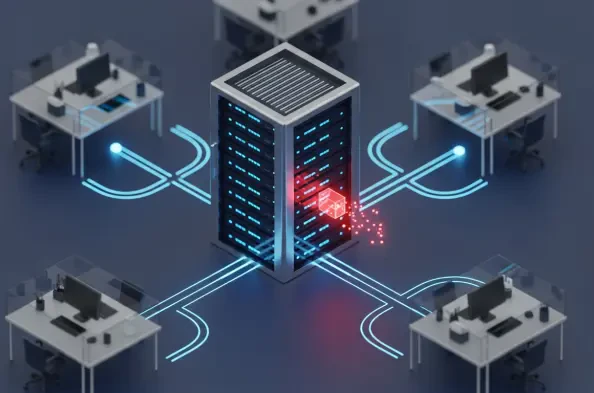
Beyond the initial breach, the real danger of these vulnerabilities lies in the potential for lateral movement and the subsequent deployment of ransomware or espionage tools across the entire network. Because Ivanti EPM holds high-level permissions to manage and modify files on every connected endpoint, a compromised core server acts as a powerful staging ground for secondary attacks. Threat actors can use the existing distribution mechanisms of the software to push malicious scripts to thousands of devices simultaneously, effectively turning a security tool into a centralized delivery system for malware. This method of exploitation is particularly difficult to detect because the resulting activity often appears legitimate to standard antivirus solutions, as the commands originate from a trusted source. Consequently, the discovery of such vulnerabilities forces security teams to treat every managed device as potentially compromised. The speed of transition from a single injection to a full-scale takeover underscores the need for robust segmentation.
Strategic Remediation: Lessons in Organizational Resilience
Addressing these vulnerabilities requires a multi-layered strategy that begins with the immediate application of security patches but extends into deeper defensive architectural changes. Simply updating the software is often insufficient to mitigate the risk if the environment has already been compromised; therefore, security professionals must engage in proactive threat hunting to identify lingering indicators of compromise. This process involves scrutinizing database logs for unusual query patterns, auditing administrative account creation, and monitoring outbound traffic for unauthorized data exfiltration attempts. Furthermore, organizations should consider implementing more stringent network access control lists to ensure that the EPM core server is only accessible from trusted internal segments or through secure virtual private networks. By isolating the management console from the broader internet, administrators can significantly reduce the attack surface and prevent unauthenticated attackers from reaching the vulnerable OLE DB components.
The shift toward a Zero Trust architecture became the primary defensive evolution following the realization that even the most trusted management tools could serve as entry points for sophisticated attacks. Administrators moved away from relying solely on perimeter defenses and instead implemented micro-segmentation and rigorous least-privilege access models for all administrative accounts. The response focused on treating management consoles as high-risk assets that required continuous monitoring and frequent automated audits to detect any deviation from established baselines. This proactive approach allowed organizations to anticipate potential failures in third-party code and mitigate them before they could be weaponized by external actors. Ultimately, the lessons learned from recent Ivanti vulnerabilities encouraged a culture of security where every update was scrutinized and every privilege was justified by necessity. By integrating advanced behavioral analytics and strictly controlling data flow, security teams successfully rebuilt organizational resilience.