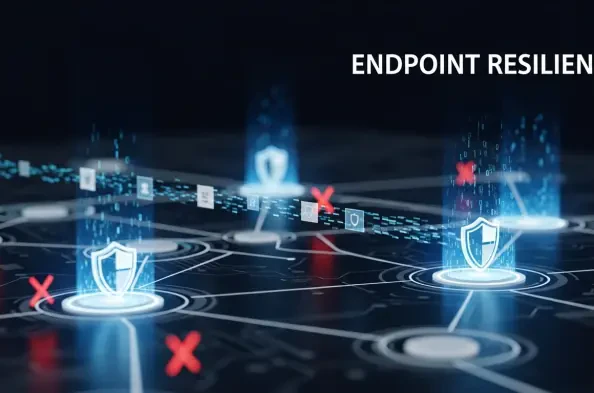
The sudden realization that traditional perimeter defenses are essentially obsolete in the face of hyper-automated, AI-driven exploitation has forced a massive recalculation of how global enterprises protect their most vulnerable assets. As the IGEL Now & Next 2026 conference in Miami demonstrated, the current technological landscape requires a departure from reactive security measures toward a framework built on inherent endpoint resilience. For contemporary Chief Information Officers, this event provided more than just a product showcase; it offered a sophisticated blueprint for managing digital environments where the attack surface is constantly expanding and changing. The core philosophy presented throughout the sessions emphasized that the endpoint must no longer be viewed as a passive or static piece of hardware that requires external protection. Instead, it must evolve into a dynamic and active participant in the enterprise’s broader security posture, capable of maintaining operational integrity even when central systems or networks are under direct duress.
The AI Transformation of Modern Threat Landscapes
Artificial Intelligence has fundamentally altered the velocity at which cyber adversaries can operate, moving from manual exploitation to a model defined by automated reconnaissance and instant vulnerability discovery. By lowering the technical barriers for bad actors, AI enables the creation of highly customized malware and phishing campaigns that can bypass standard signature-based detection systems with ease. This shift means that security teams are no longer fighting a human opponent at human speed; they are competing against machine-learning algorithms that can test thousands of entry points in seconds. Consequently, the conference highlighted that organizations can no longer rely on the hope that their firewalls will block every attempt. The objective is now to build a digital environment that remains functionally robust and secure by default, even when subjected to these high-volume, automated campaigns that characterize the current year’s security challenges.
Building on this understanding of AI-driven threats, the industry has recognized that the traditional “castle and moat” strategy has been rendered completely ineffective in a world of remote work and cloud-native applications. When every employee’s home office or mobile device represents a potential gateway for an AI-orchestrated attack, the security logic must shift from the network core to the very edge of the infrastructure. This necessitates a move toward immutability at the operating system level, ensuring that even if an adversary gains temporary access to a session, they cannot persist or move laterally through the system. By stripping away the ability for local write-access and keeping the underlying OS separate from user data and applications, IT leaders can effectively neuter the most sophisticated exploitation techniques. This structural shift ensures that the device is not just “protected” by software, but is inherently designed to be unhackable in a persistent sense.
Executing Zero Trust Strategies at the Edge
While many industry veterans have expressed a certain level of marketing fatigue regarding the term “Zero Trust,” its practical implementation has reached a critical stage of maturity in 2026. The consensus among technical experts is that for Zero Trust to be truly effective, it must move beyond identity management and network segmentation to be executed directly at the endpoint level. This means that every single request for data or application access must be verified at the source, rather than trusting a device simply because it is logged into a corporate account. By enforcing strict, continuous verification at the hardware edge, organizations can drastically reduce the success rate of identity-based attacks and social engineering. This approach is particularly vital given that the average enterprise currently faces nearly three significant breaches annually, most of which stem from compromised credentials that a resilient endpoint could have flagged or contained.
This shift toward endpoint-centric verification naturally leads to a more nuanced understanding of conditional access that adapts in real-time to the user’s specific context and environment. Rather than a binary “allow” or “deny” gate, modern systems utilize an adaptive secure platform that monitors a multitude of factors, including the physical location of the user, the health of the hardware, and the specific sensitivity of the data being accessed. If a user attempts to access financial records from an unfamiliar public network on a device that hasn’t received its latest firmware update, the system can automatically restrict access or trigger additional authentication layers. This granular level of control ensures that security does not become a hurdle for the end-user, as the system provides the appropriate level of freedom based on the current risk profile. It transforms the endpoint from a potential liability into a proactive guardian of corporate policy and data integrity.
Redefining Business Continuity as a Live Operational Capability
One of the most transformative concepts discussed throughout the Miami sessions was the redefinition of Business Continuity and Disaster Recovery from a reactive, post-incident phase to a live operational capability. In a modern enterprise where workloads are highly fragmented across Virtual Desktop Infrastructure, Software as a Service, and specialized enterprise browsers, true resilience means maintaining seamless access during an unfolding security incident. Traditionally, IT departments would shut down systems to contain a threat, leading to massive productivity losses. However, the new strategy allows teams to instantly pivot users to a “known-good” state or an alternate delivery path without interrupting their workflow. This capability ensures that the business remains functional and productive even while remediation and forensic activities are being carried out by cybersecurity teams in the background.
Furthermore, this model of continuous operation relies on the ability to treat the digital workspace as a portable, platform-independent environment that can be spun up on any hardware. By decoupling the user’s workspace from the underlying physical machine, IT leaders can ensure that even a total hardware failure or a local ransomware infection does not result in significant downtime. The resilience strategy presented at the conference emphasizes that the success of a modern IT department is no longer measured solely by how quickly it can restore a backup, but by how effectively it prevents the user from ever losing access to their essential tools. This proactive stance on continuity provides a massive competitive advantage, as it minimizes the financial and reputational damage associated with service outages, ensuring that critical operations in sectors like healthcare or manufacturing continue without a single second of hesitation.
Leadership Mindsets and the Inevitability of Compromise
A high-level perspective on organizational psychology, championed by global intelligence leaders, has shifted the focus from technical specifications to a fundamental change in executive philosophy. Leaders are now being urged to abandon the optimistic hope that a perfect defense can prevent all attacks and instead adopt a “when, not if” mindset. This psychological shift treats resilience as an organizational habit that must be practiced and refined well before a crisis occurs. It requires the establishment of clear authority structures, predefined decision-making protocols, and technical response paths that are ready for immediate execution. When a high-velocity attack is detected, the technical infrastructure must be capable of executing pre-authorized pivots instantly, removing the delays caused by bureaucratic indecision and ensuring that the organization can react at the same speed as the adversary.
This evolution in leadership thought is mirrored by the practical successes seen in diverse industries, where streamlined endpoint management has directly contributed to improved service delivery and bottom-line growth. For example, large-scale healthcare providers have demonstrated that by modernizing their endpoint strategy, they can redirect substantial portions of their IT budget away from firefighting and toward patient care initiatives. This proves that endpoint resilience is not merely a technical concern for the server room, but a strategic business enabler that impacts every facet of the organization. By adopting a posture of prepared inevitability, companies can move away from a culture of fear and toward a culture of confidence. They are no longer reactive victims of the digital landscape, but are instead disciplined operators who have built the structural and mental capacity to weather any technological storm that might arise.
Strategic Frameworks for the Future Workspace
To successfully navigate the complexities of the current digital era, a resilient endpoint strategy must be built upon a foundation of architectural flexibility and operational predictability. The modern workspace is hybrid by default, and IT environments must support a seamless user experience across a variety of application delivery methods, whether they are hosted in the cloud or managed locally. This requires an infrastructure that can adapt to new technologies as they emerge without requiring a complete overhaul of the security framework. By utilizing immutable systems and centralized management tools, organizations can create a predictable environment where updates are silent, security is transparent, and the management burden is significantly reduced. This predictability is the key to scaling digital operations in 2026, as it allows IT teams to focus on innovation rather than routine maintenance.
In conclusion, the path forward for global enterprises lies in embracing the endpoint as the most critical front line in the battle for business continuity and data security. The shift from prevention to resilience requires a holistic approach that combines advanced adaptive technologies with a disciplined leadership mindset and a focus on live operational capabilities. Organizations should prioritize the implementation of immutable, edge-based security platforms that can provide a consistent experience across all delivery silos while maintaining a zero-trust posture. As the digital landscape continues to evolve under the influence of AI and increasingly sophisticated threats, those who have built their foundations on resilience will be the ones who thrive. The next logical step for IT leaders is to audit their current endpoint flexibility and begin the transition toward a posture where business uptime is guaranteed, regardless of the external challenges or internal system failures that may occur.