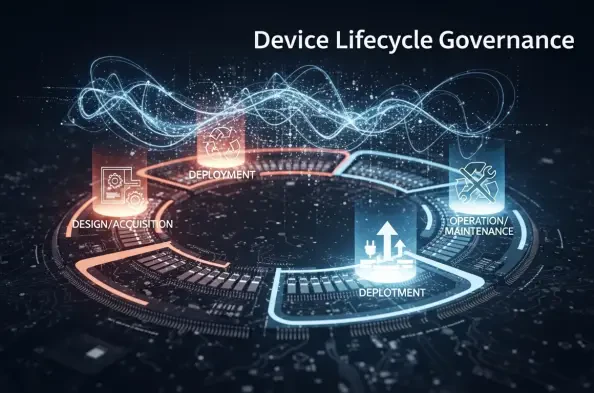
The traditional practice of squeezing every last drop of utility out of an aging laptop has transformed from a frugal business habit into a dangerous operational liability. Organizations that once viewed hardware as a static asset to be owned until failure are now finding that this reactive stance creates massive bottlenecks in productivity and security. The modern workplace is currently navigating a fundamental shift where the focus has moved away from the physical possession of devices toward the strategic governance of their entire operational journey. This change is not merely a preference for newer gadgets but a necessary response to a landscape defined by persistent supply chain volatility and the relentless hardware requirements of generative AI. For small and mid-sized businesses, the endpoint is no longer just a tool; it is the primary gateway to the corporate ecosystem and its most vulnerable failure point.
The modern endpoint crisis is reaching a tipping point as rising hardware costs and shifting employee expectations clash with legacy IT strategies. In previous years, a standard laptop might have sufficed for several cycles, but the sudden integration of AI-driven applications has rendered older silicon obsolete faster than ever before. This environment is forcing a radical change in how leadership approaches fleet management, moving from a “wait and see” mentality to one of continuous oversight. The path to strategic maturity now involves abandoning the failure-prone models of the past in favor of sophisticated lifecycle frameworks. These frameworks leverage automated deployment, real-time telemetry, and predictable economic structures to ensure that a business remains agile regardless of external market pressures.
The Evolution of Managed Device Lifecycle Services (MDLS)
Market Shifts and the Migration to OpEx Models
The transition from Capital Expenditure (CapEx) to Operational Expenditure (OpEx) is currently reshaping the financial profile of the modern IT department. Data indicates a massive movement toward “as-a-service” frameworks, with recent projections suggesting that 70 percent of organizations will fully transition to these models by 2028. This shift is primarily driven by the need for financial predictability in an era of fluctuating inflation and hardware scarcity. Instead of enduring large, disruptive budget spikes every few years, companies are opting for subscription-based models that align cost with actual workforce consumption. This allows for a smoother cash flow, which is particularly vital for organizations looking to preserve capital for growth-oriented investments rather than depreciating assets.
Adoption statistics reveal that the shift is most pronounced among organizations that prioritize scalability and resilience. The traditional method of buying hundreds of machines upfront often resulted in “device silos” where some employees had cutting-edge technology while others struggled with sluggish, legacy hardware. By adopting a governance-focused model, businesses are ensuring a uniform standard of performance across the entire organization. This migration is not just about financing; it represents a cultural change where the utility of the hardware is prioritized over the deed of ownership. Consequently, the role of procurement has merged with the role of strategic operations, creating a more cohesive approach to digital infrastructure.
Real-World Implementation of Lifecycle Frameworks
Concrete applications of Managed Device Lifecycle Services (MDLS) are becoming increasingly visible across high-stakes industries such as legal services and healthcare. For instance, a law firm dealing with strict billable hours cannot afford the downtime associated with a sudden hardware failure or a lengthy manual setup for a new associate. MDLS providers solve this by utilizing zero-touch deployment strategies, where devices are shipped directly to the user and configured automatically through the cloud. This approach eliminates the “firefighting” typically associated with IT rollout phases. Notable platforms, such as the HP Workforce Experience Platform (WXP), are currently leading the charge by providing comprehensive dashboards that track the health and status of every device in a global fleet.
In medical centers, where data security and uptime are non-negotiable, lifecycle governance provides a layer of stability that traditional leasing cannot match. These organizations are using integrated platforms to monitor battery health, storage performance, and thermal levels across thousands of endpoints. When a device shows signs of imminent failure, the system triggers an automatic replacement process before the user even experiences a problem. This level of proactive management ensures that critical services remain uninterrupted. By moving away from reactive repair cycles, these institutions have successfully redirected their internal IT talent toward patient-facing technology initiatives and data optimization projects.
Industry Perspectives on Governance vs. Ownership
Expert consensus has shifted decisively against the concept of “sweating assets,” as the hidden costs of maintaining legacy hardware often exceed the price of a modern replacement. Thought leaders argue that while an old device might appear functional on the surface, the cumulative impact of security patches, hardware-software incompatibility, and reduced employee output creates a significant financial drain. There is a critical distinction between basic leasing—often referred to as PC-as-a-Service—and comprehensive governance through MDLS. While the former focuses on the financial transaction, the latter emphasizes the continuous optimization of the user experience.
The potential for a 35 percent reduction in the Total Cost of Ownership (TCO) through expert-led management has become a powerful argument for governance-first strategies. This reduction is achieved not just through better pricing, but through the elimination of administrative overhead and the reduction of help desk tickets. Industry analysts point out that when hardware is governed effectively, the time IT staff spends on mundane provisioning and troubleshooting can be cut in half. This liberation of human capital is perhaps the most significant benefit of the trend, as it allows businesses to build a more resilient and innovative workforce that is not hampered by the limitations of their equipment.
The Future of Proactive Endpoint Ecosystems
The integration of AI-powered telemetry is fundamentally changing the nature of IT support from a reactive service to a preemptive strike. In the coming years, telemetry-driven analytics will enable a state of “self-healing” hardware where software agents identify and resolve configuration errors or resource leaks in the background. This shift is crucial for businesses that plan to leverage high-performance AI applications, which require consistent, high-bandwidth processing power. An “always-modern” hardware cycle is becoming a prerequisite for any company that wants to remain competitive in a data-saturated market, as legacy processors simply cannot handle the local compute demands of modern Large Language Models.
The security implications of automated governance are equally profound, as hardware-enforced security becomes the primary defense against sophisticated cyber threats. Automated refresh cycles ensure that every device in the field possesses the latest silicon-level protections, which are significantly harder to breach than software-only solutions. This creates a proactive defense posture where the fleet is continuously modernized to counter evolving malware. However, this progress brings new challenges, such as the need for environmentally responsible disposal and the complexities of managing devices for a permanent remote workforce. Organizations must now navigate the logistics of secure hardware retirement while ensuring that sustainability goals are met through certified recycling programs.
Strategic Maturity: Embracing a Governance-First Future
The transition from viewing hardware as a standalone asset to recognizing it as a business-critical component required a complete reimagining of the corporate infrastructure. Organizations successfully moved away from the volatility of ownership, finding that Managed Device Lifecycle Services provided the stability needed to navigate a complex technological era. This shift was characterized by the stabilization of IT budgets and a significant reduction in the operational burden placed on internal staff. By the time many businesses fully embraced these models, they found that their IT workloads had decreased by 50 percent, allowing teams to focus on initiatives that directly impacted the bottom line.
The adoption of comprehensive device governance proved to be the most effective way to protect the organizational frontline against both performance degradation and security threats. Moving forward, businesses should prioritize the integration of AI-driven telemetry to further automate the maintenance of their digital fleets. Leaders must also ensure that their refresh cycles are aligned with the rapid pace of software innovation to avoid the productivity plateaus seen in earlier years. Ultimately, mastering the art of device governance allowed firms to stop managing individual pieces of hardware and start driving strategic growth. The path ahead requires a commitment to continuous modernization and a proactive approach to the entire technology ecosystem.