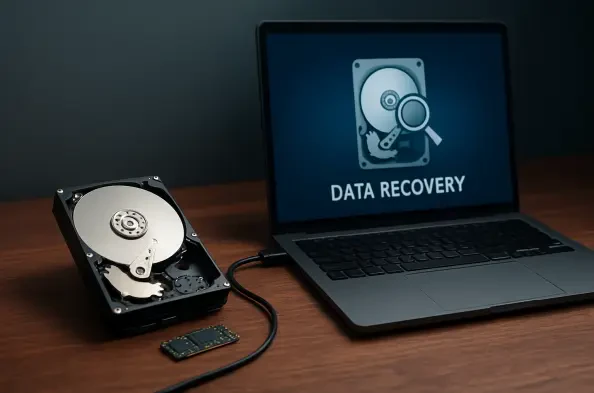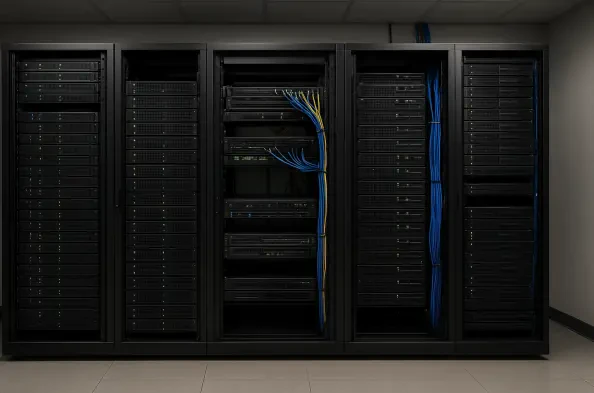
Most backup migrations stall for months because engineers must manually reconstruct retention policies across multiple consoles and fragmented tribal memories. This organizational inertia often stems from a fundamental misunderstanding of the migration’s scope, treating it as a simple software swap rather than a complete overhaul of data governance and protection strategies. In the current landscape of 2026, where cloud estates have expanded into complex web-like structures of microservices and managed databases, the limitations of legacy backup architectures are more apparent than ever. Organizations often realize that their existing on-premises focused appliances struggle to scale with dynamic cloud environments, leading to ballooning storage costs and unacceptable recovery time objectives. A successful transition requires a shift toward modern platforms that offer agentless discovery and deep integration with cloud-native IAM roles. By moving away from the black box approach of traditional backup silos, teams can achieve a state of continuous visibility that ensures no critical production resource is left unprotected due to manual error.
1. Audit Existing Assets and Coverage Gaps
The first critical step involves shifting the focus from the backup vendor to the actual infrastructure estate. An exhaustive audit must document every resource, its current retention parameters, and its designated owner across all accounts. Relying solely on a legacy console for this inventory is a common mistake, as it only reports on what is already protected, completely missing the orphan resources that have slipped through the cracks during rapid scaling phases.
By identifying these coverage gaps early, organizations can reframe their migration goals from simple cost reduction to comprehensive risk mitigation. In many cloud-heavy environments in 2026, it is common to find that up to fifteen percent of production assets lack any backup policy whatsoever. This realization often changes the selection criteria for a new platform, prioritizing automated discovery over manual tagging. Addressing these gaps ensures that the new solution is built on a foundation of total visibility rather than an incomplete list of legacy objects.
2. Test the Solution on Your Most Difficult Workloads
Rather than starting with the easiest data sets, a robust migration strategy prioritizes the most challenging workloads to uncover potential technical hurdles early. If a specific managed database has historically suffered from slow recovery times or lacks single-record restore capabilities, it should be the primary candidate for the initial pilot phase. Testing the new platform against these significant pain points provides immediate proof of value and validates whether the proposed solution can actually meet modern performance standards under stress.
Operating this pilot in parallel with existing backups is non-negotiable for maintaining data safety. This dual-run approach allows engineers to compare real-world performance and monthly billing cycles without risking a gap in coverage. By the time 2026 budget reviews arrive, the team will have concrete data comparing the total cost of ownership between the old hardware-centric model and the new cloud-native architecture. This phase successfully moves the project from theoretical projections to verifiable operational reality.
3. Establish New Policies Based on Requirements
Migrating existing policies through a simple export-import process is often a missed opportunity to clean up technical debt. Over the years, backup rules tend to accumulate a series of manual exceptions and legacy tags that may no longer serve any legitimate business or compliance purpose. Instead of reproducing these errors, administrators should rebuild policies based on current business intent and regulatory mandates. This clean-slate approach ensures that the new environment is lean, efficient, and fully aligned with present-day data protection requirements.
Modern platforms in 2026 leverage Cloud Backup Posture Management (CBPM) to automate the application of these new policies. By classifying data by type and importance, the system can dynamically assign retention rules as soon as new resources are detected. This automation removes the burden of manual tag maintenance, which is frequently the root cause of policy drift in older systems. Transitioning to an intent-based model ensures that the backup strategy remains resilient even as the infrastructure continues to evolve at a rapid pace.
4. Operate Both Systems Simultaneously for One Retention Period
A successful cutover requires a period of simultaneous operation that lasts through at least one full retention cycle for the most demanding workloads. This phase serves as the ultimate safety net, ensuring that the new platform can not only capture data but also maintain it over time as expected. Many teams feel pressured to decommission old hardware quickly to realize savings, but skipping this step introduces significant risk. A backup solution may appear to function correctly on day one, yet only reveal its limitations during a complex restoration request three months later.
During this overlap, it is essential to conduct deep-dive restoration tests led by on-call engineers rather than the primary project leads. These tests should go beyond verifying job success notifications and instead focus on row counts, referential integrity, and the total time required for a full recovery. Recording every permission required and every friction point encountered during these drills ensures that the documentation is battle-tested. This validation period provides the confidence needed to move toward final decommissioning with the certainty that the data is both accessible and accurate.
5. Execute a Systematic Shutdown
Decommissioning the outgoing platform must be a deliberate and scheduled event rather than a lingering background task. To prevent the migration from dragging on indefinitely, stakeholders must agree upon specific success criteria in advance, such as a set of successful restores and a firm cutoff date for legacy data. Assigning a clear owner for the final deletion decision ensures accountability and prevents the just in case mentality that often leads to paying for redundant storage long after the migration should have concluded.
In many hybrid environments, some workloads may genuinely need to remain on the legacy platform due to on-premises constraints. However, this should be a conscious choice rather than a result of migration failure. For the portions of the estate that do remain on Cohesity, a strict review schedule should be established to monitor cost and policy drift. By isolating these legacy components from the new cloud-native operations, the organization can maintain a clear boundary between modern and legacy systems, ensuring that the migration project reaches a definitive and successful conclusion.
6. Integrating Data Governance and Future Readiness
The transition from legacy backup hardware to a modern, cloud-native architecture was completed by organizations that prioritized strategic planning over tactical speed. These teams recognized that the true challenge of migration was not the data transfer itself, but the reorganization of fragmented tribal knowledge and outdated retention rules. By implementing a phased approach, they successfully eliminated coverage gaps that had previously exposed the business to unnecessary risk. The focus shifted from managing appliances to governing data, which allowed for a more flexible and scalable security posture.
Actionable next steps involved a complete audit of access permissions and the formalization of new data classification standards. Engineers were tasked with documenting the automated discovery workflows to ensure that future infrastructure deployments would be protected by default. This shift toward Cloud Backup Posture Management provided a sustainable framework for growth throughout the latter half of 2026. The project finally concluded when the last legacy appliance was powered down, marking the beginning of a more efficient era in enterprise data protection.
WordsCharactersReading time